A complete pilgrim record drawn from the existing published article data.
Historical Foundation
Origins under Emperor Ashoka
"The Great Stupa at Sanchi embodies Emperor Ashoka's profound spiritual transformation and his unwavering commitment to propagate the Dhamma across his vast empire."
Evolution through Dynasties
Following the decline of the Mauryan Empire, Sanchi continued to thrive under subsequent dynasties, each contributing significantly to its grandeur.
Architecture & Craftsmanship
The Great Stupa (Stupa No. 1)

An aerial view capturing the grandeur of the Great Stupa (Stupa No. 1) at Sanchi.
"Sanchi's Great Stupa is a sculpted universe, where every stone narrates a tale of devotion, enlightenment, and the enduring spirit of Buddhist art."
The Exquisite Toranas & Railings
Key Architectural Terms
- Stupa: A dome-shaped structure erected as a Buddhist shrine, typically containing relics.
- Torana: A free-standing ornamental gateway, often elaborately carved, seen in Buddhist and Hindu architecture.
- Vihara: A Buddhist monastery, often comprising living quarters for monks and halls for communal activities.
- Balustrade: A railing supported by a series of short posts or balusters, often enclosing a sacred space.
- Chatra: A parasol-like finial, usually triple-tiered, crowning a stupa, symbolizing royalty or protection.

The East Torana, one of the four exquisitely carved gateways at Sanchi Stupa No. 1, depicting Jataka tales.
Other Structures and Influences
50 Columns of Ancient Devotion
Temple 40, one of the oldest structures at Sanchi, originally featured a massive pillared hall supported by 50 columns (5x10 arrangement), highlighting the scale of early monastic architecture.
The Presiding Deity
The Sacred Relics of Buddha
Gautama Buddha (Relics Enshrined)
Primary Role: Focal point of reverence and spiritual aspiration. The relics represent the physical presence and enduring legacy of the enlightened one.
Form: Relics (corporeal remains).
Tradition: Early Buddhist traditions (Mahastupa, Relic shrine), predating extensive Buddha iconography.
Significance: The enshrinement of relics transforms the stupa into a sacred mound embodying the Buddha's Parinirvana and the attainment of Nirvana. Circumambulating the stupa is an act of devotion, symbolizing following the path of the Dharma.
Other Sacred Personalities and Symbols

A Salabhanjika Yakshi (tree spirit) figure, a common auspicious motif on the toranas at Sanchi.
Festivals & Living Traditions
Commemorating Buddha's Life
Pro Tip for Visitors
Visiting Sanchi during Buddha Purnima can be a deeply enriching experience, offering a glimpse into living Buddhist traditions amidst ancient ruins. Expect larger crowds and plan your travel and accommodation accordingly. The spiritual atmosphere is particularly palpable during this time.
Modern Observances and Cultural Impact
Key Takeaway: Sanchi's Enduring Legacy
Sanchi Stupa transcends its identity as an archaeological site; it is a profound testament to the continuous spiritual and cultural influence of Buddhism in India, from its ancient origins to its modern resurgence.
Plan Your Visit
Getting There & Best Time
Sanchi is conveniently located and easily accessible. The nearest major city is Bhopal, the capital of Madhya Pradesh, situated approximately 46 kilometers away.
- Nearest Airport: Raja Bhoj Airport, Bhopal (BHO), located about 46 km from Sanchi.
- Nearest Railway Station: Bhopal Junction railway station (BPL), also approximately 46 km away, with good rail connectivity to major Indian cities.
Visitor Information & Nearby Attractions
Sanchi is also part of a fascinating circuit of historical and religious sites in Madhya Pradesh:
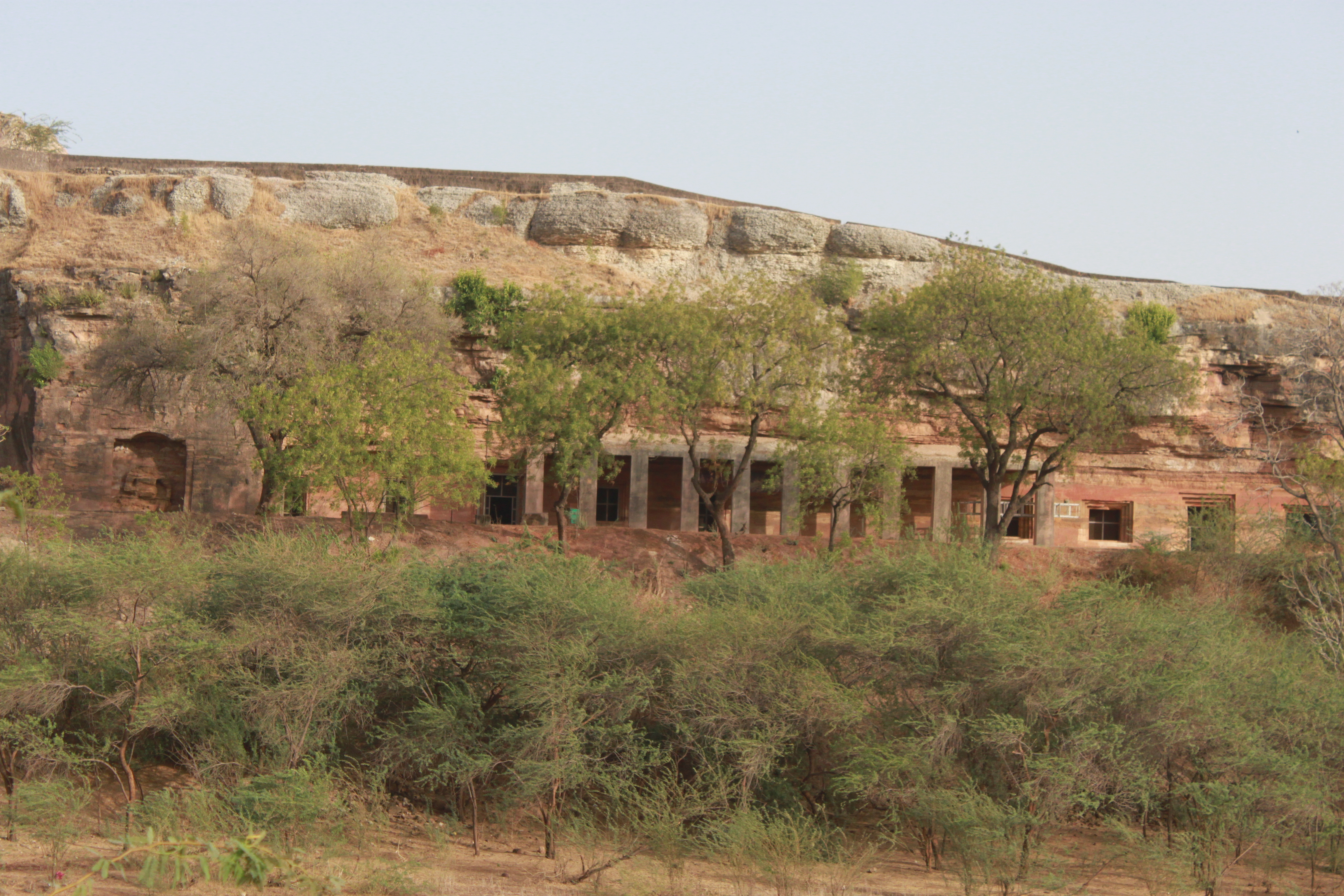
- Udayagiri Caves: Approximately 14 km away, these Hindu and Buddhist rock-cut caves date from the 4th-5th century CE, featuring exquisite Gupta period sculptures.
- Vidisha (Ancient Besnagar): Just 10 km from Sanchi, Vidisha is an ancient city with historical ruins, including the Heliodorus Pillar, a testament to Indo-Greek cultural interaction.
- Bharhut: Though further afield (300 km northeast), Bharhut is another significant Shunga-period stupa site, offering comparative insights into early Buddhist art.
Related temples: Ajanta Caves | Aranya Devi Temple, Arrah
Sacred Stories & Mythology
Ashoka's Personal Connection
The Emperor's Devotion: Ashoka, Devi, and the Foundations of Sanchi
While still a viceroy in Ujjain, the future Emperor Ashoka traveled to Vidisha. There, he married Devi, a devout Buddhist woman whose family patronage first established a vihara (monastery) at Chetiyagiri (Sanchi). This site later became a haven for their son, Mahendra, who stayed there before embarking on his momentous mission to carry the teachings of the Buddha to Sri Lanka. This intimate family connection underscores Sanchi not just as a royal commission, but as a site born from deep personal faith, linking Ashoka's imperial power with his remorse-driven conversion and ardent propagation of the Dharma.
Jataka Tales and Buddhist Narratives

A detailed panel from the toranas illustrating a Jataka tale, depicting the Buddha's previous lives.
Saints, Poets & Devotees
Royal Patrons and Missionaries
Scholarly Rediscovery and Conservation
Records, Marvels & Heritage
Unique Historical and Architectural Distinctions
Engineering Feats and Preserved Legacy
"Sanchi is an open book of history, where every stone, every carving, and every ancient inscription unfolds a chapter of India's glorious Buddhist past."
🗺 How to Reach
Hover a card to animate the journey on the map
Route to Sanchi
Common Questions
Where is Sanchi Stupa: A Timeless Legacy of Buddhist India located?
Sanchi Stupa: A Timeless Legacy of Buddhist India is documented at Sanchi, Madhya Pradesh.
Which deity is associated with Sanchi Stupa: A Timeless Legacy of Buddhist India?
Sanchi Stupa: A Timeless Legacy of Buddhist India is associated with Buddha.
Related Temples

A Living Covenant