



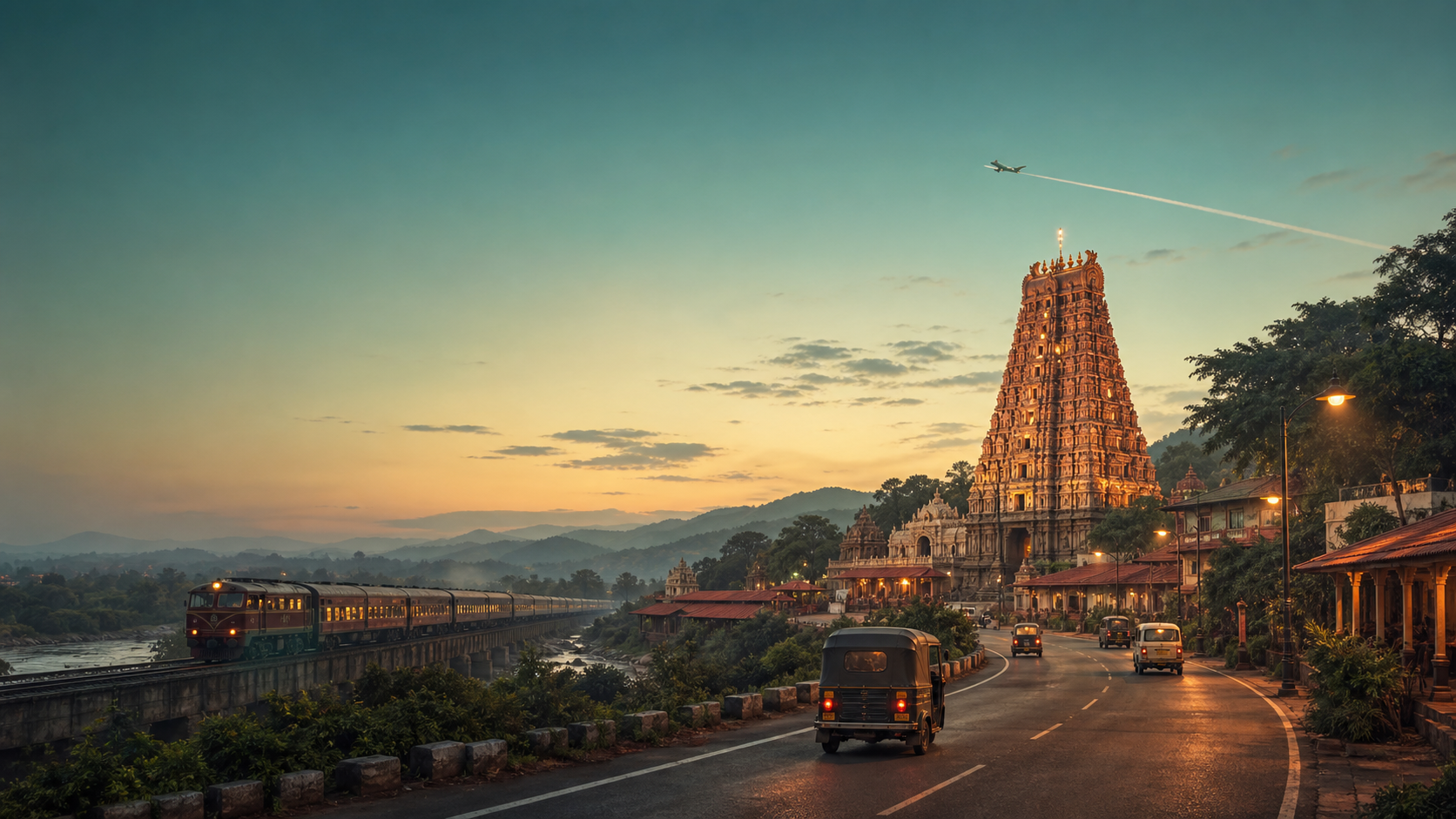
A complete pilgrim record drawn from the existing published article data.
Tracing the Ancient Roots of Kalkaji Mandir
The origins of Kalkaji Mandir are steeped in ancient legends and oral traditions, though precise historical records regarding its initial construction remain elusive. Many devotees believe the temple's site dates back to the _Mahabharata_ era, associating it with the Pandavas. Over centuries, the temple has undergone numerous renovations and reconstructions, evolving into its current form. This continuous renewal reflects its enduring spiritual significance and the unwavering devotion of its followers, preserving its legacy through various historical periods.
Legendary Origins
Folklore and local beliefs suggest the temple's sacred ground has existed since antiquity, possibly linked to mythological narratives.
Historical Development
While the original structure's age is uncertain, the temple has been periodically rebuilt and expanded, indicating a long history of worship.
Enduring Legacy
Despite the lack of definitive historical records for its founding, the temple has maintained its spiritual importance through generations.
Architectural Splendor of Kalkaji Mandir
The architecture of Kalkaji Mandir presents a fascinating blend of traditional Hindu temple design with elements that reflect its continuous renovation and expansion over time. The main shrine, while rooted in ancient spiritual layouts, features structures that have been modernized and adorned. The complex includes several smaller shrines dedicated to other deities, surrounding the central sanctum. While specific architectural styles from a single dynasty are not clearly defined, the overall design emphasizes functionality for large congregations and aesthetic reverence for the deity, creating a vibrant and welcoming spiritual space.
Design Elements
The temple's design incorporates traditional Hindu temple architecture, adapted and expanded through various periods of renovation.
Blend of Styles
It showcases an evolving architectural style, reflecting both ancient spiritual principles and more contemporary building practices.
Temple Layout
The complex is structured around the main shrine of Devi Kalkaji, featuring numerous ancillary shrines and spaces for devotees.
Kalkaji Mandir: A Spiritual Hub in Delhi
Kalkaji Mandir stands as a significant and revered Hindu temple located in the bustling city of Delhi. Dedicated to Devi Kalkaji, a powerful manifestation of Goddess Durga, it serves as a vital spiritual center for devotees. Its prominence is further enhanced by its accessibility, with the Kalkaji Mandir metro station providing convenient access for pilgrims and visitors from across the National Capital Region and beyond. The temple complex is a focal point for religious activities, drawing thousands who seek blessings and spiritual solace from the fierce protector goddess.
Devi Kalkaji's Abode
The primary deity enshrined within this sacred complex is Devi Kalkaji, revered as a potent form of the divine feminine.
Prominence in Delhi
As one of Delhi's most significant Hindu pilgrimage sites, the mandir holds deep cultural and religious importance for the local community and visitors alike.
Metro Connectivity
The temple's location is highly accessible, directly served by the Kalkaji Mandir metro station, making it a convenient destination for devotees.
Planning Your Visit to Kalkaji Mandir
For those planning a spiritual journey to Kalkaji Mandir, practical information is key to a fulfilling experience. While specific timings and entry details are best confirmed directly with the temple office, the mandir generally welcomes devotees throughout the day. Its prime location near the Kalkaji Mandir metro station makes it highly accessible. Visitors are advised to respect local customs and dress codes. The temple offers a profound spiritual experience, especially during festivals dedicated to Devi, which are considered the best times to visit for a vibrant atmosphere.
Temple Timings and Entry
It is recommended to contact the temple office for the most current information regarding daily opening and closing times and entry protocols.
Accessibility and Transport
The temple is conveniently located near the Kalkaji Mandir metro station, offering easy access via public transport. Information on other transport options like bus, train, and flight distances can be found by contacting the temple office.
Visitor Guidelines
Visitors should observe respectful dress codes and temple etiquette. The best time to visit for a vibrant experience is often during major festivals.
| Deity | Devi |
|---|---|
| Form | Devi is often depicted in various forms, embodying different aspects of the divine feminine, such as Durga, Lakshmi, or Saraswati, each with unique attributes and iconography. |
| Consort | Unknown |
| Sampradaya | Hindu |
| Significance | She represents the supreme power, creation, preservation, and destruction, revered as the Mother Goddess and the source of all energy and existence in Hinduism. |
The Unrevealed Legend of Kalkaji Mandir
Specific mythological stories directly associated with the Kalkaji Mandir itself are not available in the provided information. However, the temple is dedicated to Devi, the supreme Mother Goddess in Hinduism. Her legends are vast and varied, encompassing tales of creation, cosmic battles against evil, and her role as the source of all power and existence. Devotees visit to experience her divine presence and seek blessings.
She is the ultimate reality, the power behind all existence, the Mother who nurtures and protects.
In her myriad forms, Devi embodies strength, wisdom, and compassion, guiding all beings towards liberation.
Related temples: Achalpuram Shivalokathyagar Temple | Bade Baba Temple
Devi Kalkaji: The Fierce Protector
Devi Kalkaji is a formidable and revered manifestation of Goddess Durga, embodying strength, protection, and the destruction of evil. She is worshipped as a fierce yet benevolent mother goddess who safeguards her devotees from negative forces and grants their wishes. The mythology surrounding her portrays her as a powerful warrior deity, often depicted with multiple arms bearing weapons, symbolizing her ability to combat malevolence. Her presence at Kalkaji Mandir is central to the temple's spiritual identity, inspiring deep devotion and faith among pilgrims seeking her divine protection.
Manifestation of Durga
Devi Kalkaji is understood as a powerful and fierce form of Goddess Durga, representing divine energy and cosmic power.
Symbol of Protection
Devotees worship her as a fierce protector, capable of vanquishing evil and bestowing blessings upon her followers.
Central to Worship
Her unique iconography and mythological narratives are central to the rituals and devotional practices observed at the temple.
Modern Pilgrimage
The Kalkaji Mandir metro station has profoundly reshaped the concept of pilgrimage to the ancient Kalkaji Temple, transforming it from a potentially arduous journey into an easily accessible spiritual experience. Before its advent, devotees often faced challenges with traffic congestion, parking, and navigating the bustling South Delhi area. Now, with the seamless connectivity offered by both the Violet Line and the Magenta Line, pilgrims from across Delhi-NCR can reach the temple with unprecedented ease and efficiency. This modern transportation hub has democratized access to the revered shrine, allowing a wider demographic, including daily commuters and casual visitors, to integrate a spiritual stop into their urban routines. The station acts as a vital gateway, significantly reducing travel time and stress, thereby enhancing the overall pilgrimage experience for countless individuals seeking blessings at the Kali Mata temple. This enhanced accessibility has not only streamlined the pilgrimage process but has also contributed to a noticeable increase in footfall at the Kalkaji Mandir, particularly during festivals and auspicious days. The metro station serves as a crucial point of convergence, allowing families, elderly devotees, and individuals with limited mobility to undertake their spiritual journeys comfortably and safely. Furthermore, the convenience offered by the metro has fostered a vibrant ecosystem around the station, with numerous small businesses, flower vendors, and *prasad* shops catering specifically to the needs of arriving and departing pilgrims. This integration of modern urban transit with traditional religious practices exemplifies how infrastructure development can profoundly impact cultural and spiritual landscapes, making ancient traditions more accessible and sustainable for contemporary society.🗺 How to Reach
Hover a card to animate the journey on the map
Route to Temple
Related Temples

A Living Covenant