



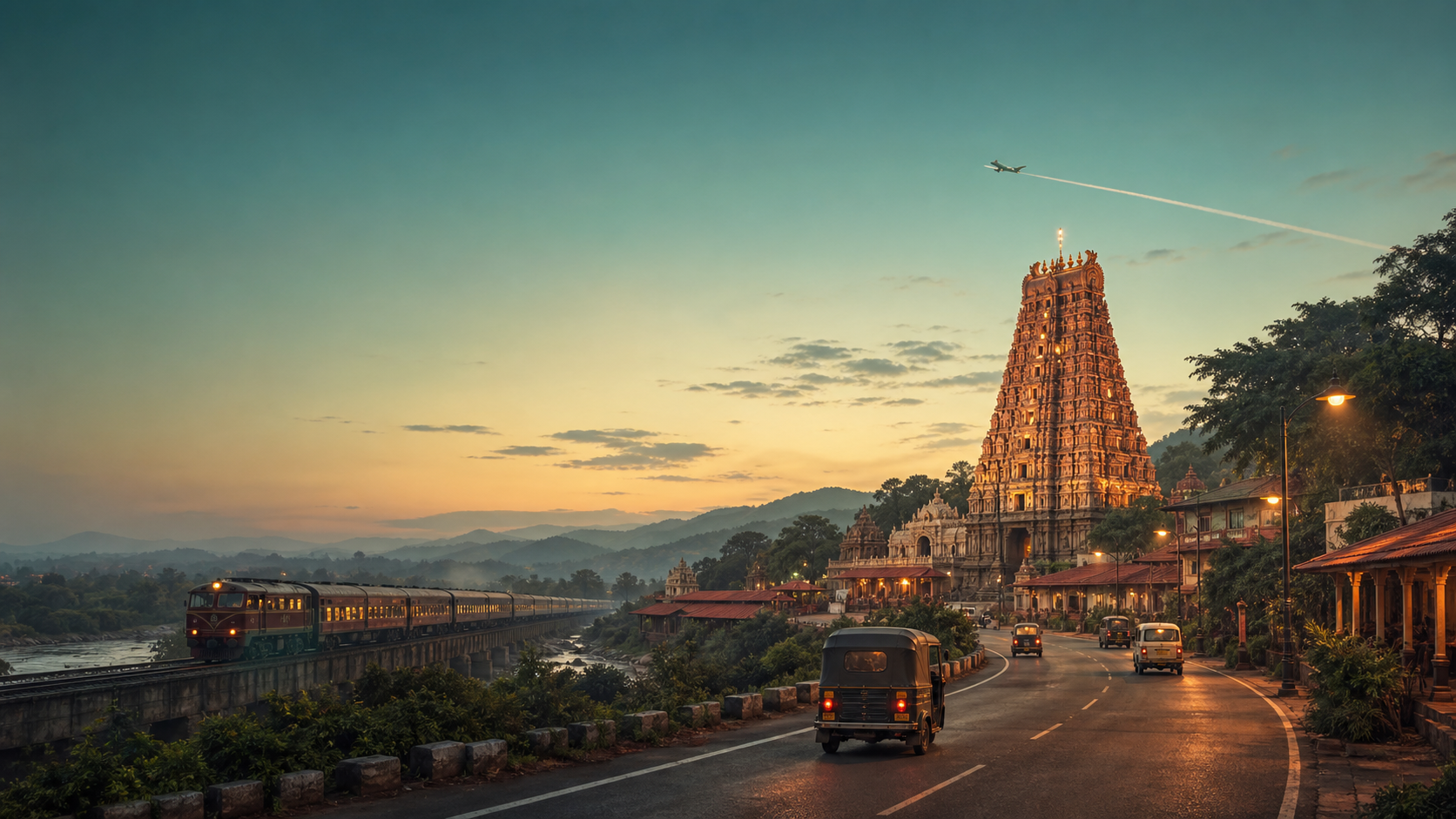
A complete pilgrim record drawn from the existing published article data.
Simple Grandeur: The Architecture of Kali Paltan Mandir
The architecture of Kali Paltan Mandir, particularly its modern incarnation built in 1968, reflects a blend of contemporary temple design while likely incorporating traditional Hindu architectural elements. While specific details regarding the original shrine's style and materials from 1844 are unknown, it was an underground Shivalinga discovery that led to its founding, suggesting an initially simpler structure. The current complex, being larger, offers more space for devotees and ceremonies. Its design prioritizes functionality and reverence, providing a suitable environment for worship without adherence to a single, identifiable historical architectural style.
Evolution of Design
The temple's architecture evolved from an original shrine in 1844 to a modern, larger complex constructed in 1968.
Modern Temple Features
The contemporary complex prioritizes functionality and space for devotees, incorporating elements of modern temple construction.
Unknown Original Style
Specific architectural styles and materials of the original 1844 shrine remain unknown, suggesting a more humble initial structure.
Experiencing History and Spirituality: A Visitor's Guide to Kali Paltan Mandir
Visiting Kali Paltan Mandir offers a chance to experience both profound spirituality and significant history. The temple is conveniently located within Meerut city, accessible by local bus services. For those traveling from further afield, Meerut City Junction train station provides connections to major Indian cities, and Indira Gandhi International Airport in Delhi is approximately 70 km away. Visitors should plan for a duration of 1-2 hours. Entry is free, and the best time to visit is from October to March. Traditional attire is preferred, and footwear must be removed before entering the sacred premises. Contact the temple office for precise timings.
Getting There
The temple is accessible via Meerut Bus Stand, Meerut City Junction train station, and Delhi's Indira Gandhi International Airport (approx. 70 km away).
Visitor Etiquette
Entry is free; traditional attire is preferred, and footwear must be removed before entering the temple premises.
Best Time to Visit
The most favorable period for visiting the Kali Paltan Mandir is between October and March, offering pleasant weather.
| Deity | Shiva |
|---|---|
| Form | Shiva is worshipped in the aniconic form of a Shivalinga, symbolizing his cosmic creative and destructive power. |
| Consort | Unknown |
| Sampradaya | Shaiva |
| Significance | As a principal deity of Hinduism, Shiva is known as the Destroyer within the Trimurti, representing transformation, meditation, and asceticism. |
The Lingam's Emergence and a Nation's Awakening
Deep beneath the earth, a sacred secret lay hidden until the year 1844. It was then that a divine Shivalinga spontaneously emerged, revealing itself to the world and marking the auspicious spot for what would become the revered Kali Paltan Mandir. This very ground, blessed by the presence of Lord Shiva, later became intrinsically linked with a pivotal moment in Indian history. Located near the bustling army barracks, or 'Paltan,' the temple earned its distinctive name. More profoundly, it is whispered that this hallowed site, particularly a nearby well, served as a clandestine meeting point for the brave sepoys who ignited the flames of the 1857 Rebellion, making it not just a place of worship, but a silent, powerful witness to the dawn of a nation's struggle for freedom.
This hallowed site, particularly a nearby well, served as a clandestine meeting point for the brave sepoys who ignited the flames of the 1857 Rebellion.
A divine Shivalinga spontaneously emerged, revealing itself to the world and marking the auspicious spot for what would become the revered Kali Paltan Mandir.
Related temples: Achalpuram Shivalokathyagar Temple | Ariyanatha Mudaliar
Kali Paltan Mandir: A Symbol of Faith and Rebellion
The Kali Paltan Mandir in Meerut stands as a unique historical and spiritual landmark, embodying both profound religious devotion and a pivotal moment in India's struggle for independence. Originally established in 1844 following the discovery of an underground Shivalinga, it quickly became a revered site. The temple's proximity to army barracks, or 'Paltan,' gave it its distinctive name. Its significance deepened profoundly in 1857, when it became historically associated with the initiation of the Indian Rebellion, serving as a clandestine meeting point for sepoys. A modern, larger temple complex was constructed in 1968, preserving its legacy while accommodating growing numbers of devotees.
Discovery and Founding
The original shrine was founded in 1844 after an underground Shivalinga was discovered, establishing the site's spiritual significance.
Name Origin
The temple's name, 'Paltan,' is derived from its location near army barracks, reflecting its historical connection to military personnel.
Modern Transformation
In 1968, a modern and significantly larger temple complex was constructed, enhancing its capacity for worship and preserving its heritage.
Echoes of 1857: The Temple's Role in India's First War of Independence
The Kali Paltan Mandir holds a legendary place in the narrative of the 1857 Indian Rebellion, often referred to as India's First War of Independence. Before the uprising, sepoys are said to have convened secretly at a well near the temple site, planning their revolt against British rule. This hallowed ground, therefore, became intrinsically linked with the rebellion's initiation. The temple stands as a silent, powerful witness to the fervent desire for freedom that ignited the nation. Its historical association underscores its role not merely as a place of worship but as a crucible where the seeds of a nation's struggle were sown.
Sepoys' Secret Meetings
A well near the temple site is historically noted as a clandestine meeting point for sepoys planning the 1857 Indian Rebellion.
Catalyst for Rebellion
The temple became profoundly associated with the initiation of the 1857 Indian Rebellion, marking it as a historical flashpoint.
Enduring Historical Significance
The site remains a powerful symbol of the early struggle for Indian independence, intertwining spiritual faith with national history.
The Fierce Mother: Worshipping Shakti at Kali Paltan Mandir
While the temple primarily venerates Lord Shiva with an ancient Shivalinga, the spiritual heart of Kali Paltan Mandir also deeply resonates with the powerful presence of Shakti or Devi. Devotees come to seek blessings from the Divine Mother, who embodies strength, protection, and liberation. This veneration connects to the temple's historical narrative, as Shakti is often invoked for courage in times of struggle. The temple complex thus offers a dual spiritual experience, honoring both the cosmic masculine and feminine principles, inspiring resilience and faith among its worshippers.
Veneration of the Divine Mother
Devotees at Kali Paltan Mandir offer prayers to Shakti or Devi, seeking her blessings for strength and protection.
Shakti's Connection to Courage
The worship of Shakti, a symbol of divine power, aligns with the temple's historical narrative of courage during times of rebellion.
Dual Spiritual Focus
The temple embraces a spiritual duality, honoring both Lord Shiva and the powerful Goddess Shakti, offering a comprehensive devotional experience.
Modern Pilgrimage
The Kali Paltan Mandir continues to draw a significant number of devotees in contemporary times, serving as a vital spiritual anchor amidst the bustling urban landscape of Delhi. Pilgrims from various walks of life, ranging from local residents to visitors from other parts of the city and even beyond, frequent the temple seeking solace, offering prayers, and participating in traditional rituals. The daily aratis, particularly the morning and evening ceremonies, are well-attended, creating a vibrant atmosphere of devotion. Many come to make offerings to Maa Kali, seeking blessings for health, prosperity, and protection. The temple's enduring appeal lies in its historical sanctity and the strong belief in the deity's power, making it a cherished destination for those looking to connect with their spiritual heritage in a rapidly modernizing world.
In an era defined by rapid technological advancement and fast-paced living, the Kali Paltan Mandir stands as a testament to enduring faith and community spirit. While maintaining its traditional practices, the temple has also adapted to serve the needs of modern pilgrims. It is easily accessible via public transport, making it convenient for devotees across Delhi to visit. Beyond individual worship, the temple often hosts community events, religious discourses, and charitable activities, reinforcing its role as a social and cultural hub. For many, a visit to the Kali Paltan Mandir is not just a religious obligation but a cherished opportunity to escape the daily grind, find inner peace, and reaffirm their spiritual beliefs, ensuring its continued relevance for generations to come.
🗺 How to Reach
Hover a card to animate the journey on the map
Route to Delhi
Common Questions
Where is Kali Paltan Mandir: Delhi's Shakti Powerhouse located?
Kali Paltan Mandir: Delhi's Shakti Powerhouse is documented at Meerut.
Which deity is associated with Kali Paltan Mandir: Delhi's Shakti Powerhouse?
Kali Paltan Mandir: Delhi's Shakti Powerhouse is associated with Shiva.
Related Temples

A Living Covenant