A complete pilgrim record drawn from the existing published article data.
From Rock-Cut Caves to Towering Gopurams: A Historical Journey
The evolution of Dravidian temple architecture is a fascinating historical journey, commencing with early rock-cut caves and monolithic temples. This architectural style developed significantly under powerful dynasties such as the Pallavas, Cholas, Pandyas, and Vijayanagara rulers. Each period introduced distinct innovations, gradually transforming modest shrines into colossal temple complexes. The Pallavas pioneered rock-cut architecture, while the Cholas perfected the towering vimana. Later, the Pandyas introduced the massive gopuram, and the Vijayanagara Empire further expanded these complexes with elaborate mandapas and sculptural programs, culminating in the iconic forms seen today.
Pallava Contributions
Pioneered monolithic temples and structural temples, laying foundational principles for later developments.
Chola Zenith
Marked by the construction of grand vimanas and extensive temple complexes, showcasing architectural maturity.
Vijayanagara Expansion
Focused on adding elaborate mandapas, fortification elements, and intricate sculptural programs to existing structures.
The Enduring Grandeur of Dravidian Temple Architecture
Dravidian temple architecture stands as a testament to South India's rich artistic and spiritual heritage. This distinctive style, primarily developed in the southern states of India, is renowned for its monumental scale, intricate carvings, and profound religious symbolism. It represents a pinnacle of human creativity, blending engineering prowess with deep devotional artistry. These temples are not merely places of worship but complex spiritual ecosystems, reflecting centuries of evolving traditions and aesthetic principles. Their grandeur continues to captivate and inspire.
Architectural Philosophy
Emphasizes cosmic symbolism and the representation of the divine in physical form, integrating celestial and earthly elements.
Artistic Expression
Characterized by elaborate sculptures, friezes, and painted elements depicting mythological narratives and divine forms.
Spiritual Significance
Temples serve as vibrant centers for religious rituals, community gatherings, and the preservation of cultural traditions.
The Divine Canvas: Deities and Iconography in Dravidian Temples
Dravidian temples function as sacred microcosms, meticulously designed to house and honor specific deities. The garbhagriha is the consecrated space for the primary idol, often a manifestation of Vishnu, Shiva, or Devi. Surrounding sculptures, reliefs, and paintings on gopurams and vimanas depict a vast pantheon of gods, goddesses, mythical beings, and epic narratives. Every iconographic detail, from the posture of a deity to the attributes held, carries profound religious symbolism, guiding devotees through spiritual narratives and philosophical concepts. The temple thus becomes a physical manifestation of divine presence and cosmic order.
Primary Deities
Focus on major Hindu deities like Vishnu, Shiva, and various forms of Devi, enshrined in the central sanctum.
Narrative Sculptures
Depicting Puranic stories, epic events, and mythological tales from Hindu scriptures across temple surfaces.
Symbolic Iconography
Every element, gesture, and attribute within the temple conveys spiritual meaning and philosophical tenets.
Enduring Legacy and the Future of Dravidian Masterpieces
The architectural legacy of Dravidian temples transcends mere construction; it represents a living tradition that continues to inspire and influence contemporary art and thought. These ancient masterpieces are not static relics but vibrant centers of culture, religion, and community life. Significant efforts are underway by archaeological departments, cultural organizations, and local communities to preserve these invaluable structures from environmental degradation, natural calamities, and human impact. Documentation, restoration, and sustainable management practices are crucial to ensuring that the intricate artistry and profound spiritual heritage of Dravidian temples are understood and cherished by future generations, maintaining their relevance in a changing world.
Cultural Preservation
Temples as living centers of tradition, community, and the continuous practice of religious and cultural rites.
Conservation Challenges
Addressing environmental factors, natural calamities, and anthropogenic threats to ensure structural integrity.
Future Stewardship
Ensuring long-term survival through modern preservation techniques, documentation, and community engagement for future generations.
| Deity | Unknown |
|---|---|
| Form | Unknown |
| Consort | Unknown |
| Sampradaya | other |
| Significance | Unknown |
A Temple Without a Known Story
No specific mythological story or legend is available for this temple based on the provided information. Many ancient temples have rich oral traditions and written accounts detailing their origins and the miracles associated with their deities, but for this particular site, such narratives remain unrecorded in the provided data.
The towering gopurams and intricate carvings of South Indian temples stand as timeless testaments to devotion and architectural mastery.
Within these sacred walls, echoes of ancient prayers and the spirit of timeless traditions continue to inspire all who enter.
Related temples: Related Temple 1 | Related Temple 2
Unpacking the Iconic Elements of Dravidian Temples
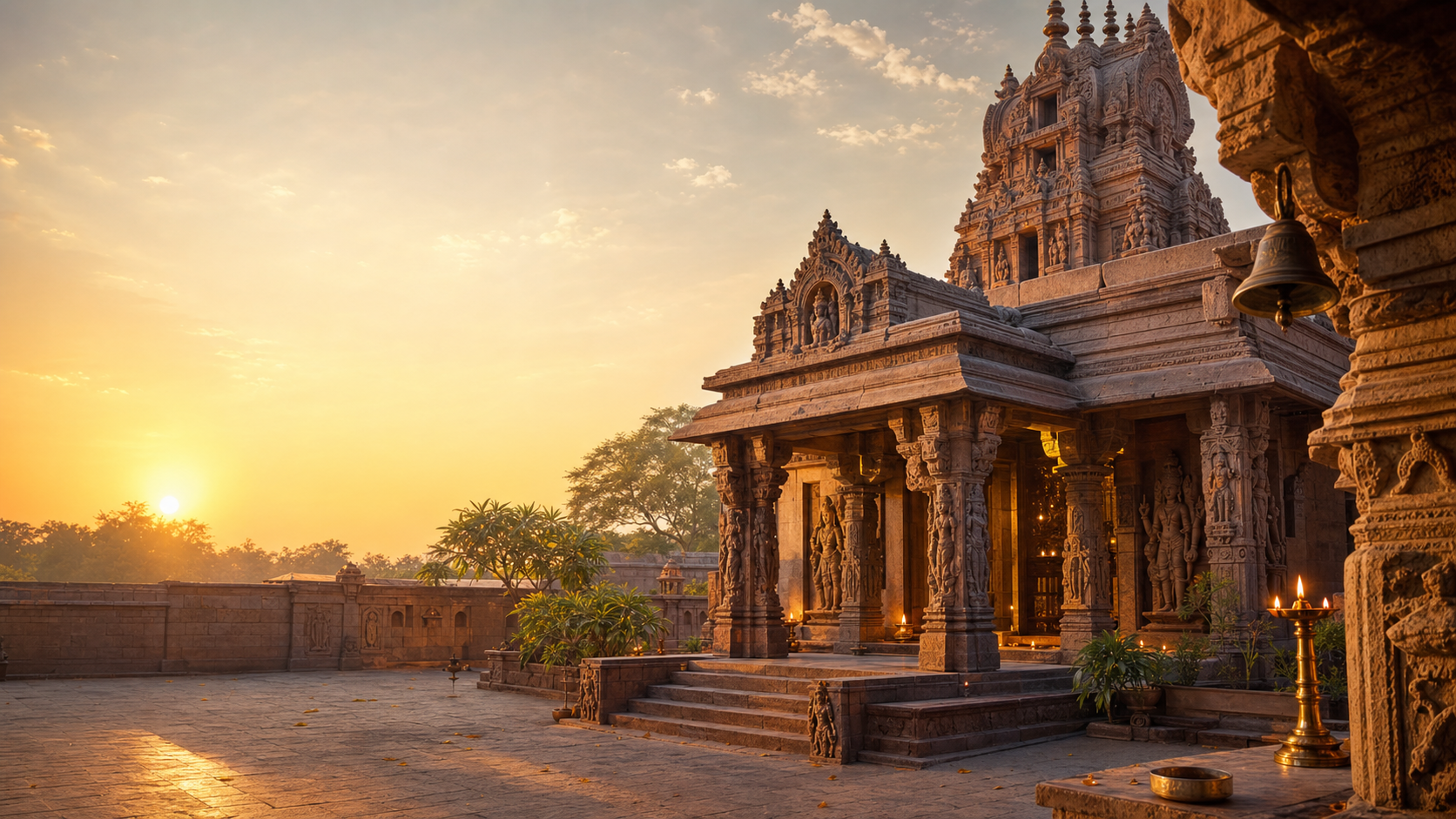
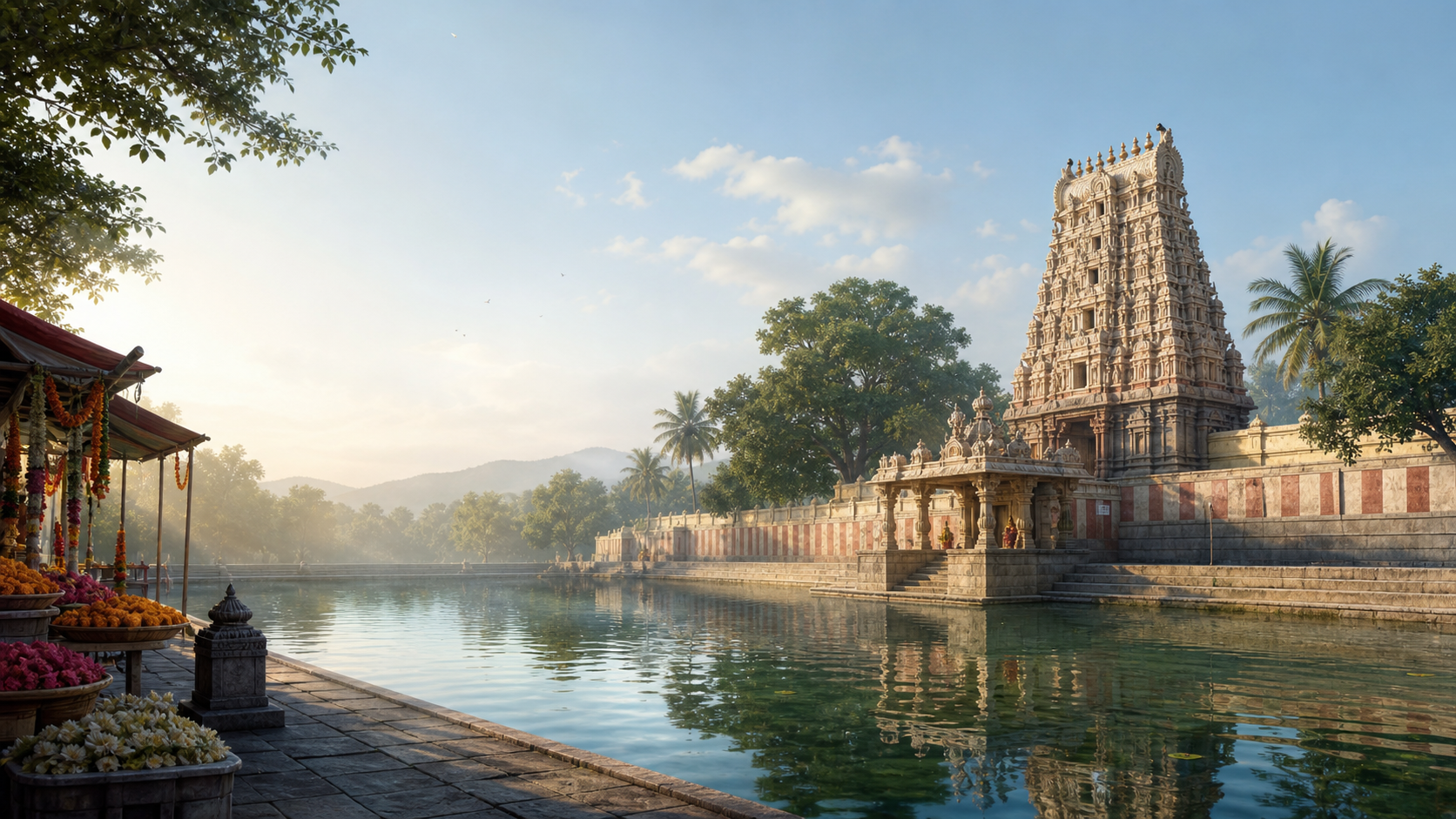
Dravidian temples are characterized by a distinctive set of architectural components. The gopuram, a monumental, often multi-storied entrance tower, serves as a prominent landmark, intricately carved with deities and mythological scenes. At the heart of the complex lies the vimana, the main shrine tower above the sanctum sanctorum, varying in height and form. Mandapas, or pillared halls, provide spaces for rituals and congregations, often adorned with elaborate sculptures. The garbhagriha, or sanctum sanctorum, houses the primary deity. Surrounding walls, pradakshina pathas (circumambulatory passages), and temple tanks complete the traditional layout, all contributing to the unique aesthetic and spiritual experience.
The Gopuram
Monumental entrance towers, richly sculpted with figures from Hindu mythology, serving as symbolic gateways.
The Vimana
The main shrine tower, typically pyramidal or terraced, housing the garbhagriha and symbolizing the cosmic mountain.
Mandapas and Halls
Pillared structures providing spaces for various religious and social functions, often featuring intricate carvings.
Restoration and Conservation Efforts
South Indian temples, often centuries old, face significant challenges in their preservation, demanding continuous restoration and conservation efforts. Factors such as environmental degradation, including weathering, air pollution, and natural disasters like floods or earthquakes, gradually erode their intricate carvings, frescoes, and structural integrity. The sheer scale and complexity of these structures, built from diverse materials like granite, sandstone, and wood, necessitate highly specialized conservation techniques. Organizations such as the Archaeological Survey of India (ASI), various state archaeology departments, and numerous private trusts and foundations are actively engaged in these critical endeavors. Their work encompasses meticulous documentation, scientific analysis of materials, and the careful application of traditional building methods alongside modern engineering principles to ensure both authenticity and long-term stability.
Modern conservation practices for South Indian temples prioritize a delicate balance between structural stability and aesthetic integrity. This often involves a range of interventions, including chemical cleaning to remove accretions, consolidation of deteriorated stone, careful re-pointing of masonry, and the reconstruction of fallen elements using original materials whenever feasible. A significant challenge lies in accurately distinguishing between original fabric and previous repairs, as well as in sourcing and training skilled artisans capable of replicating ancient techniques, such as traditional stucco work or intricate stone carving. The active involvement of local communities and temple authorities is paramount, given that these temples function not merely as historical sites but as vibrant, active places of worship. Sustainable conservation also entails managing visitor impact and educating the public about the profound importance of preserving these architectural marvels for future generations, ensuring their continued role as cultural and spiritual epicenters.