Explore the spiritual majesty of the Chota Char Dham circuit—Gangotri, Yamunotri, Kedarnath, and Badrinath—in the Indian Himalayas.
Direct answer: Chota Char Dham: Journey to the Himalayan Sacred Circuit is a Hindu temple guide on Hindu Mandir Yatra covering the temple's location in Garhwal Himalayas , Uttarakhand , India.
Garhwal Himalayas , Uttarakhand , IndiaAll India
By Hindu Mandir Yatra EditorialApril 4, 20264 min read
Chota Char Dham
A complete pilgrim record drawn from the existing published article data.
Chota Char Dham — figure 5
Emergence of the Chota Char Dham
Key Takeaway: The Chota Char Dham represents a modern synthesis, taking the ancient spiritual geography of the larger Char Dham and framing it within the stunning, accessible geography of the Uttarakhand Himalayas, making the divine journey attainable for millions seeking spiritual solace.
Infrastructure and Accessibility
Timeline of the Char Dham Tradition
8th Century CEAdi Shankaracharya establishes the original Char Dham circuit across India.
Pre-20th CenturyPilgrimage to Himalayan shrines like Kedarnath and Badrinath remains arduous, accessible primarily by foot.
Mid-20th Century OnwardsInfrastructure development begins, improving road connectivity to the Garhwal Himalayas.
Late 20th CenturyThe term "Chota Char Dham" gains prominence to distinguish the Uttarakhand circuit.
20222.8 Million pilgrims visit the Chota Char Dham in a single season, highlighting its enduring popularity.
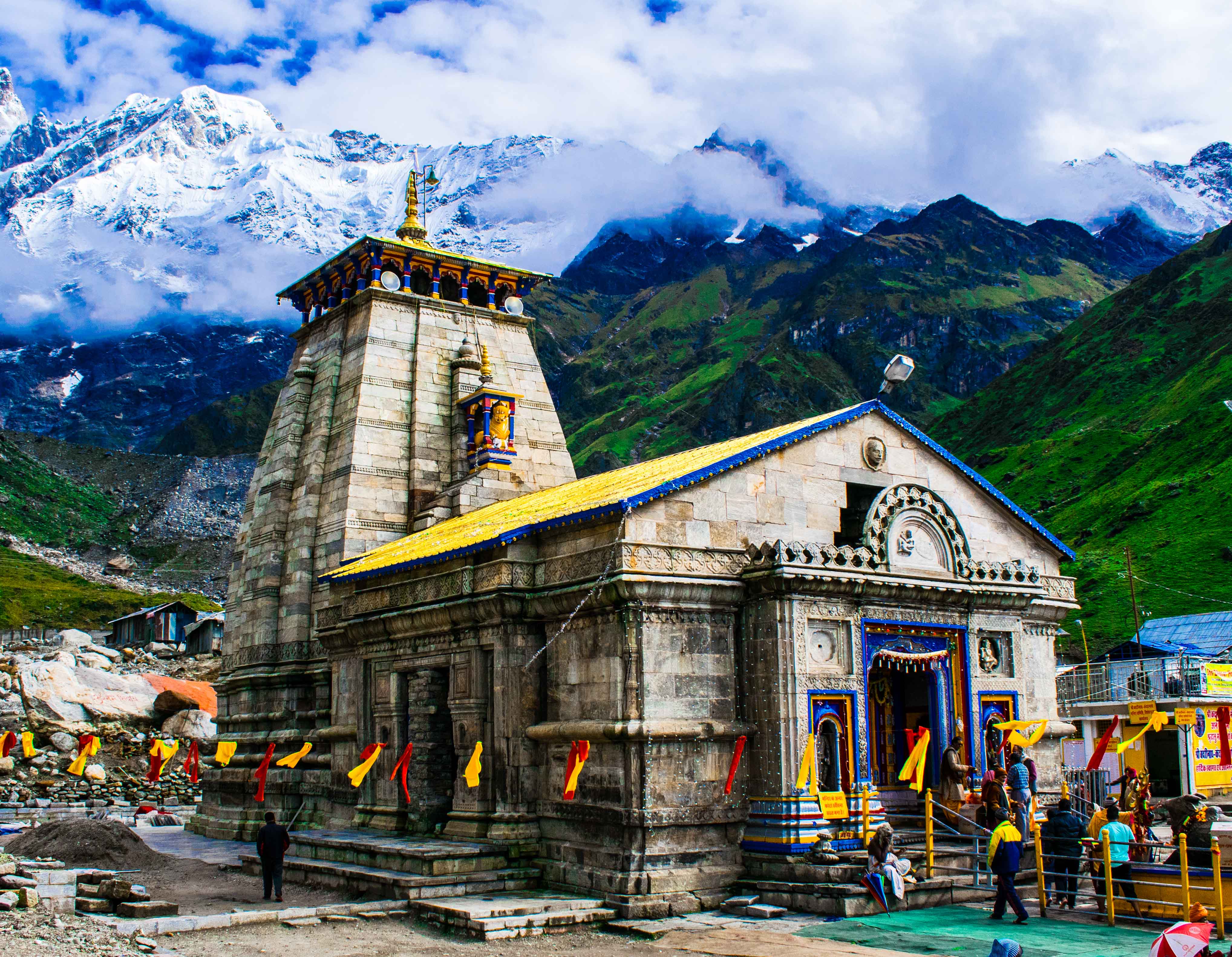
Kedarnath: The abode of Shiva in the high Himalayas.
Visitor Tip: For optimal travel, plan your itinerary to account for acclimatization. Spend adequate time resting, especially at higher altitudes, and always consult local authorities or trusted travel agencies regarding road conditions and safety advisories before setting out. Carrying essential medicines and a basic first-aid kit is also advisable.
Navigating the Diverse Routes
Lord Vishnu (Badrinath)
Lord Vishnu, the Preserver of the Universe, is the principal deity at Badrinath. Here, he is worshipped as Badrinarayan, seated in a meditative posture. According to legend, Vishnu chose this desolate but serene spot for meditation, transforming it into a sacred haven. The black stone idol of Badrinarayan is believed to have been recovered from the Alaknanda River by Adi Shankaracharya. Badrinath represents a vital Vaishnava anchor in the predominantly Shaiva landscape of the Himalayas, showcasing the beautiful convergence of faiths.
Sacred River Sources: Ganga and Yamuna
The Descent of Ganga at Gangotri
The River Ganga, also known as Ganges, originates from the Gangotri Glacier at Gaumukh, a short trek from the Gangotri temple. Ancient Hindu scriptures narrate the story of King Bhagiratha, who performed severe penance for thousands of years to persuade Goddess Ganga to descend to Earth. His aim was to purify the ashes of his ancestors. When Ganga finally descended, her immense force threatened to destroy the Earth. Lord Shiva graciously contained her in his matted locks, releasing her gently onto the plains. Gangotri marks one of the primary points of her earthly manifestation, embodying purification and salvation.
The Mythical Origins of Yamuna
The Yamuna River, a major tributary of the Ganga, originates from the Yamunotri Glacier, nestled in the Bandarpunch peaks. The presiding deity at Yamunotri temple is Goddess Yamuna. She is often depicted as the daughter of the Sun God, Surya, and sister to Yama, the God of Death. Pilgrims believe that bathing in the sacred waters of the Yamuna protects them from a painful death. The temple stands near a thermal spring, adding another mystical element to its natural grandeur and spiritual significance.
Pilgrimage Cycles and Auspicious Seasons
Opening and Closing Ceremonies
The opening of the Chota Char Dham gates is not just a seasonal event; it is a sacred invitation, signaling the divine readiness to commune with humanity amidst the purity of the Himalayan peaks.
Key Takeaway: The timing of the Yatra is a delicate balance between spiritual timing and environmental feasibility. Pilgrims must respect the seasonal conditions, especially avoiding the peak monsoon season in late July and August when landslides and heavy rainfall pose significant risks.
Seasonal Considerations and Spiritual Significance
🛕
Chota Char Dham
Haldwani, Uttarakhand · India
Uttarakhand
Loading map…
✈️Delhi
🚂Mumbai
🚌Bengaluru
🗺 How to Reach
Nearest CityHaldwani
Hover a card to animate the journey on the map
✈️
By Air
Dehradun (DED)
🚂
By Train
Haridwar / Rishikesh
🚌
By Road
Buses & taxis from Haldwani
Pro tip: Book well in advance during major festival seasons.
The temple article remains powered by the same published content pipeline. This view is only a presentation layer over the existing Hindu Mandir Yatra article data.
Shri Kanthamuri Brahmavedi Mandir — Vannarpettai, Tamil Nadu 627809