A complete pilgrim record drawn from the existing published article data.
Key Takeaway: The Enduring Spirit of Kedarnath
Kedarnath Temple symbolizes an extraordinary blend of spiritual devotion, architectural resilience, and profound natural beauty. Its unique high-altitude location, ancient legends, and miraculous survival stories make it a compelling destination for pilgrims and adventurers alike, showcasing the eternal presence of Lord Shiva in the Himalayas.
Historical Foundation
Ancient Roots and Literary Mentions
What is a Paadal Petra Sthalam?
A Paadal Petra Sthalam refers to one of the 275 Shiva temples that are revered in the canonical Tevaram poems written by the Tamil Nayanars, particularly the trio of Appar, Sundarar, and Tirugnāṇasambandar. These temples are considered exceptionally sacred within the Shaivite tradition.
Adi Shankara's Revival and Enduring Legacy
Historical Timeline of Kedarnath Temple
Architecture & Craftsmanship
Structural Design and Materials
"The architecture of Kedarnath is a silent symphony between human endeavor and nature's might, where every stone tells a story of devotion and resilience."
Sculptural Highlights and Iconographic Uniqueness

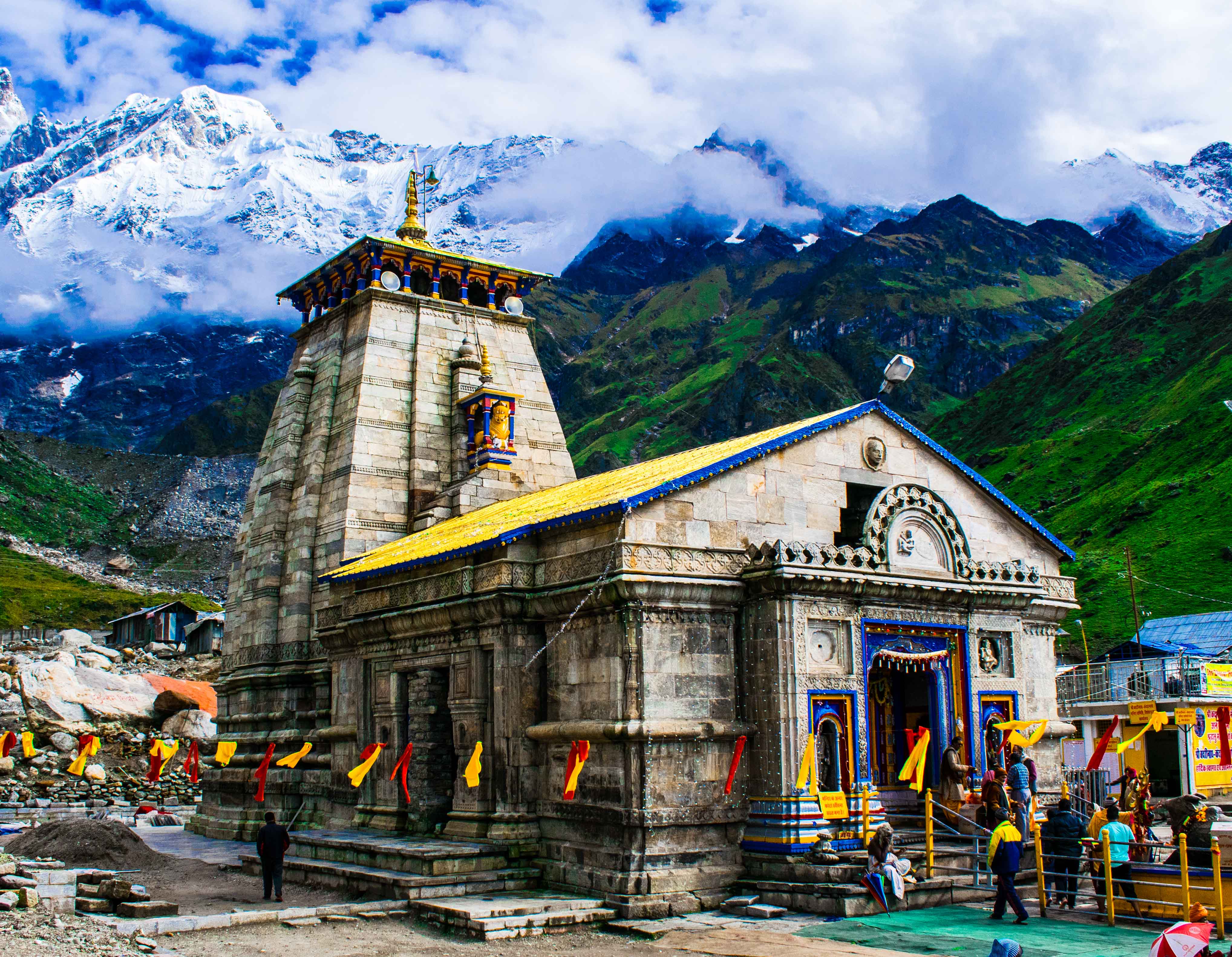
The rugged stone architecture of Kedarnath Temple, designed to withstand the harsh Himalayan climate.
The Presiding Deity
Lord Kedarnath: The Triangular Jyotirlingam
Deity Profile: Lord Kedarnath
- Primary Deity: Shiva
- Form: Kedarnath (Lord of the Field)
- Iconography: Three-sided, conical svayambhu lingam with a carved human head. Massaged with ghee daily.
- Spiritual Significance: One of the 12 Jyotirlingas, central to the Panch Kedar legend. Represents Shiva's bull form's hump.
- Consort Deity: Parvati (represented by images in the temple hall)
- Secondary Deities: Bhukund Bhairavnath (guardian), Nandi, Virabhadra, Krishna, Draupadi, Pandava brothers.
- Tradition: Shaiva
Secondary Deities and Guardians

The unique triangular svayambhu lingam of Kedarnath, central to its spiritual identity.
Festivals & Living Traditions
Major Festivals: A Seasonal Cycle of Devotion
- Maha Shivaratri (Phalguna - February/March): Although the main temple is closed, this is a major annual festival for Shaivites globally. Special pujas and night-long vigils are performed for the deity in its winter abode at Ukhimath, anticipating the opening of Kedarnath.
- Akshaya Tritiya (Vaishakha - April): This auspicious day marks the grand opening of the temple doors for pilgrims after the winter closure. The deity is brought back from Ukhimath amidst much fanfare and Vedic chants, symbolizing the return of Lord Shiva to his Himalayan abode.
- Kartika Purnima (Kartika - October/November): This full moon day signifies the closing of the temple for the winter. Elaborate rituals are performed, and the deity is ceremoniously transferred to Ukhimath, marking the end of the pilgrimage season.
Daily Rituals and Unique Priestly Tradition
Plan Your Visit
Best Time to Visit and How to Reach
- By Air: The nearest airport is Jolly Grant Airport (Dehradun), 223 km away. From Dehradun, you can hire a taxi or take a bus to Rishikesh, and then proceed towards Gaurikunda.
- By Rail: The nearest railway station is Rishikesh Railway Station, also 223 km from Gaurikunda. Rishikesh is well-connected to major Indian cities.
- By Road & Trek: The road journey typically ends at Gaurikunda. From Gaurikunda, Kedarnath Temple is an arduous 17 km uphill trek. Ponies, palanquins (dolis), and helicopter services (from Phata, Sitapur, Guptkashi) are available for those unable to trek.
Pro-Tip for Pilgrims
Acclimatization is crucial for the Kedarnath trek. Spend a day at Guptkashi or Gaurikunda to adjust to the altitude. Carry essential warm clothing, rain gear, sturdy trekking shoes, and a basic first-aid kit. Stay hydrated and carry energy-rich snacks. Register for the Char Dham Yatra before commencing your journey.
Visit Rules, Suggested Duration & Nearby Circuit
Pilgrims are required to observe certain rules:
- Modest dress is required inside the temple premises.
- Photography is strictly prohibited inside the sanctum sanctorum.
- The entire region leading to Kedarnath is considered sacred; intoxicants and non-vegetarian food are strictly prohibited.
- Beyond Gaurikunda, there is no vehicular access; the trek is mandatory.

The challenging yet rewarding 17 km trek to Kedarnath offers breathtaking views and a profound spiritual experience.
Related temples: Badhangarhi Temple | Bagnath Temple
Sacred Stories & Mythology
The Pandava Legend and the Panch Kedar
- The hump emerged at Kedarnath.
- The arms appeared at Tungnath.
- The face revealed itself at Rudranath.
- The navel and stomach surfaced at Madhyamaheshwar.
- The hair manifested at Kalpeshwar.
The Bull and Bhima's Penance
After the great war, the Pandavas were distraught by the weight of their sins. They journeyed to the Himalayas, seeking Lord Shiva’s forgiveness. Shiva, wishing to test their devotion, assumed the form of a bull and hid among a herd. Bhima, with his keen divine insight, recognized Shiva. As Bhima lunged to catch the bull, Shiva dived into the earth. Bhima, determined, held on to its tail and hindquarters. The bull then fragmented, and its hump emerged at Kedarnath. As an act of profound remorse and devotion, Bhima is said to have massaged this divine form with ghee, a tradition reverently continued by pilgrims today as the lingam is anointed with ghee daily.
Other Mythological Events and Beliefs
"In the heart of the Himalayas, Kedarnath stands as a testament to humanity's eternal quest for redemption and divine connection, woven into the very fabric of its ancient stones."
Saints, Poets & Devotees
Adi Shankara: The Great Revitalizer
The Nayanars and the Tevaram Hymns

Adi Shankara, the 8th-century philosopher, is believed to have revived the Kedarnath Temple and attained Mahasamadhi nearby.
Records, Marvels & Heritage
The Highest Jyotirlinga and Ancient References
Over 1 Million Pilgrims Annually!
Before the 2013 floods, Kedarnath attracted over a million devotees each year, a testament to its immense spiritual pull. Pilgrim numbers have steadily resumed post-2014, reflecting enduring faith.
The Miracle of 2013: 'God's Rock'

The 'Bhīm Śilā' boulder behind Kedarnath Temple, which miraculously diverted floodwaters during the 2013 disaster.
Resilience, Heritage & Conservation
"Kedarnath is not just an ancient temple; it is a living symbol of resilience, where faith and robust engineering converged to defy the fury of nature."
🗺 How to Reach
Hover a card to animate the journey on the map
Route to Kedarnath
Common Questions
Where is Kedarnath Temple: Abode of Lord Shiva in Himalayas located?
Kedarnath Temple: Abode of Lord Shiva in Himalayas is documented at Kedarnath, Uttarakhand.
Which deity is associated with Kedarnath Temple: Abode of Lord Shiva in Himalayas?
Kedarnath Temple: Abode of Lord Shiva in Himalayas is associated with Śiva.
Related Temples


A Living Covenant