A complete pilgrim record drawn from the existing published article data.

History & Foundation
Origins of Kalyana Vihara
The earliest historical evidence for the Bagh Caves comes from a copper plate inscription of 416–417 CE. This inscription, issued by Maharaja Subandhu of Mahishmati, records an endowment to the 'Kalyana Vihara', confirming the site's active use and royal patronage during the early 5th century. This patronage highlights the importance of Buddhism in the region.
Construction of the main caves, including viharas (monasteries) and chaityas (prayer halls), primarily occurred between the 5th and 6th centuries CE. This period aligns with the late Gupta and early medieval eras, making Bagh a contemporary of Ajanta's Phase II developments.
Decline and Rediscovery

Architecture & Deity
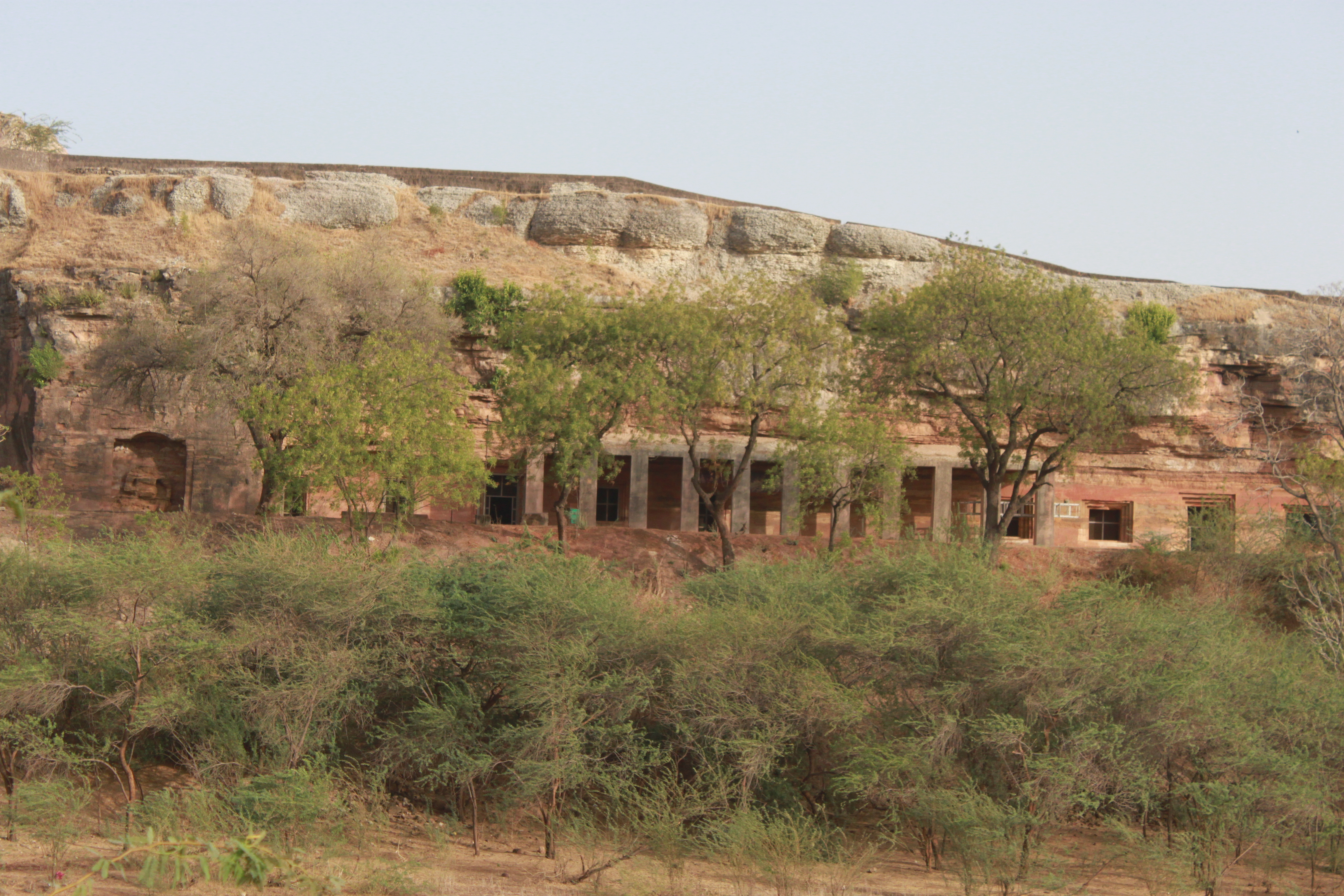
The Bagh Caves are prime examples of rock-cut Buddhist architecture, meticulously carved into a perpendicular sandstone cliff face. The complex comprises several viharas and chaityas, showcasing the advanced engineering and artistic skills of their creators.
Rock-Cut Marvels
The caves exhibit a Late Gupta / Early Medieval Central Indian cave style, characterized by quadrangular plans and elaborate pillared halls. Cave 4, known as 'Rang Mahal' (Palace of Colors), is particularly notable with its 28 pillars and fully developed tripartite entrance, supporting a once richly painted ceiling. Cave 2 features a six-pillared portico and an enshrined stupa.
The precision of the rock-cut excavation and the inferred acoustical design of the halls demonstrate sophisticated architectural understanding. The primary material used was local sandstone, expertly shaped into functional and aesthetically pleasing monastic spaces.
Buddhist Iconography
Secondary deities include various Bodhisattvas, especially Padmapani, whose depiction here is considered a stylistic precursor to the famous Ajanta frescoes. Jataka figures, illustrating the Buddha's previous lives, are also prominent, reinforcing the Mahayana Buddhist tradition of the site.
Vihara & Chaitya
A Vihara is a Buddhist monastery, typically comprising living quarters for monks. A Chaitya is a prayer hall, often housing a stupa, which is a hemispherical structure containing relics.

Sacred Stories
The Bagh Caves are renowned for their extensive mural paintings, which are among the earliest surviving large-scale examples in India. These frescoes vividly narrate Buddhist sacred stories and offer unique insights into secular life during the Gupta period.
Jataka Narratives and Miracles
Many murals depict Jataka tales, which recount the previous incarnations of the Buddha. These narrative scenes served as moral lessons and sources of inspiration for the monastic community. One notable depiction illustrates the Buddha's miracle at Kapilavastu, a significant event in his life.
The artistic style aligns with the Gupta-Buddhist mural tradition, characterized by fluid lines, expressive figures, and rich symbolism. These paintings are crucial for understanding the evolution of Indian art, providing a bridge between earlier traditions and later developments.
Unique Secular Depictions
The depiction of Bodhisattva Padmapani here is considered a prototype, influencing later iconic representations, including those at Ajanta. Unfortunately, due to their fragility, 21 specimens from Cave 4 have been removed for preservation in museums, highlighting the ongoing conservation challenges.
Modern Cultural Significance
The Bagh Caves are a vital resource for academic research, particularly in the study of Gupta-period aesthetics and Buddhist narrative art. Scholars frequently compare the Bagh murals with those of Ajanta and Sittanavasal, identifying stylistic connections and unique regional characteristics.
The site also serves as a practical training ground for conservationists from the Archaeological Survey of India. This ongoing engagement ensures that the fragile heritage of Bagh is meticulously studied and protected for future generations.
Conservation and Preservation
The absence of major festivals today allows for a focus on scholarly preservation and controlled access, ensuring the longevity of these invaluable historical records. The site's primary tradition now revolves around its role as a protected archaeological treasure.
Planning Your Visit
A suggested duration for exploring the caves is a half-day (around 4 hours), especially if combined with a trip from nearby Mandu. Dhar Railway Station is about 94 km from the site, offering rail connectivity.
Visitor Guidelines and Nearby Attractions
Photography restrictions are likely in place, particularly for the murals, to protect these delicate artworks from flash damage. Visitors should adhere to all guidelines provided by the ASI. The site is managed by the Archaeological Survey of India, ensuring its preservation.
Consider combining your visit with other historical sites in the region, such as the Maheshwar Fort & Temples, Udaipur Jain Temples, or the Bhojpur Shiva Temple. These nearby attractions offer a broader perspective on Central India's rich architectural and religious heritage.


"Every stone here carries the prayers of generations who came before."
"Bagh Cave 9 is not just a temple — it is a living chronicle of faith."
Restoration & Conservation Efforts
Scholarly Studies & Interpretation
🗺 How to Reach
Hover a card to animate the journey on the map
Route to Kukshi
Common Questions
Where is Bagh Caves: Ancient Buddhist Rock-Cut Temples located?
Bagh Caves: Ancient Buddhist Rock-Cut Temples is documented at Madhya Pradesh.
Which deity is associated with Bagh Caves: Ancient Buddhist Rock-Cut Temples?
Bagh Caves: Ancient Buddhist Rock-Cut Temples is associated with Buddha.
Related Temples

A Living Covenant