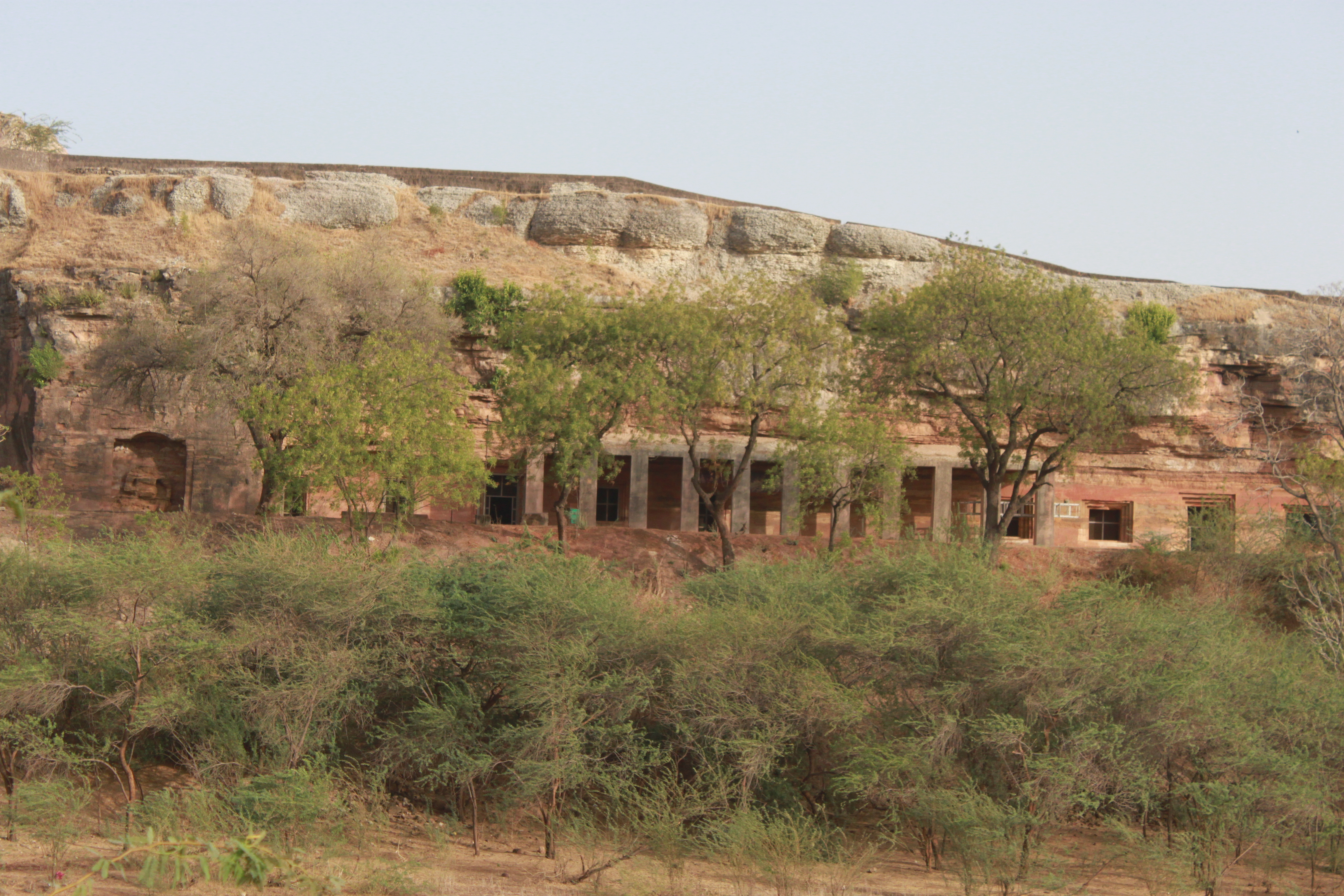
A complete pilgrim record drawn from the existing published article data.
History & Foundation
Origins and Royal Patronage
The Bagh Caves emerged during the 5th-6th century CE, a period of flourishing Buddhist activity in Central India. Their foundation is attributed to a Buddhist monk named Dataka, establishing a significant monastic complex.
A pivotal copper plate inscription from 416–417 CE by Maharaja Subandhu of Mahishmati refers to the site as 'Kalyana Vihara', indicating royal patronage and endowment. This grant solidified the caves' role as a center for Buddhist learning and meditation.
“The Kalyana Vihara, endowed by Maharaja Subandhu, stands as a beacon of ancient Buddhist devotion.”Abandonment and Renaming
By the 10th century CE, Buddhism in the region faced decline, leading to the abandonment of the Bagh Caves. Over time, these once sacred spaces became inhabited by wild animals, particularly tigers.
This association with tigers gave the site its modern name, 'Bagh', which means tiger in Hindi. The Archaeological Survey of India (ASI) has undertaken extensive restoration efforts, spanning over 17 years, to preserve this fragile heritage.
Key Historical Sources:
- Copper plate inscription of Maharaja Subandhu (416–417 CE)
- ASI restoration reports
Architecture & Deity
Gupta Period Cave Architecture
The Bagh Caves exemplify the Buddhist rock-cut cave architecture of the Late Gupta period, contemporary with Ajanta Phase II. Carved from sandstone, the complex comprises nine caves, with five well-preserved today.
These structures include viharas (monastic dwellings) and chaityas (prayer halls), featuring elements like pillared porticos and central stupa chambers. Cave 4, known as Rang Mahal, is particularly notable for its elaborate doorways and once housed 28 pillars.
Vihara & Chaitya
A Vihara is a Buddhist monastery, serving as a dwelling for monks. A Chaitya is a prayer hall, often containing a stupa for worship.
The Buddha and Bodhisattvas
The primary focus of worship within the Bagh Caves is the Buddha, often represented aniconically through the stupa. Later iconographic depictions also feature prominently, including various Bodhisattvas.
A significant sculptural highlight is the enshrinement of a stupa in Cave 2, surrounded by carved pillars with spiral fluting. Murals also depict figures like Bodhisattva Padmapani, a prototype for similar depictions at Ajanta, alongside Jataka figures.
Festivals & Traditions
Historical Buddhist Practices
While no major festivals are currently celebrated at the Bagh Caves, their historical significance lies in the Buddhist traditions they once housed. As a vihara, the complex was a vibrant center for monastic life, meditation, and learning.
Monks would have engaged in daily rituals, chanting, and the study of scriptures, guided by the teachings depicted in the elaborate murals. The presence of a lecture hall (pathashala) underscores its role as an educational institution.
Spiritual Legacy and Conservation
The Bagh Caves represent a profound spiritual legacy, embodying the essence of early Buddhist monasticism in Central India. Although active worship ceased centuries ago, the site continues to inspire spiritual reflection.
The Archaeological Survey of India (ASI) actively manages the site, focusing on conservation. This includes ongoing efforts to protect the fragile murals from environmental degradation, ensuring their survival for future generations to appreciate. Learn more about ASI's conservation efforts.
Visiting the Temple
Planning Your Trip
The Bagh Caves are located near Dhar in Madhya Pradesh, offering a captivating journey into India's Buddhist past. The nearest airport is Devi Ahilyabai Holkar Airport, Indore (153 km), and Dhar Junction (94 km) is the closest railway station.
The best time to visit is from October to March, when the cooler weather avoids monsoon damage to the fragile murals. A half-day visit (approximately 4 hours) is recommended to fully explore the preserved caves.
Preservation and Visitor Guidelines
"Every stone here carries the prayers of generations who came before."
"Bagh Cave 8 is not just a temple — it is a living chronicle of faith."
Sacred Stories
Murals: Narratives in Stone
The Bagh Caves are renowned for their frescoes, among the finest surviving examples of Gupta-era mural painting. These vibrant artworks depict a rich tapestry of Buddhist narratives and daily life.
Key scenes include the Buddha's miracle at Kapilavastu, a rare narrative, and the Lichhavi horse procession at Vaishali. The caves are the only known site with inscribed Jataka captions accompanying frescoes, making them uniquely didactic.
“The Bagh murals offer an unparalleled visual encyclopedia of Gupta Buddhist life and lore.”Jataka Tales and Musical Programs
Multiple Jataka tales are illustrated across the cave walls, recounting previous incarnations of the Buddha. These visual stories served as moral and spiritual instruction for the monastic community.
A distinctive feature is the sequence of female musicians with inscribed captions, possibly depicting Princess Malini of Benares. These murals suggest a sophisticated didactic-musical program, unique to Bagh. The systematic retrieval of 21 specimens from Cave 4 for preservation highlights their immense artistic value.
Restoration and Conservation Efforts
Related temples: Ajanta Caves | Aranya Devi Temple, Arrah
🗺 How to Reach
Hover a card to animate the journey on the map
Route to Kukshi
Common Questions
Where is Bagh Caves: Gupta Era Buddhist Art in Madhya Pradesh located?
Bagh Caves: Gupta Era Buddhist Art in Madhya Pradesh is documented at Dhar, Madhya Pradesh.
Which deity is associated with Bagh Caves: Gupta Era Buddhist Art in Madhya Pradesh?
Bagh Caves: Gupta Era Buddhist Art in Madhya Pradesh is associated with Buddha.
Related Temples

A Living Covenant