
A complete pilgrim record drawn from the existing published article data.
The Bagh Caves, located in Madhya Pradesh, represent a significant cluster of ancient Buddhist rock-cut monasteries. These caves are renowned for their exquisite murals, offering a rare glimpse into Gupta-era Buddhist art and monastic life.
History & Foundation
Origins as Kalyana Vihara
The Bagh Caves were established between the 5th and 6th centuries CE. A copper plate inscription from 416–417 CE by Maharaja Subandhu of Mahishmati refers to the site as 'Kalyana Vihara', signifying its importance as a Buddhist monastic center. This early grant provided crucial support for the monastery's development.
The ruling dynasty during this period is not definitively specified but is believed to be post-Satavahana or early Kalachuri. The caves represent a significant example of Central Indian early medieval vihara-chaitya tradition, stylistically linked to the famous Ajanta Caves.
Decline and Renaming
By the 10th century CE, Buddhism in the region declined, leading to the abandonment of the Bagh Caves. The deserted caverns eventually became a habitat for tigers, which gave the site its modern name, 'Bagh,' meaning tiger. This natural transformation highlights the site's long history and eventual return to wilderness.
Extensive archaeological conservation efforts by the Archaeological Survey of India (ASI) have been ongoing for over 17 years, focusing on preserving the fragile structures and invaluable murals. These efforts include systematic documentation and removal of 21 mural specimens from Cave 4 for preservation.
Architecture & Deity
Rock-Cut Monastic Complex
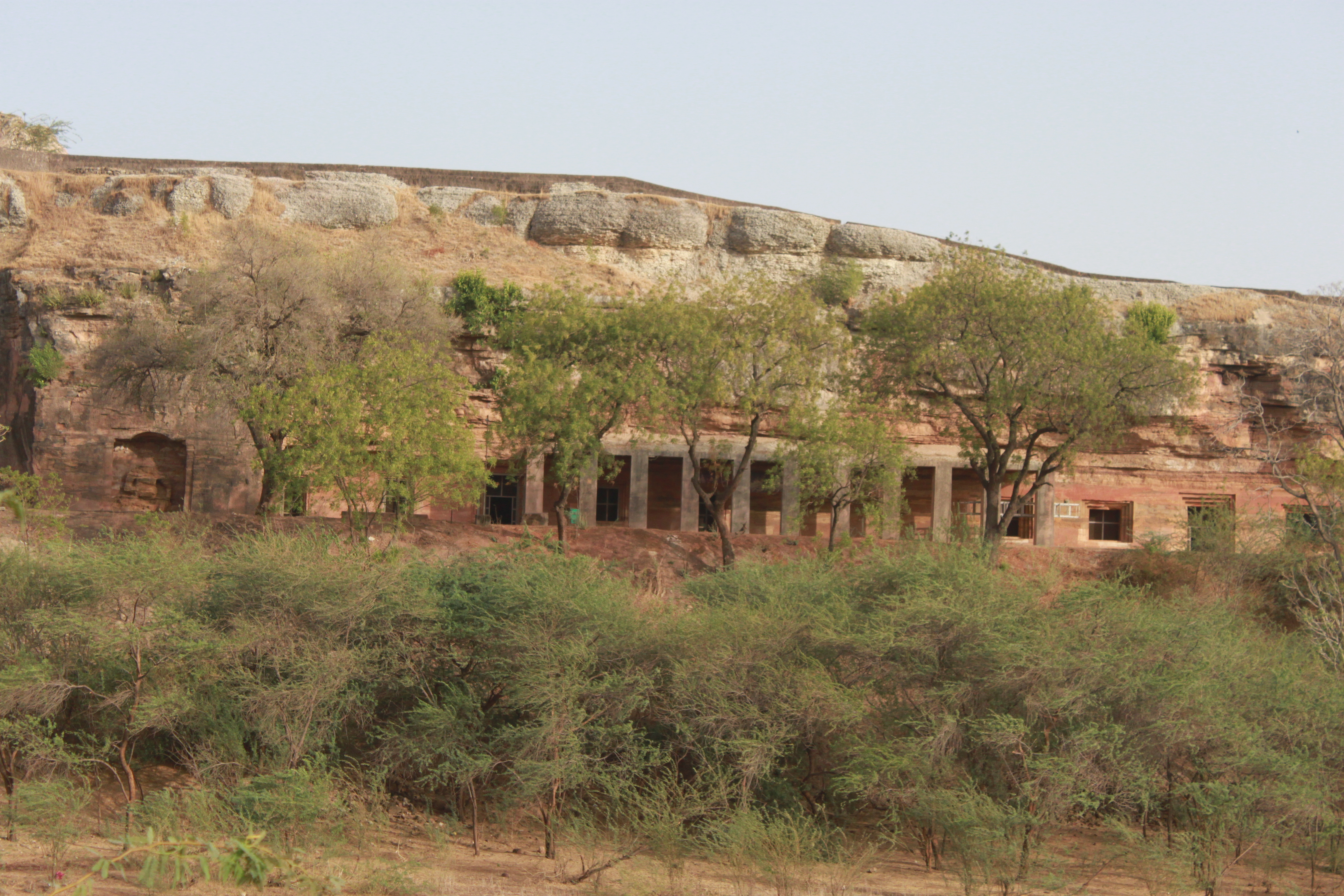
The Bagh Caves showcase impressive Buddhist rock-cut architecture, primarily comprising viharas (monasteries) and chaityas (prayer halls). The complex originally consisted of nine caves, with five remaining well-preserved today. Cave 4, known as Rang Mahal (Palace of Colors), is particularly renowned for its scale and artistic detail, featuring 28 pillars.
The caves were carved from perpendicular sandstone cliffs, demonstrating remarkable engineering precision. They also integrated acoustically designed pillared halls and an ingenious water management system utilizing the seasonal Baghni stream.
Buddhist Iconography and Murals
The primary deity represented is Buddha, often symbolically through a stupa, as seen in the recessed stupa shrine of Cave 2. Anthropomorphic depictions of Buddha and Bodhisattvas, such as Padmapani, are also prominent. The caves are celebrated for their Gupta period Buddhist art, particularly the frescoes.
These murals include rare narrative sequences of Jataka tales and even secular courtly life, a unique feature in a Buddhist monastic context. The Bodhisattva Padmapani mural is considered a prototype for the more famous Ajanta version. "The Bagh murals offer a unique blend of spiritual narrative and contemporary life, rarely seen in Buddhist art," notes an art historian.
Festivals & Traditions
Monastic Life and Learning
Gupta Era Artistic Legacy
Visiting the Temple
Planning Your Journey
A half-day visit, approximately 4 hours including travel, is recommended to fully appreciate the five preserved caves and their artistic treasures. Consider combining your visit with nearby historical sites like Maheshwar Fort & temples for a richer cultural experience.
Pro-Tip: Protect the Art
Photography restrictions are likely in place to protect the fragile murals from light damage. Always inquire about rules upon arrival and respect conservation guidelines to preserve these invaluable historical artworks for future generations.
Conservation and Accessibility
Visitors should be aware of the ongoing efforts to maintain the site's integrity. The unique integration of art, architecture, and natural landscape makes Bagh Caves a profound heritage experience.
Sacred Stories
Jataka Tales and Buddhist Narratives
The walls of the Bagh Caves are adorned with intricate murals and sculptural fragments depicting various Jataka tales, which recount the previous births of the Buddha. These stories served as vital moral and ethical teachings for the monastic community and lay devotees. The detailed narrative sequences provide a visual encyclopedia of Buddhist lore.
Notable narrative scenes include the Buddha's miracle at Kapilavastu and the horse procession of the Lichhavis at Vaishali. These depictions highlight key moments in Buddhist mythology and history, making the caves a significant site for understanding early Buddhist narrative art.
The Legend of Dataka and Kalyana Vihara
According to local tradition, the Bagh Caves were initially established by a Buddhist monk named Dataka. The site flourished as 'Kalyana Vihara,' a center of Buddhist learning and spiritual practice, supported by royal patronage. This origin story underscores the deep spiritual roots of the complex.
The transformation of Kalyana Vihara into 'Bagh' after its abandonment is a poignant reminder of the ebb and flow of religious traditions. "The name 'Bagh' itself tells a story of abandonment and nature reclaiming sacred spaces," reflects a local guide. This shift from a spiritual haven to a wild sanctuary adds another layer to its rich history.
Definition: Vihara
A vihara is a Buddhist monastery, typically comprising residential cells for monks, a central courtyard, and often a shrine. The Bagh Caves are primarily viharas.
Restoration and Conservation Efforts
Related temples: Ajanta Caves | Aranya Devi Temple, Arrah
🗺 How to Reach
Hover a card to animate the journey on the map
Route to Kukshi
Common Questions
Where is Bagh Caves: Ancient Buddhist Art in Madhya Pradesh located?
Bagh Caves: Ancient Buddhist Art in Madhya Pradesh is documented at Dhar, Madhya Pradesh.
Which deity is associated with Bagh Caves: Ancient Buddhist Art in Madhya Pradesh?
Bagh Caves: Ancient Buddhist Art in Madhya Pradesh is associated with Buddha.
Related Temples

A Living Covenant