
A complete pilgrim record drawn from the existing published article data.
These caves, particularly renowned for their exquisite frescoes, offer a rare glimpse into the spiritual and cultural life of the Gupta period.
History & Foundation
Origins and Patronage
The Bagh Caves were established between the 5th and 6th centuries CE, with evidence pointing to a Buddhist monk named Dataka as their founder. Maharaja Subandhu of Mahishmati (modern Maheshwar) provided significant patronage, as documented by a copper plate inscription from 416–417 CE. This inscription refers to the site as 'Kalyana Vihara', confirming its early Buddhist monastic function.
The ruling dynasty of Maharaja Subandhu is not explicitly named, though it likely falls within the post-Satavahana or early Kalachuri periods. These caves represent a crucial phase of Buddhist expansion and artistic development in Central India, contemporary with the famous Ajanta Caves.
Decline and Rediscovery
By the 10th century CE, the Bagh Caves were largely abandoned, coinciding with the decline of Buddhism in the region. Over time, tigers inhabited the deserted caves, giving the site its modern name 'Bagh', meaning tiger.
The Archaeological Survey of India (ASI) later undertook extensive restoration efforts, spanning over 17 years. This monumental work brought these significant historical and artistic treasures back into public awareness and ensured their preservation for future generations.
Architecture & Deity
Rock-Cut Design
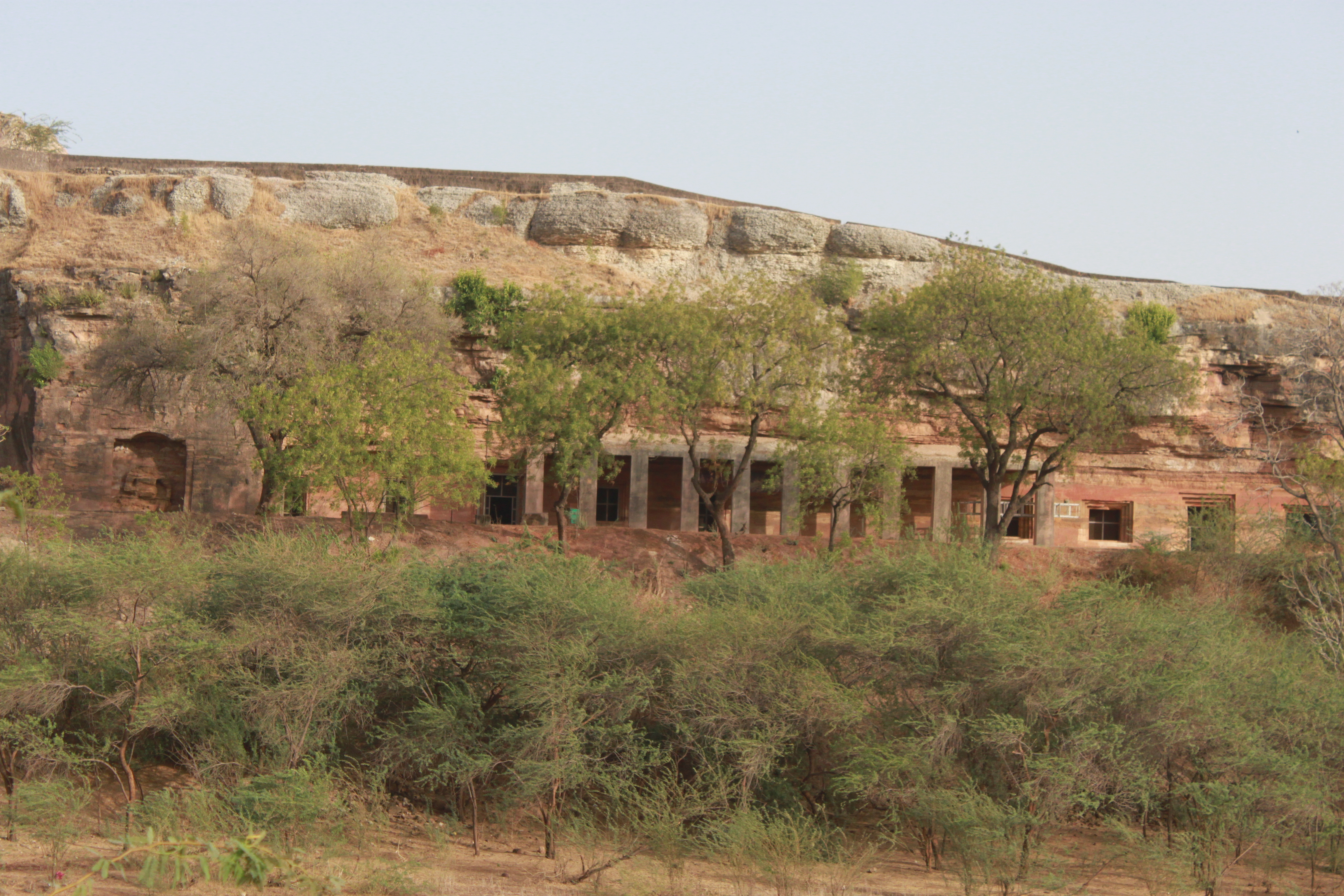
The Bagh Caves exemplify the sophisticated Buddhist rock-cut cave architecture of the Gupta period. Carved into a perpendicular sandstone cliff face, the complex originally comprised nine caves, with five surviving today. These include viharas (monasteries) and chaityas (prayer halls), featuring elements like pillared porticos and lecture halls.
Cave 2, for instance, boasts a six-pillared portico, while Cave 4, known as 'Rang Mahal', is particularly notable for its scale and artistic preservation. The precision of the excavation and the structural elements, such as the 28 pillars in Cave 4, highlight advanced engineering skills.
Artistic Grandeur
The dominant art style is characteristic of the Gupta period, renowned for its elegance and refinement. Sculptural highlights include carved pillars with spiral fluting and elaborate doorways. The primary deity, Buddha, is often represented by a stupa enshrined in a recessed cell, as seen in Cave 2. This aniconic representation emphasizes early Buddhist devotional practices.
Implied seated and standing Buddha images would have adorned the viharas. Secondary deities like Bodhisattvas, including the iconic Padmapani, and Jataka figures are also prevalent, particularly in the extensive mural paintings. "Bagh's art provides a crucial link between early Buddhist rock-cut traditions and the zenith of Gupta artistic expression."
Festivals & Traditions
Spiritual Significance
Visiting the Temple
Planning Your Visit
The Bagh Caves are located near Dhar in Madhya Pradesh, managed by the Archaeological Survey of India (ASI). The nearest airport is Devi Ahilyabai Holkar Airport in Indore (153 km), and Dhar Railway Station (94 km) is the closest rail link. The best time to visit is from October to March, offering cool, dry weather ideal for exploring the caves and protecting the fragile murals from monsoon damage.
A half-day visit, including travel from nearby Mandu, is generally sufficient to appreciate the site's grandeur. While no specific dress code is mentioned, respectful attire is always advisable at religious and historical sites. Photography restrictions may apply, especially for the delicate frescoes, to ensure their long-term preservation.
Conservation and Importance
The Bagh Caves are a fragile site with murals actively conserved by the ASI. Ongoing archaeological studies and conservation efforts highlight their importance as benchmarks of classical Indian painting. The site is a unique surviving group of 5th–6th century Buddhist cave viharas in Central India with extensive mural remains.
Visitors contribute to the preservation of this invaluable heritage. The frescoes are widely studied, with some specimens curated in the Gwalior Archaeological Museum and an on-site museum. Kalyana Vihara: The original name for the Bagh Caves, meaning 'Auspicious Monastery'.
Explore Ajanta Caves for a comparative experience. Discover Sanchi Stupa for more Buddhist heritage.Sacred Stories
Mural Narratives
The Bagh Caves are most celebrated for their exquisite frescoes, considered among the earliest and most significant repositories of Gupta-era mural painting in India. These murals depict a rich tapestry of Buddhist narratives and daily life. Notable scenes include a prototype of the Bodhisattva Padmapani, which predates and resembles the famous Ajanta version.
Other significant depictions include Buddha's miracle at Kapilavastu, a vibrant Lichhavi horse procession, and the intriguing narrative of Princess Malini of Benares. 21 specimens from Cave 4 were removed for preservation, underscoring their fragility and importance.
The Jataka Connection
Many murals illustrate Jataka scenes, which are pre-Buddha birth narratives forming part of the Pali Canon. These tales convey moral lessons and illustrate the Buddha's previous lives, enriching the spiritual experience of the monastic complex. The rare narrative sequence of female musicians with captions is particularly unique.
The artistic quality and narrative breadth of Bagh's frescoes, especially in Cave 4 ('Rang Mahal'), make them unparalleled among contemporaneous sites in Central India. They provide invaluable insights into the iconographic and artistic developments of the period. "The frescoes of Bagh are a visual encyclopedia of Gupta Buddhist thought and artistic mastery."
Restoration & Conservation Efforts
🗺 How to Reach
Hover a card to animate the journey on the map
Route to Kukshi
Common Questions
Where is Bagh Cave 6: A Gupta Era Buddhist Marvel located?
Bagh Cave 6: A Gupta Era Buddhist Marvel is documented at Bagh, Madhya Pradesh.
Which deity is associated with Bagh Cave 6: A Gupta Era Buddhist Marvel?
Bagh Cave 6: A Gupta Era Buddhist Marvel is associated with Buddha.
Related Temples


A Living Covenant