A complete pilgrim record drawn from the existing published article data.
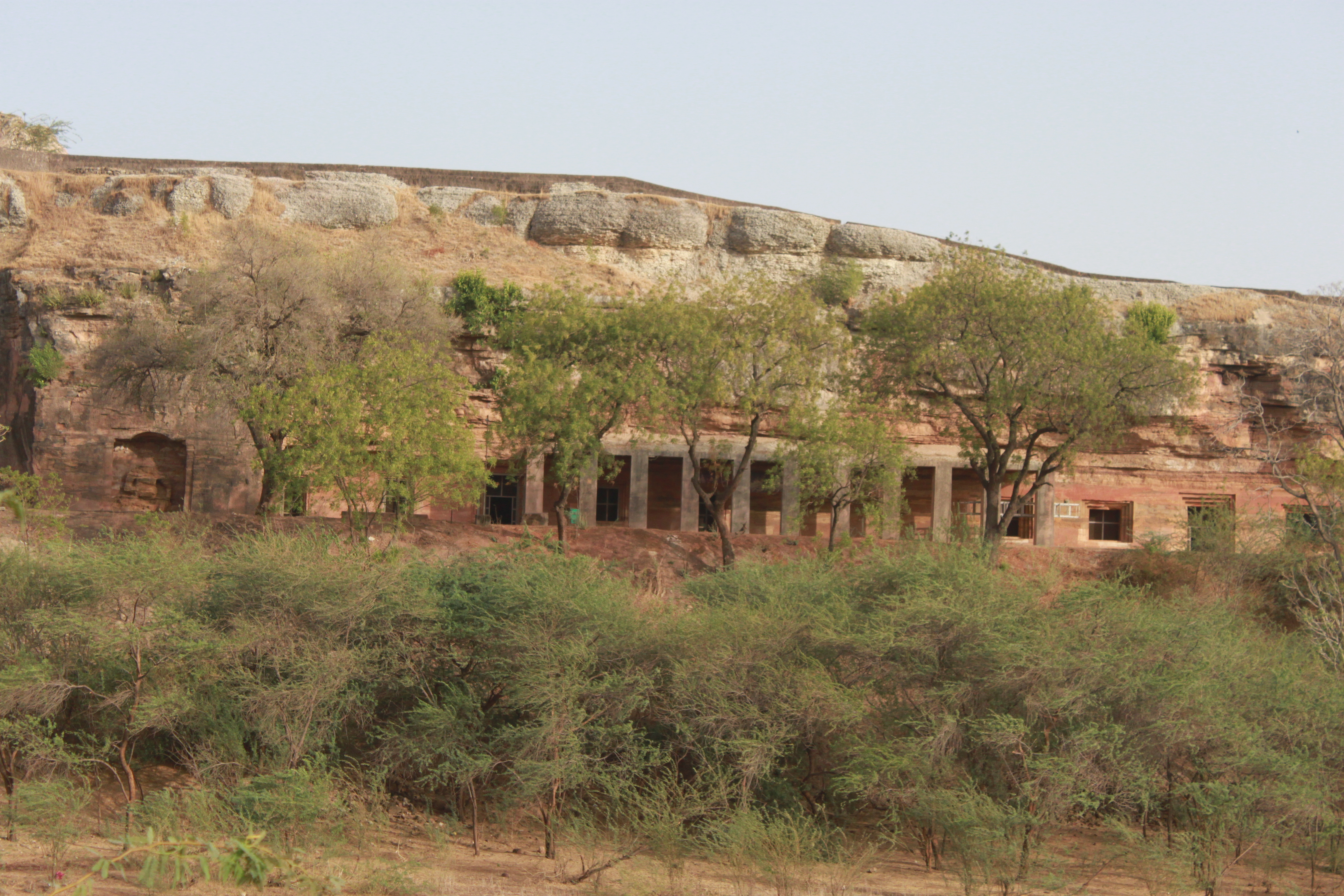
Bagh Cave 4, famously known as the "Rang Mahal" (Palace of Colors), is a magnificent rock-cut Buddhist vihara nestled in the Vindhya Range of Madhya Pradesh. This ancient site offers a rare glimpse into Gupta-era art and architecture, showcasing some of India's finest mural paintings.
As part of the larger Bagh Caves complex, Cave 4 stands out for its scale and the exceptional preservation of its polychrome decorations, making it a crucial archaeological and spiritual destination.
History & Foundation

Origins of Kalyana Vihara
The Bagh Caves complex, including Cave 4, was established by the Buddhist monk Dataka during the 5th-6th century CE. Its early history is illuminated by a crucial copper plate inscription from 416–417 CE.
This inscription, issued by Maharaja Subandhu of Mahishmati, refers to the site as 'Kalyana Vihara' and records a royal grant for its ongoing maintenance. This endowment highlights the significant patronage received by the monastic community during the Gupta period.
Key Historical Milestones
- 5th-6th Century CE: Construction of Bagh Caves, including Cave 4.
- 416–417 CE: Maharaja Subandhu's copper plate inscription grants land for 'Kalyana Vihara'.
- 10th Century CE: Caves abandoned following the decline of Buddhism in the region.
- Post-10th Century: Caves become known as 'Bagh' (Tiger) due to tiger habitation.
- Early 20th Century: Archaeological documentation and initial conservation efforts begin.
- Past 17 Years: Archaeological Survey of India (ASI) undertakes extensive restoration.
Key Takeaway: The Bagh Caves represent a vital link in the understanding of early medieval Buddhist monasticism and royal patronage in Central India.

"The copper plate inscription of Maharaja Subandhu is an invaluable record, confirming the site's ancient name as Kalyana Vihara and its royal patronage."
Architecture & Deity

Design and Layout of Rang Mahal

The Sacred Presence
Primary Deity: Buddha
The main deity revered at Bagh Cave 4 is the Buddha. While a central stupa would have been present in a chaitya hall (Cave 2 has a recessed stupa chamber), the Buddha is primarily represented through narrative murals and various Bodhisattva forms throughout the complex.
Secondary deities include Bodhisattva Padmapani, whose fresco here is considered a stylistic precursor to the famous Ajanta version, and other Bodhisattvas and Jataka figures depicted in the extensive paintings.

Festivals & Traditions
Spiritual Legacy and Modern Significance
Unlike many Hindu temples, Bagh Cave 4, as a historical Buddhist monastic site, does not host major annual festivals in the traditional sense. Its spiritual traditions were centered around monastic life, meditation, and the study of Buddhist scriptures, as depicted in its murals.
The site's primary significance today lies in its cultural and historical heritage. The frescoes, though partially removed for preservation, are widely studied as benchmarks of classical Indian painting. Specimens are displayed in the Gwalior Archaeological Museum and the on-site Bagh Museum, allowing visitors to appreciate their intricate details.
Conservation and Study
The Archaeological Survey of India (ASI) has managed the site for decades, undertaking extensive restoration and conservation efforts for over 17 years. This ongoing work ensures the preservation of this invaluable heritage. The murals themselves are a testament to the Mahayana Buddhist tradition that flourished here.
The site continues to attract scholars, art historians, and spiritual seekers, drawn by its profound artistic and historical narratives. It embodies a rich, albeit silent, tradition of Buddhist devotion and artistic expression.

Visiting the Temple

Planning Your Trip
Bagh Cave 4 is located near the town of Bagh in Madhya Pradesh. The nearest major city is Dhar. For air travel, Devi Ahilyabai Holkar Airport in Indore is 153 km away. The nearest railway station is also in Dhar, approximately 94 km from the caves.
The best season to visit is from October to March, during the cooler winter months, which avoids the intense summer heat and monsoon-related accessibility issues. A half-day visit, approximately 4 hours, is recommended to fully explore Cave 4 and the surrounding complex.
Pro-Tip: Combine your visit to Bagh Caves with nearby historical sites like the Mandu monuments, which are relatively close and offer a rich cultural experience.
Nearby Attractions and Facilities
While in the region, consider visiting the Bhojpur Shiva Temple, Udayagiri Caves, and the architectural wonders of Mandu, including Jahaz Mahal and Rani Roopmati Pavilion. Photography is permitted at Bagh Caves, allowing visitors to capture its beauty.
Sources: ASI Reports, Copper Plate Inscription of Maharaja Subandhu (416–417 CE).

Related temples: Ajanta Caves | Aranya Devi Temple, Arrah
Sacred Stories

Narratives in Polychrome
Bagh Cave 4 is renowned for its frescoes, which are among the finest surviving examples of Gupta-era mural painting in India. These paintings vividly narrate various Buddhist stories and events. Key depictions include the Buddha's miracle at Kapilavastu and numerous Jataka tales.
Notable Mural Depictions
- Bodhisattva Padmapani: A stylistic prototype for the Ajanta version.
- Horse Procession of the Lichhavis: A rare depiction of this event at Vaishali in a Central Indian context.
- Princess Malini of Benares: Another unique narrative scene.
- Female Musicians: Captioned narratives accompanying musical performances.
"The Bagh murals offer an unparalleled window into the artistic and spiritual life of the Gupta age, with their vibrant colors and intricate storytelling."

Scholarly Studies
🗺 How to Reach
Hover a card to animate the journey on the map
Route to Kukshi
Common Questions
Where is Bagh Cave 4: The Rang Mahal of Madhya Pradesh located?
Bagh Cave 4: The Rang Mahal of Madhya Pradesh is documented at Bagh, Madhya Pradesh.
Which deity is associated with Bagh Cave 4: The Rang Mahal of Madhya Pradesh?
Bagh Cave 4: The Rang Mahal of Madhya Pradesh is associated with Buddha.
Related Temples

A Living Covenant