
A complete pilgrim record drawn from the existing published article data.
Badrinath is a sacred town nestled in the Chamoli district of Uttarakhand, India. It stands as a pivotal Hindu holy place, forming one of the four revered sites in India's Char Dham pilgrimage.
This ancient temple, dedicated to Lord Badrinarayan, is also an integral part of the Chota Char Dham circuit, drawing countless devotees to its serene Himalayan abode.

History & Foundation
Ancient Origins and Resilience
The history of Badrinath Temple is marked by both deep reverence and repeated challenges. For centuries, pilgrims undertook arduous journeys, walking hundreds of miles to reach this sacred destination.
The temple has faced numerous destructions throughout its existence, primarily due to natural calamities like earthquakes and avalanches, yet it has always been rebuilt, symbolizing its enduring spiritual importance.

Growth and Enduring Popularity
Even as late as the First World War, the town of Badrinath comprised only about 20 huts for temple staff. However, the site consistently attracted thousands annually, with numbers soaring to 50,000 during its duodecennial festivals, held every twelve years.
In recent decades, Badrinath's popularity has surged dramatically. By the 2006 season, an estimated 600,000 pilgrims visited, a significant increase from 90,676 in 1961. This growth underscores its continued status as a vital pilgrimage site for Vaishnavites and a gateway for mountaineering expeditions.

Architecture & Deity
Architectural Style and Temple Structure
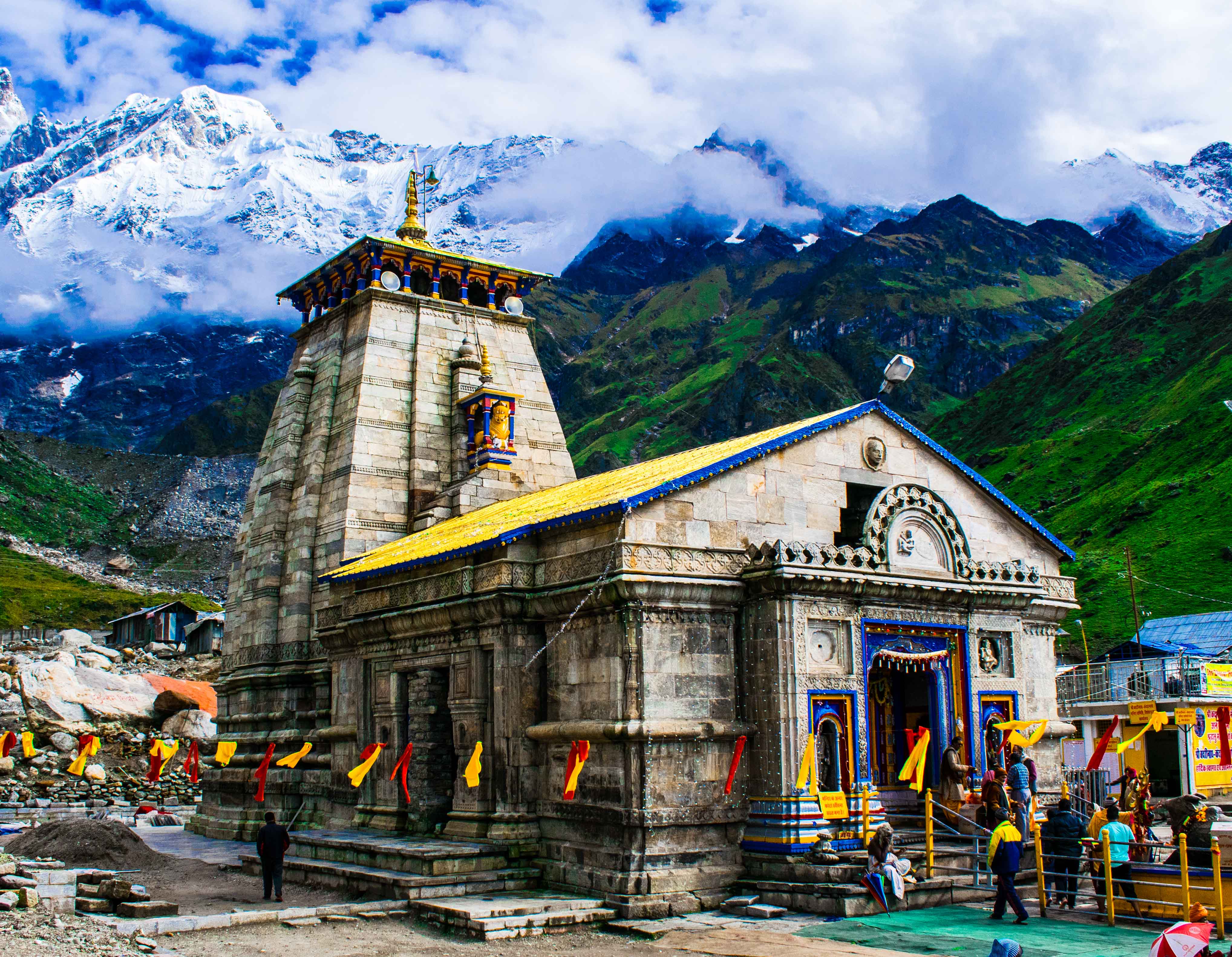
The Badrinath Temple exemplifies the Nagar style of architecture, characteristic of many North Indian temples. While specific architectural details are not extensively documented in the provided data, its repeated reconstruction suggests a traditional design adapted to the harsh Himalayan environment.
The temple stands prominently on the banks of the Alaknanda River, its design reflecting centuries of devotional craftsmanship and resilience against natural forces.

Lord Badrinarayan: The Presiding Deity
The primary deity enshrined at Badrinath is Lord Badrinarayan, a form of Vishnu. The temple is a sacred pilgrimage site for Vaishnavites, who worship Vishnu.
According to the Bhagavata Purana, Vishnu incarnated as the sages Nara and Narayana, performing great penance at Badrikashram for the welfare of all living entities. This divine presence makes Badrinath exceptionally holy.

Festivals & Traditions
The Pilgrimage Season
While specific festival details are not provided in the source data, the primary tradition associated with Badrinath is the annual pilgrimage season. Thousands of devotees undertake the arduous journey to Badrinath, typically when the temple gates open after the harsh winter months.
This pilgrimage is a deeply spiritual undertaking, central to the Hindu faith, especially for Vaishnavites. The sheer number of pilgrims, reaching hundreds of thousands annually, underscores the enduring power of this tradition.

Duodecennial Celebrations
Historically, Badrinath has been a site for significant duodecennial festivals, occurring every twelve years. These grand celebrations attracted substantial crowds, sometimes up to 50,000 pilgrims.
These large-scale events highlight the temple's role not just as a daily place of worship but as a focal point for major cyclical religious gatherings, reinforcing its status as a paramount spiritual center in the Himalayas.

Visiting the Temple
Location and Accessibility
Badrinath is situated at an average elevation of 3,100 meters (10,170 feet) in the Garhwal Himalayas. It lies between the Nar and Narayana mountain ranges, approximately 9 km east of the majestic Nilkantha peak.
The town is strategically located on the banks of the Alaknanda River, making it a picturesque yet challenging destination to reach. Despite its remote location, infrastructure has improved significantly to accommodate the increasing number of visitors.

Pilgrimage and Mountaineering Gateway
Badrinath serves as a primary destination for the Char Dham and Chota Char Dham pilgrimages, attracting devotees seeking spiritual solace and blessings from Lord Badrinarayan. Its profound significance makes it a must-visit for many Hindus.
Beyond its religious importance, Badrinath is also a gateway for various mountaineering expeditions heading towards peaks like Nilkantha. Visitors should be prepared for high-altitude conditions and plan their travel accordingly.
Pro Tip: Plan Ahead for Altitude
Due to Badrinath's high elevation, visitors are advised to acclimatize properly. Carry warm clothing, essential medications, and stay hydrated. Check weather conditions and temple opening dates before your journey.
"Every stone here carries the prayers of generations who came before."
Related temples: Badhangarhi Temple | Bagnath Temple
Sacred Stories
Divine Penance and Cosmic Connections
The Badrinath area, known as Badari or Badarikaashram, is steeped in Hindu scriptures. "There in Badrikashram, the supreme being (Vishnu), in his incarnation as the sages Nara and Narayana, had been undergoing great penance since time immemorial for the welfare of all living entities" (Bhagavata Purana 3.4.22).
Another legend recounts that when Ganga descended to Earth, her immense force was split into holy channels, with the Alaknanda River, flowing by Badrinath, being one of them. The area was also said to be full of Badari (wild berry) trees, under which Vishnu meditated, with Lakshmi taking the form of a Badari tree to provide shade.

Mahabharata and Jain Significance
The mountains surrounding Badrinath feature prominently in the Mahabharata. The Pandavas are said to have passed through Badrinath and the nearby town of Mana on their ascent to Svarga (heaven), a journey known as Swargarohini. Mana also houses a cave where Vyasa is believed to have written the Mahabharata.
Badrinath holds significance in Jainism as well. The Himalayas, referred to as Ashtapad, include Badrinath. Many Jain Munis are believed to have attained Moksha here through penance. Rishabhdev's parents, Nabhirai and Marudevi, also performed severe austerities here, with Nabhirai's footprint still revered on Neelkanth mountain.

Definition: Badrikashram
An ancient name for the Badrinath region, signifying a hermitage or abode of sages, particularly associated with the penance of Nara and Narayana.
🗺 How to Reach
Hover a card to animate the journey on the map
Route to Badrinath
Related Temples

A Living Covenant