



A complete pilgrim record drawn from the existing published article data.
Tracing the Royal Lineage: History of Stok Monastery
Stok Monastery's history is deeply intertwined with the royal Namgyal dynasty of Ladakh. It was founded in the 14th century by Lama Lhawang Lotus. However, its prominence grew significantly after the Namgyal royal family relocated their residence to Stok Palace in the early 19th century, following their loss of power in Leh. The monastery then became closely associated with the royal family, serving as their private monastery and a repository for royal relics and religious artifacts. This connection cemented its status as a significant historical and religious site.
Founding and Early Years
The monastery was established by Lama Lhawang Lotus in the 14th century, laying the foundation for its spiritual development in the region.
Royal Connection
Following the shift of the Namgyal dynasty's residence to Stok Palace, the monastery became an integral part of the royal estate, housing many of their sacred possessions and serving their spiritual needs.
Architectural Marvels and Sacred Art of Stok
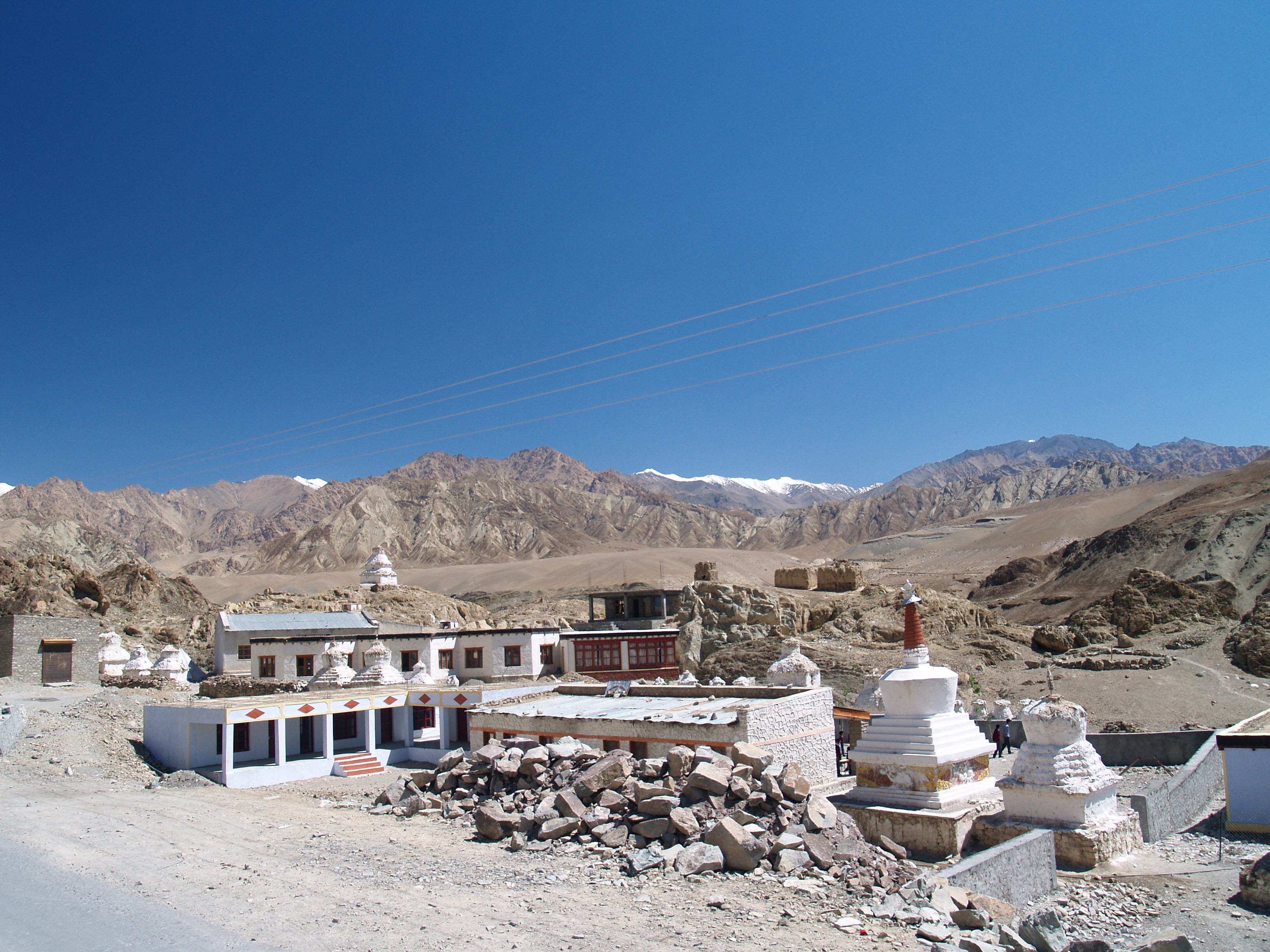
Stok Monastery exemplifies traditional Ladakhi monastic architecture, characterized by its white-washed walls, red roofs, and intricate wooden carvings. The complex is built into the hillside, offering a commanding presence over the valley. Inside, the main prayer hall, or Dukhang, is adorned with vibrant murals depicting Buddhist deities, mandalas, and scenes from the life of Buddha. Numerous statues, including a large seated Buddha, are housed within the monastery, serving as focal points for worship and meditation. The art and architecture reflect centuries of Ladakhi craftsmanship and spiritual devotion.
Ladakhi Architectural Style
The monastery showcases classic Ladakhi architectural elements, featuring multi-storied structures with prayer flags fluttering from the rooftops, typical of Himalayan Buddhist monasteries.
Murals and Statues
The interior walls are covered with ancient thangkas and frescoes, while various chapels host revered statues of Buddha and other Buddhist figures, central to the monastery's sacred art collection.
The Spiritual Essence: Buddha and Buddhist Practices at Stok
The spiritual life at Stok Monastery revolves around the teachings and iconography of Buddha. As a monastery of the Gelugpa tradition, also known as the Yellow Hat sect of Tibetan Buddhism, it adheres to specific monastic disciplines and philosophical studies. Daily rituals, prayers, and meditation are central to the monks' lives. The monastery is particularly famous for the annual Stok Guru Tsechu festival, a masked dance festival held before the annual Hemis festival. During this event, monks perform sacred masked dances, embodying various deities and spirits, believed to bring blessings and ward off evil.
Centrality of Buddha
Buddha is the main deity of worship, with numerous representations found throughout the monastery, guiding the spiritual path of its resident monks and devotees.
Gelugpa Tradition
Stok Monastery follows the Gelugpa school of Tibetan Buddhism, emphasizing rigorous academic study and strict monastic discipline.
Stok Guru Tsechu Festival
This significant annual festival features sacred mask dances performed by lamas, attracting pilgrims and tourists to witness the vibrant cultural and religious spectacle.
Experiencing Stok: A Visitor's Guide
Visiting Stok Monastery offers a profound cultural experience. The monastery is generally open from 6:00 AM to 1:00 PM and 2:00 PM to 6:00 PM, with an approximate entry fee of INR 50-100. The best time to visit is from May to September, when the weather is pleasant and roads are accessible. Visitors should wear modest attire, covering shoulders and knees, and remove footwear before entering prayer halls. The monastery is approximately 10-15 km from Kushok Bakula Rimpochee Airport (Leh Airport) and about 15-20 km from Leh Bus Stand, making it easily reachable by taxi or local transport. Ample parking is usually available near the premises.
Accessibility and Timings
Stok Monastery is easily accessible from Leh by road, with a drive time of approximately 30-45 minutes. It operates with specific visiting hours, allowing ample time for exploration.
Best Time to Visit
The period from May to September is ideal for visiting, offering favorable weather conditions and full accessibility to the region.
Visitor Etiquette
Adhering to a modest dress code and removing shoes in designated areas is expected, respecting the sacred nature of the monastery.
| Deity | Buddha |
|---|---|
| Form | Buddha is typically depicted in human form, often seated in meditation (e.g., lotus position) or standing, with various mudras (hand gestures) symbolizing different aspects of his teachings or life events. Key iconographic features include the ushnisha (cranial protuberance), urna (dot between eyebrows), and elongated earlobes. |
| Consort | None |
| Sampradaya | Buddhist |
| Significance | Buddha, Siddhartha Gautama, is the founder of Buddhism, who attained enlightenment (Nirvana) and taught the path to liberation from suffering. His teachings, centered on the Four Noble Truths and the Eightfold Path, guide practitioners towards wisdom, compassion, and ultimate freedom. |
No Specific Mythological Story Known
Information regarding a specific mythological story or legend directly associated with Stok Monastery is not available in the provided facts. Many monasteries in Ladakh hold rich histories and local legends, but details for Stok Monastery are not specified here.
Do not dwell in the past, do not dream of the future, concentrate the mind on the present moment.
The mind is everything. What you think you become.
Related temples: Ajanta Caves | Articles on Early and Later Western Indian Caves [Part 1
Stok Monastery: A Beacon of Ladakhi Buddhism
Stok Monastery, a prominent Buddhist monastery, is nestled in the picturesque region of Ladakh. Situated approximately 15-20 km from Leh, it serves as a vibrant spiritual and cultural hub within the Buddhist tradition. The monastery is renowned for its significant collection of Buddhist art and scriptures, contributing to the rich tapestry of Ladakhi heritage. Its serene location offers panoramic views of the surrounding Himalayan landscape, making it a focal point for both devotees and visitors seeking spiritual solace and cultural immersion.
Location and Significance
Located in Stok village, Ladakh, the monastery holds a vital position in the region's Buddhist faith. It is easily accessible from Leh, the capital of Ladakh, via local buses and shared taxis.
Cultural and Spiritual Hub
As a living monastery, Stok continues to be a center for Buddhist teachings and practices. It plays a crucial role in preserving Ladakhi culture and spirituality through its daily rituals and annual events.
Restoration and Conservation Efforts
Stok Monastery, like many ancient structures nestled in the challenging high-altitude environment of Ladakh, constantly faces the rigors of time, extreme weather, and seismic activity. Its traditional construction, primarily utilizing mud, timber, and stone, while resilient, is susceptible to gradual decay, requiring continuous attention to preserve its integrity. Over centuries, these materials can erode, crack, or become compromised, threatening the invaluable artistic and religious heritage housed within its walls. Conservation efforts are crucial to counteract these natural processes, ensuring that the monastery's unique architectural style and spiritual essence endure. These initiatives often involve a collaborative approach, drawing upon the expertise of local monastic communities, traditional builders, and sometimes international heritage organizations, all committed to safeguarding this significant cultural landmark. Modern conservation projects at Stok Monastery prioritize methods that respect its historical authenticity and traditional building techniques. These efforts often include stabilizing foundations, meticulously repairing or consolidating ancient frescoes and murals, and replacing deteriorated wooden elements with locally sourced, appropriate materials. A significant challenge lies in balancing the need for structural reinforcement with the preservation of the monastery's original aesthetic and spiritual atmosphere. Specialized teams work to document existing conditions, conduct archaeological surveys, and train local artisans in traditional restoration practices, ensuring that interventions are both effective and minimally intrusive. This comprehensive approach ensures that Stok remains not only a structurally sound edifice but also a vibrant, living center of Buddhist practice and cultural heritage for generations to come.🗺 How to Reach
Hover a card to animate the journey on the map
Route to Stok
Related Temples


A Living Covenant