A complete pilgrim record drawn from the existing published article data.
Historical Foundation
Founding & Early Patronage
Definition: Guge Kingdom
The Guge Kingdom was an ancient kingdom in Western Tibet that existed from the 10th century to the 17th century. It played a crucial role in the second diffusion of Buddhism in Tibet, fostering a golden age of art and culture under its lama-kings, like Yeshe-Ö.
The Guge Legacy and Later Developments
Architecture & Craftsmanship
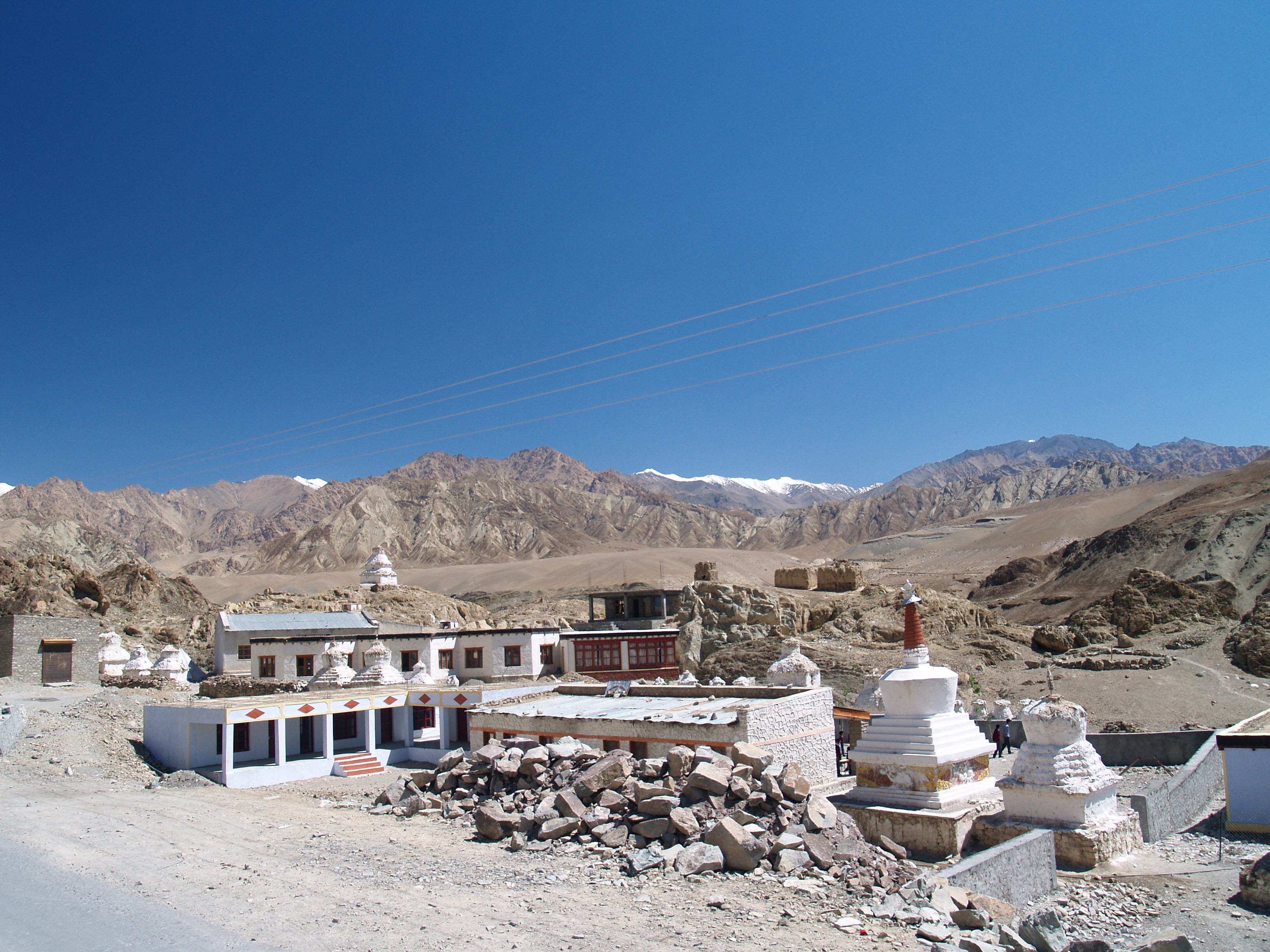
 Alchi Monastery, showing earthen walls and wooden details." width="800" height="500">
The Sumtseg, or three-storied temple, is one of Alchi's most iconic structures, showcasing earthen construction.
Architectural Elements and Structural Ingenuity
The Sumtseg's ground floor sanctum measures 5.4 m × 5.8 m, with niches up to 4 m high, housing towering sculptures.
Artistic Synthesis: Kashmiri & Tibetan
 Alchi Monastery." width="800" height="500">
Detail of elaborate wood carvings, showcasing makara motifs and auspicious symbols, a hallmark of Kashmiri craftsmanship.
The Presiding Deity
Vairochana: The Central Buddha
Bodhisattvas & Mandalas
Deity Profile: Vairochana
- Role: Central Buddha, often representing the Dharmakaya (body of truth).
- Iconography: Typically depicted in white, often in a teaching gesture (Dharmachakra Mudra).
- Significance: In Alchi, he is the central figure in the Dukhang mandalas, symbolizing the purity and omnipresence of enlightened wisdom.
- Associated with: Five Dhyani Buddhas, Wisdom, and the center of the mandala.
Definition: Trikaya
In Mahayana and Vajrayana Buddhism, the Trikaya doctrine describes three bodies or forms of the Buddha: Dharmakaya (truth body), Sambhogakaya (enjoyment body), and Nirmanakaya (emanation body). At Alchi, the monumental triad of Maitreya, Avalokiteshvara, and Manjushri in the Sumtseg is interpreted as representing these three aspects.
Festivals & Living Traditions
Annual Celebrations: Losar and Saka Dawa
Definition: Cham Dance
Cham is a vibrant and energetic ritual dance performed by Buddhist monks in monasteries across the Himalayas, typically during festivals. Dancers wear elaborate masks and costumes, representing deities, demons, and various beings, enacting morality plays and narratives from Buddhist scriptures.
Daily Observances and Ritual Arts

Monks from Likir Monastery continue ancient ritual traditions within the sacred halls of Alchi.
Plan Your Visit
Getting There & When to Visit
Visitor Guidelines & Nearby Attractions
Pro-Tip for Visitors
Hire a local guide. Their insights into the complex iconography and historical narratives of Alchi's murals and sculptures will greatly enhance your understanding and appreciation of this unique site.


Related temples: Ajanta Caves | Articles on Early and Later Western Indian Caves [Part 1
Historical Timeline of Alchi Monastery
"Alchi Monastery stands as a unique cultural crossroads, where the spiritual fervor of Tibet met the unparalleled artistic refinement of Kashmir, yielding a legacy of visual splendor unlike any other in the Himalayas."
Sacred Stories & Mythology
The Legend of Rinchen Zangpo
Rinchen Zangpo and the 108 Monasteries
King Yeshe-Ö of Guge, keen to re-establish the Dharma, sent twenty-one young scholars to study in Kashmir and India. Among them was Rinchen Zangpo, who, overcoming immense hardship, became a master translator. Upon his return, it is said that he oversaw the construction of 108 monasteries, a symbolic number signifying completeness and widespread dissemination of the teachings. Alchi is traditionally revered as one of these sacred sites, built with the intention to secure the longevity of the Buddha's teachings in the mountainous regions. The exquisite Kashmiri artwork within Alchi is often attributed to the artists Zangpo brought back with him, whose expertise was crucial in shaping the visual language of Tibetan Buddhism.
Buddhist Revival in the Himalayas
Saints, Poets & Devotees
Rinchen Zangpo: The Great Translator
"The legacy of Rinchen Zangpo is etched into the very fabric of Alchi, embodying the bridge between Indian Buddhist wisdom and its flourishing in the Tibetan cultural sphere."
Jigten Gonpo and the Drigungpa Lineage
Records, Marvels & Heritage
Architectural Uniqueness and Artistic Wonders
Key Takeaway: Alchi's Uniqueness
Alchi Monastery is distinguished by its pre-sectarian Kashmiri-Tibetan art, the reverse-chronological Buddha life narrative, and the unique Sumtseg typology with its monumental triad of Bodhisattvas, making it an unrivaled cultural heritage site.
Alchi's murals are considered the earliest extant Kashmiri-Tibetan artistic synthesis in Himalayan Buddhist architecture.
Conservation Efforts and Global Recognition

One of the six mandalas surrounding Vairochana in the Dukhang, a testament to Alchi's artistic detail.
🗺 How to Reach
Hover a card to animate the journey on the map
Route to Alchi
Common Questions
Where is Alchi Monastery: Ladakh's Ancient Artistic Gem located?
Alchi Monastery: Ladakh's Ancient Artistic Gem is documented at Alchi, Ladakh.
Which deity is associated with Alchi Monastery: Ladakh's Ancient Artistic Gem?
Alchi Monastery: Ladakh's Ancient Artistic Gem is associated with Buddha.
Related Temples


A Living Covenant