A complete pilgrim record drawn from the existing published article data.
Historical Foundation
"Samarth Ramdas's vision for the Maruti temples was not merely religious; it was a strategic move to imbue the Maratha youth with the physical and moral fortitude necessary for swarajya (self-rule) and nation-building."
— Historian's observation on Ramdas's legacy
The Vision of Samarth Ramdas
Chronology of Foundations
Architecture & Craftsmanship

A representative image of the modest, yet sturdy, Maratha regional temple style, often seen in the Maruti temples.
Structural Elements and Materials
What is a Garbhagriha?
The garbhagriha, or 'womb chamber', is the innermost sanctum of a Hindu temple where the idol or icon of the primary deity resides. It is considered the most sacred space, typically accessible only to priests.
Sculptural Art and Iconography
- Virya (Valour): Many idols portray Hanuman in a powerful, heroic stance, symbolizing strength, courage, and readiness for action.
- Bhakta (Devotion): Other forms emphasize his profound devotion to Lord Rama, often depicted with folded hands or a humble posture.
- Bhav Samadhi (Sleeping Posture): The Bhadra Maruti Temple is particularly unique for its depiction of Hanuman in a serene, sleeping posture, a rare iconographic representation.
The Presiding Deity
Lord Hanuman (Maruti)
Primary Deity: Hanuman (Maruti)
Deity Forms Present:
- Maruti: The energetic and powerful form, often depicted ready for action.
- Vir Maruti: The heroic warrior form, symbolizing strength and courage.
- Das Maruti: The servant form, emphasizing humility and devotion to Lord Rama.
- Bhav Samadhi: The rare, serene sleeping posture, found uniquely at Bhadra Maruti Temple.
Associated Epic: Ramayana, where Hanuman plays a pivotal role in the rescue of Sita and Lakshmana.
Spiritual Significance: Symbolizes physical strength, mental discipline, unwavering devotion, and selfless service. Worship is believed to grant courage, protection, and relief from fear.
Iconographic Uniqueness: The Bhadra Maruti Temple is one of only three known temples in India where Hanuman is depicted in Bhav Samadhi (sleeping posture), making it a truly exceptional site.
Forms of Maruti
Secondary Deities and Tradition
Festivals & Living Traditions
Major Annual Celebrations
Several festivals throughout the year draw large crowds, celebrating the might and devotion of Hanuman:
- Hanuman Jayanti: Celebrated on Chaitra Purnima (March–April), this is the most significant festival. It marks the birth of Lord Hanuman and is observed with immense enthusiasm. Special pujas, elaborate decorations, and the recitation of the Hanuman Chalisa are central to the festivities. Community fitness activities, echoing Samarth Ramdas's original intent, are often organized, reinforcing the link between spiritual and physical strength.
- Sharavan Somvar: Mondays in the auspicious Hindu month of Shravan (July–August) are considered particularly sacred for Shiva worship, but in Maharashtra, Tuesdays and Saturdays are often dedicated to Hanuman. However, specific Maruti temples may observe intensified weekly rituals during Shravan, with devotees undertaking fasting and performing special abhishekams.
- Saturday Worship at Bhadra Maruti: Every Saturday, but especially during Shravan, is considered highly auspicious for visiting Bhadra Maruti and other Maruti temples. Devotees believe that worshipping Hanuman on Saturdays invokes his protective grace, grants strength, courage, and relief from fear and anxiety.
These festivals are not just religious observances but also cultural events, fostering community bonding and preserving traditional arts like Kirtan and Bhajan.
Daily Rituals and Offerings
Plan Your Visit
Location and Accessibility
- Nearest City (Bhadra Maruti): Aurangabad (Chhatrapati Sambhaji Nagar)
- Nearest Airport: Chhatrapati Sambhaji Nagar Airport (IXU), ~4 km from Bhadra Maruti Temple.
- Nearest Railway: Aurangabad Railway Station (AWB), ~4 km from Bhadra Maruti Temple.
- Road Network: Well-connected by state and national highways, making road travel a convenient option for touring multiple temples.
Best Time to Visit and Local Etiquette
Visit Rules & Tips:
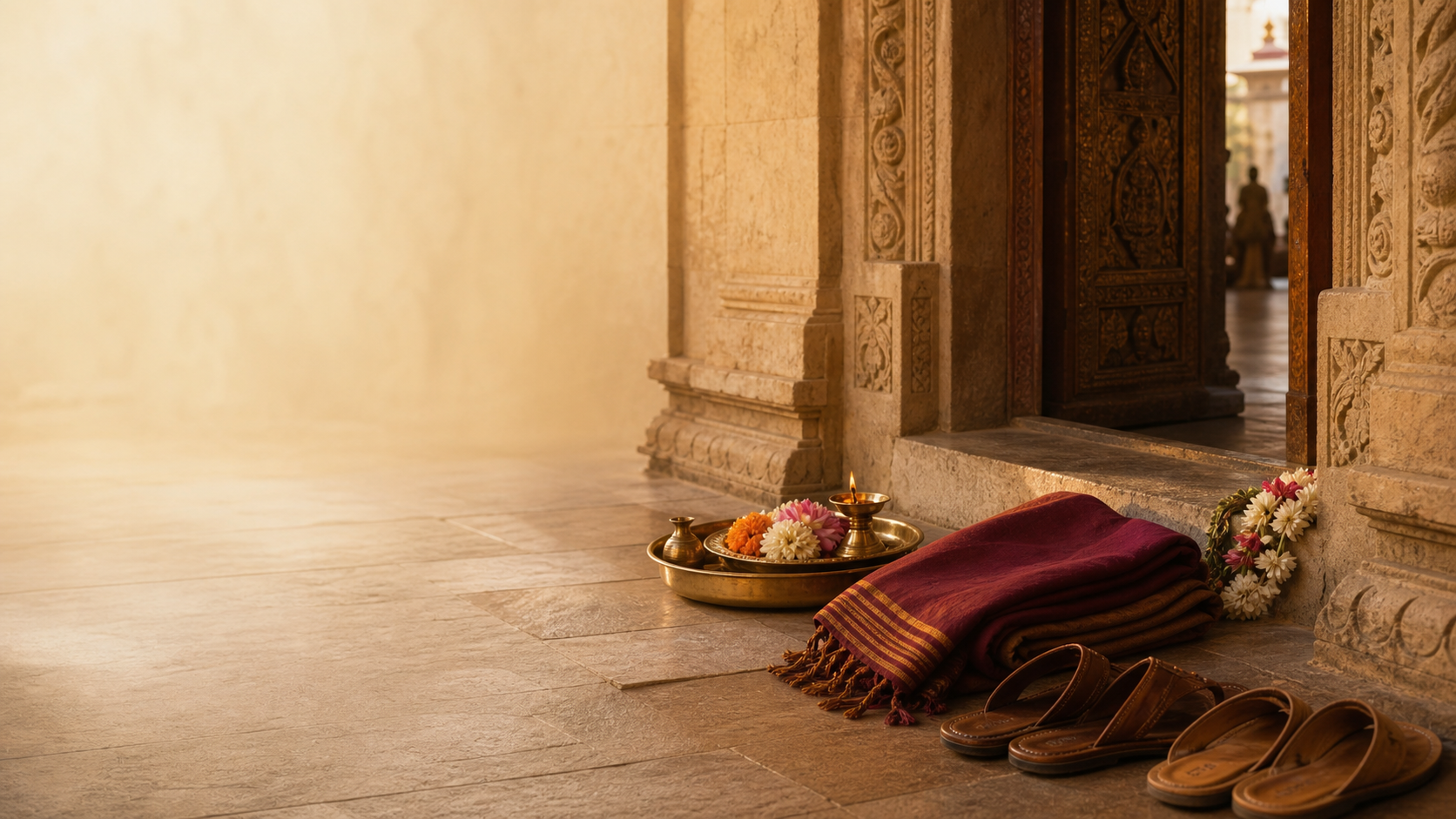
- Modest dress is expected when entering the temple premises.
- Footwear must be removed before entering the sanctum sanctorum (garbhagriha).
- Photography may be restricted inside the garbhagriha; always check local signage or ask temple authorities.
- Allow 1-2 hours per temple for a comprehensive visit. A full circuit of all eleven temples would ideally require 5-7 days.
Nearby Attractions
For visitors to Bhadra Maruti, its proximity to other significant historical and spiritual sites makes it an excellent part of a broader itinerary:
- Ellora Caves (approx. 4 km): A UNESCO World Heritage site renowned for its rock-cut architecture, featuring Hindu, Buddhist, and Jain cave temples.
- Ajanta Caves (approx. 100 km): Another UNESCO World Heritage site, famous for its ancient Buddhist rock-cut caves and murals.
- Grishneshwar Jyotirlinga (approx. 45 km): One of the twelve revered Jyotirlinga shrines dedicated to Lord Shiva.
- Daulatabad Fort (approx. 15 km): A magnificent medieval fortress with impressive defensive architecture.
Combining a visit to Bhadra Maruti with these global heritage sites offers a truly enriching experience of Maharashtra's diverse history and spirituality.
Related temples: Abeyadana Temple | Ajanta Caves
Sacred Stories & Mythology
The Legend of Bhadra Maruti and Bhav Samadhi
King Bhadrasen's Devotion
In ancient times, the region now known as Khuldabad was part of the kingdom of Bhadravati, ruled by King Bhadrasen. The king was an ardent devotee of Lord Rama and a gifted singer, constantly engrossed in chanting Rama's glories. So profound was his devotion and melodious his bhajans that they resonated through the heavens, reaching Lord Hanuman. Moved by King Bhadrasen's unwavering love and devotion, Hanuman appeared before him. To eternally bless the king and his land, Hanuman assumed a serene, reclined, or sleeping posture – the Bhav Samadhi – signifying deep peace and spiritual fulfillment, agreeing to reside there permanently in that form.
Another version of this legend links it to the Ramayana itself:
Hanuman's Rest during Lakshmana's Rescue
During the critical period when Lakshmana was gravely wounded by Indrajit's arrow, Hanuman flew to the Himalayas to fetch the life-saving Sanjeevani herb. En route, he was momentarily waylaid or chose to rest at this spot. Some narratives suggest that Sage Bhadra, residing there, briefly immobilized the mountain Hanuman was carrying, wishing for Hanuman to stay. Upon Hanuman lifting the spell and resuming his journey, he promised to return and reside there in a state of rest, fulfilling the sage's wish and embodying a moment of respite amidst his heroic tasks.
"The Bhav Samadhi posture of Hanuman is a rare theological statement, representing not merely physical rest but a profound state of meditative absorption and spiritual contentment, a blessing for those seeking inner peace."
— A Devotional Insight
Connections to the Ramayana
Saints, Poets & Devotees
Samarth Ramdas: The Visionary Founder
Chhatrapati Shivaji Maharaj: Patron and Disciple
Historical Impact: Samarth Ramdas established the network of 11 Maruti temples in a decade (1644-1654), fundamentally shaping the spiritual and physical ideals of the Maratha movement.
Records, Marvels & Heritage
A Coordinated Network: A Unique Feat
This strategic placement and purposeful founding underscore Samarth Ramdas's genius in harnessing spiritual devotion for broader societal and political objectives.
The Marvel of Bhav Samadhi
Conservation Status and Modern Significance
🗺 How to Reach
Hover a card to animate the journey on the map
Route to Kolhapur
Common Questions
Where is Maruti Temples, Maharashtra: Samarth Ramdas's Legacy located?
Maruti Temples, Maharashtra: Samarth Ramdas's Legacy is documented at Kolhapur, Maharashtra.
Which deity is associated with Maruti Temples, Maharashtra: Samarth Ramdas's Legacy?
Maruti Temples, Maharashtra: Samarth Ramdas's Legacy is associated with Hanuman.
Related Temples


A Living Covenant