



A complete pilgrim record drawn from the existing published article data.
Historical Significance and Origins
The Mahaganpati Temple boasts a rich history, primarily rooted in the Maratha Empire era. Its construction is largely attributed to Madhavrao Peshwa in the late 18th century, marking a significant period of temple patronage. Beyond its initial establishment, the temple benefited from the contributions of various Maratha nobles. The stonework, for instance, was funded by Malharrao Holkar and Mahadji Shinde, demonstrating widespread support for its development. Nana Fadanavis provided annual grants, ensuring its maintenance, while Sardar Kibe of Indore later contributed to subsequent renovations, allowing the temple to evolve over centuries while retaining its historical essence.
Peshwa Era Construction
The temple's structure was built during the late 18th century, with its construction attributed to Madhavrao Peshwa, a prominent figure of the Maratha Empire.
Noble Patronage
Significant contributions came from Maratha nobles; Malharrao Holkar and Mahadji Shinde funded the stonework, and Nana Fadanavis provided annual grants.
Ongoing Support and Renovation
Sardar Kibe of Indore later contributed to the temple's renovations, ensuring its preservation and continued grandeur through different periods.
Architectural Marvels and Design
The Mahaganpati Temple in Ranjangaon showcases the distinctive Maratha architectural style, characterized by its robust construction and traditional aesthetics. Built primarily with a combination of wood and stone, the temple reflects the prevailing building practices of the late 18th century. Its design incorporates elements typical of Maratha temples, often featuring intricate carvings and a spacious layout conducive to worship. The structure, though renovated over time, largely retains its original form, offering a glimpse into the architectural heritage of the region. The temple's modest yet sturdy construction emphasizes functionality and spiritual focus, aligning with its role as a revered pilgrimage site.
Maratha Architectural Style
The temple exemplifies the Maratha architectural style, known for its blend of simplicity and traditional design elements prevalent during the Peshwa era.
Construction Materials
The primary materials used in the temple's construction are wood and stone, reflecting the resources and building techniques available in the late 18th century.
Structural Features
While specific details vary, Maratha temples typically feature a central shrine, a mandapa (hall), and a surrounding pradakshina patha (circumambulatory passage), designed for devotional practices.
Planning Your Visit to Ranjangaon
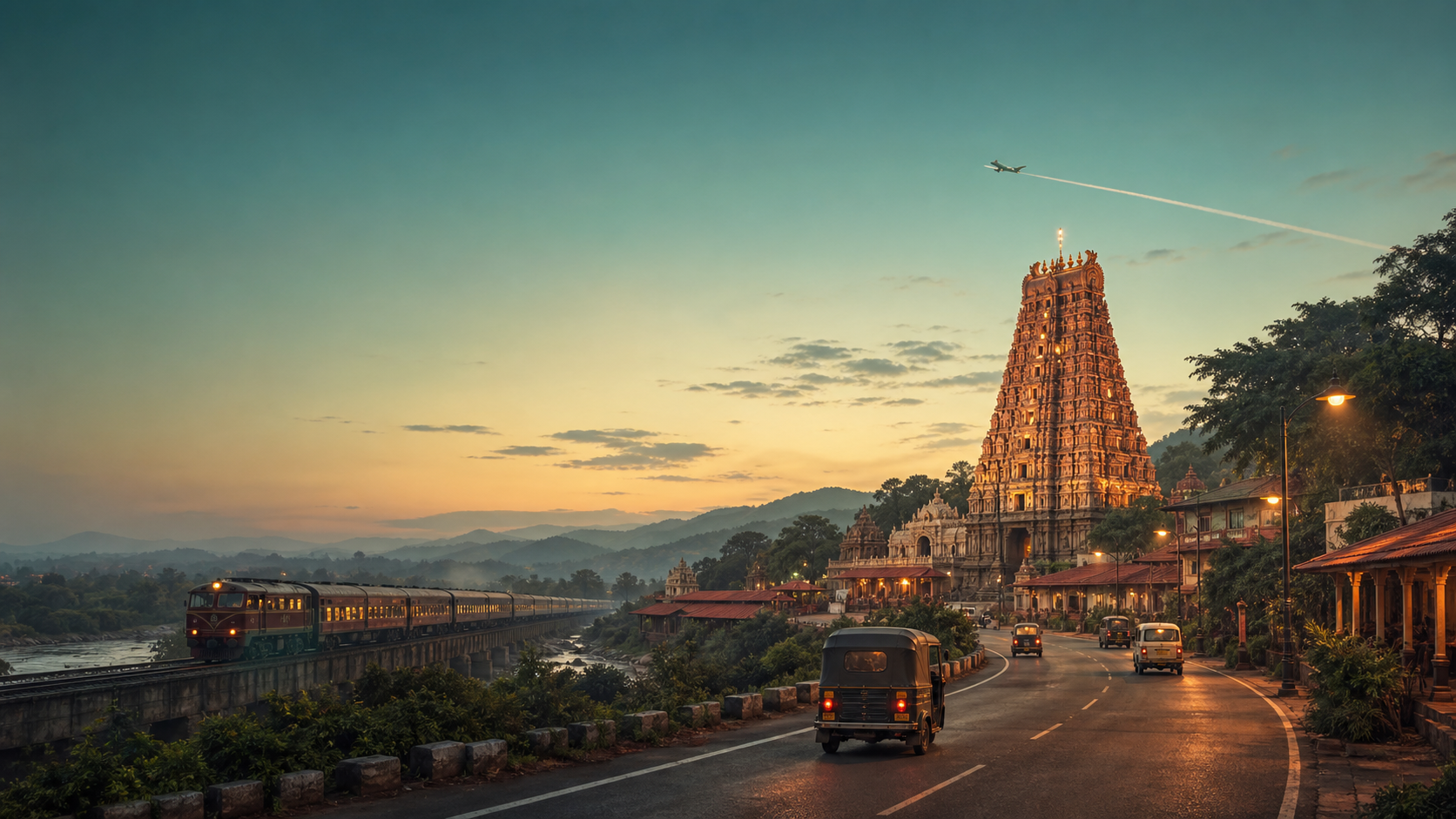
Visiting the Mahaganpati Temple in Ranjangaon is a spiritual journey made convenient by various transport options. Pune serves as a major hub, with regular bus services passing through Ranjangaon. For train travelers, Ranjangaon Road Railway Station is just 5 km away, or Pune Junction provides broader connectivity. Pune International Airport is approximately 55 km distant for air travel. The best time to visit is typically between August and October, avoiding extreme weather. While entry is free, modest dress is required, and footwear must be removed before entering the sanctum. Ample parking is available at the temple premises.
Accessibility and Transport
Ranjangaon is well-connected by road, with buses from Pune. The nearest railway station is Ranjangaon Road (5 km), and Pune International Airport is 55 km away.
Visitor Information
The temple offers free entry. Timings should be confirmed with the temple office. The best time to visit is from August to October.
Dress Code and Facilities
Modest dress is required, and footwear must be removed before entering the sanctum. Parking facilities are available on-site for visitors.
| Deity | Lord Ganesha |
|---|---|
| Form | Mahaganapati is a rare and unique form of Ganesha, depicted with ten faces and twenty arms. He is seated on a lotus, accompanied by his consorts Siddhi and Riddhi. |
| Consort | Siddhi and Riddhi |
| Sampradaya | Shaiva-Ganapatya syncretic tradition |
| Significance | Known as Tripurarivade Mahaganpati and Mahotkat, this form of Ganesha is central to the legend of Tripurasura, where he empowered Shiva to defeat the demon. He represents immense power and the ability to overcome formidable obstacles. |
The Tale of Tripurasura and Mahaganapati's Manifestation
Sage Gṛtsamada's penance led to the birth of Tripurasura, whom Ganesha blessed with three invincible cities. Tripurasura's tyranny prompted the Devas to seek Shiva's help. Shiva, guided by Narada, worshipped Ganesha at Ranjangaon. Ganesha manifested as Mahaganapati, a powerful form with ten faces and twenty arms, bestowing Shiva with immense strength. Empowered, Shiva then defeated Tripurasura on Kartika Purnima. This temple is thus known as Tripurarivade Mahaganpati, commemorating Ganesha's role in Shiva's victory over the demon of three cities.
No Ganesh puja is complete until the Ashtavinayak yatra culminates at Ranjangaon, bestowing eight forms of divine prosperity.
Mahaganapati, with ten faces and twenty arms, embodies the invincible power that empowers even the gods to overcome the most formidable obstacles.
Related temples: Abeyadana Temple | Ajanta Caves
Introduction to Mahaganpati Temple, Ranjangaon
The Mahaganpati Temple in Ranjangaon stands as a pivotal shrine within the revered Ashtavinayak circuit, a pilgrimage encompassing eight self-manifested idols of Lord Ganesha across Maharashtra. Located approximately 50-60 km from Pune, this temple is the eighth and often considered the final stop on the Ashtavinayak yatra, symbolizing the completion of the pilgrimage and the bestowal of divine prosperity. It is dedicated to Lord Ganesha in his formidable Mahaganpati form, a manifestation associated with immense power and victory over evil. The temple holds significant cultural and spiritual importance, drawing devotees from across the region.
Location and Significance
Situated in Ranjangaon, Maharashtra, the temple is strategically positioned along routes connecting major cities, making it accessible for pilgrims. It is the eighth temple visited in the traditional Ashtavinayak pilgrimage.
The Presiding Deity
The primary deity is Lord Ganesha, worshipped here as Mahaganpati, a powerful form believed to grant strength and success. The idol is considered 'svayambhu', or self-manifested.
Heritage Status
The Mahaganpati Temple is recognized as a State Protected Monument by the Maharashtra government, underscoring its historical and architectural value.
Lord Ganesha: The Mahaganpati Form
At the heart of the Ranjangaon temple is Lord Ganesha, revered in his powerful Mahaganpati form. This manifestation is depicted with ten faces and twenty arms, symbolizing immense strength and divine capability. The idol is popularly believed to be 'svayambhu', or self-manifested, adding to its sacredness. The temple's mythological narrative is deeply intertwined with the legend of Tripurasura. According to the tale, Ganesha manifested as Mahaganpati to empower Lord Shiva, enabling him to defeat the demon Tripurasura. This event cemented the temple's identity as 'Tripurarivade Mahaganpati', signifying Ganesha's role in Shiva's victory. For devotees, visiting this shrine completes the Ashtavinayak yatra, promising 'Ashta Aishwarayam', the eight forms of divine prosperity.
The Mahaganpati Idol
The principal idol is Mahaganpati, depicted with ten faces and twenty arms, symbolizing his supreme power. It is revered as a 'svayambhu' or self-manifested deity.
Legend of Tripurasura
The temple's origin story involves Lord Ganesha empowering Lord Shiva to defeat the demon Tripurasura, hence the name 'Tripurarivade Mahaganpati'.
Ashtavinayak Pilgrimage Significance
The Mahaganpati Temple is the final and crucial stop on the Ashtavinayak pilgrimage, believed to bestow 'Ashta Aishwarayam' upon devotees.
Modern Pilgrimage
The Mahaganpati Temple of Ranjangaon stands as a pivotal destination within the revered Ashtavinayak pilgrimage circuit, drawing countless devotees seeking the blessings of Lord Ganesha. This eight-temple journey across Maharashtra is a deeply spiritual undertaking for many, often completed by bus tours, private vehicles, or even on foot during auspicious times. For modern pilgrims, Ranjangaon represents a crucial stop, offering a blend of ancient rituals and accessible facilities. The temple's prominence ensures a steady stream of visitors throughout the year, with numbers surging dramatically during festivals like Ganesh Chaturthi and Sankashti Chaturthi. Pilgrims often spend time in quiet contemplation, participate in aartis, and offer prayers, experiencing a profound connection to the divine amidst the bustling activity. The ease of travel and improved infrastructure have made this ancient pilgrimage more attainable for a wider audience, solidifying its place in contemporary spiritual life.
Managing the influx of modern pilgrims requires significant logistical effort from the temple trust and local community. To accommodate the growing numbers, Ranjangaon has developed various facilities, including dharamsalas for overnight stays, numerous food stalls offering traditional Maharashtrian fare, and ample parking areas. The economic impact of this continuous pilgrimage is substantial, providing livelihoods for many local residents through tourism-related services. Furthermore, the temple administration has embraced modern technology, offering online information, live darshan streams during major events, and digital donation options, enhancing the pilgrimage experience for those unable to visit physically. This strategic blend of preserving centuries-old traditions while adapting to contemporary needs ensures that the Mahaganpati Temple remains a vibrant and accessible spiritual hub, continuing to inspire devotion in the 21st century.
🗺 How to Reach
Hover a card to animate the journey on the map
Route to Temple
Common Questions
Where is Mahaganpati Temple Ranjangaon: Ashtavinayak's Divine Grace located?
Mahaganpati Temple Ranjangaon: Ashtavinayak's Divine Grace is documented at Maharashtra.
Which deity is associated with Mahaganpati Temple Ranjangaon: Ashtavinayak's Divine Grace?
Mahaganpati Temple Ranjangaon: Ashtavinayak's Divine Grace is associated with Ganesha.
Related Temples

A Living Covenant