



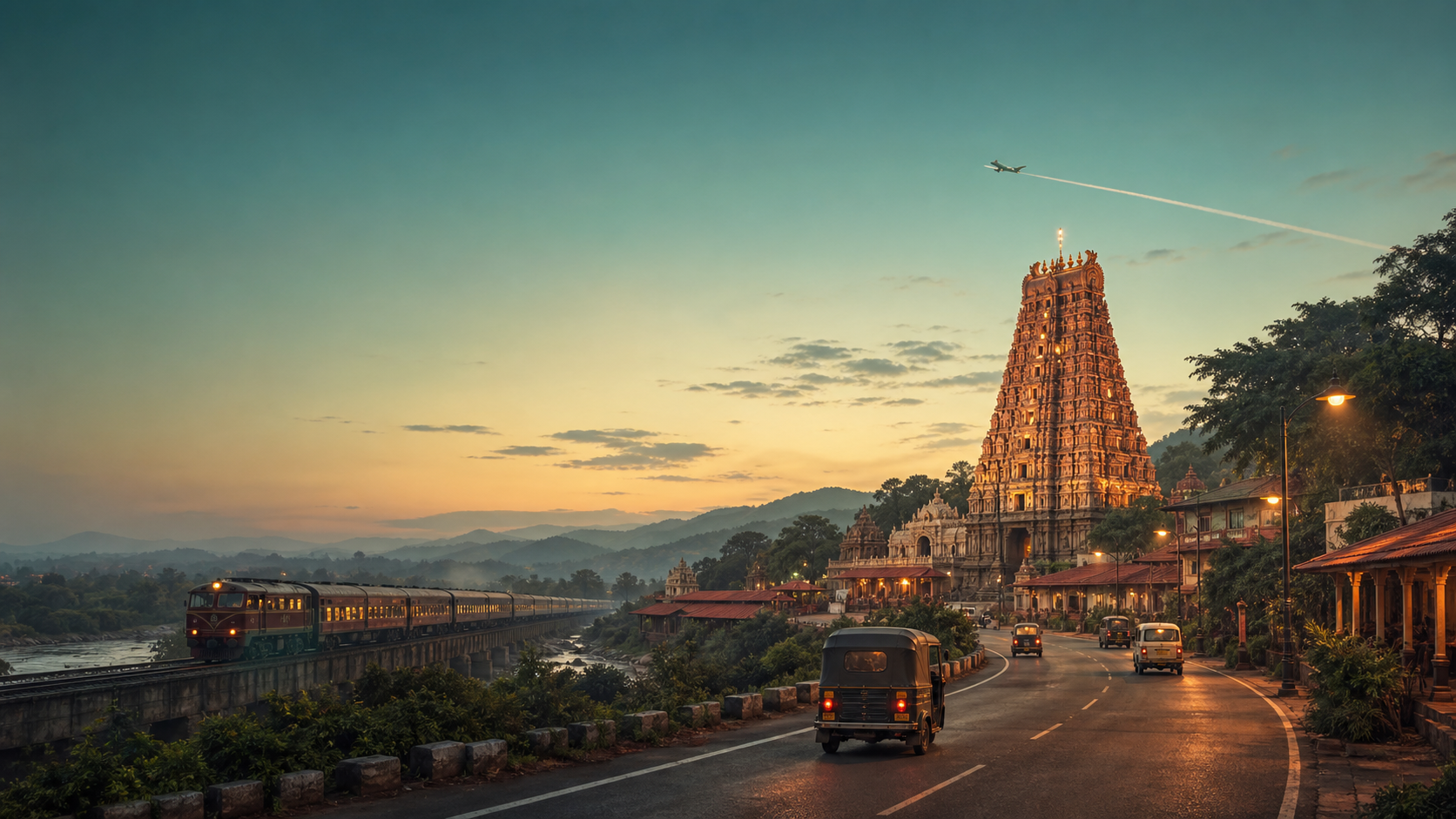
A complete pilgrim record drawn from the existing published article data.
The Grandeur of Mahadeva Temple, Ittagi
The Mahadeva Temple, located in Ittagi, is a celebrated masterpiece of Western Chalukya architecture, completed in 1112 CE. Often revered as the 'Emperor among Temples' in Karnataka, it exemplifies the zenith of the Kalyani Chalukya building style. Dedicated to the Hindu God Shiva, this temple is renowned for its sculptural perfection and intricate detailing, crafted from soapstone. It stands today as an ASI-protected monument, drawing visitors to appreciate its historical and artistic significance.
Architectural Excellence
The temple showcases the refined Vesara style, characterized by a harmonious blend of North and South Indian architectural elements, executed with exceptional precision.
The 'Emperor Among Temples'
Its grand scale, sophisticated design, and rich ornamentation earned it the distinguished epithet, reflecting its unparalleled status among contemporary structures.
Heritage Status
As an Archaeological Survey of India (ASI) protected monument, the Mahadeva Temple is preserved for its invaluable contribution to India's cultural heritage.
Lord Shiva: The Presiding Deity and Temple Mythology
The Mahadeva Temple is primarily dedicated to Lord Shiva, the supreme deity in the Shaiva tradition of Hinduism. As a Shaiva monument, it served as a significant center for the worship of Shiva during the Western Chalukya period. While specific myths or legends unique to this temple are not extensively documented, its construction by General Mahadev underscores a profound act of devotion to Lord Shiva, reflecting the religious fervor of the 12th century. The temple's design and iconography are consistent with traditional Shaiva practices.
The Principal Deity
Lord Shiva is the central deity enshrined within the temple, revered as the creator, preserver, and destroyer within the Hindu pantheon.
Shaiva Tradition
The temple adheres to the Shaiva tradition, focusing on the worship of Shiva and his various manifestations, evident in its iconography and ritual practices.
Devotional Context
The temple's creation by General Mahadev is a testament to the deep personal and societal devotion to Lord Shiva during the Western Chalukya era.
Experiencing the Heritage: A Visitor's Guide
Visiting the Mahadeva Temple offers a profound cultural experience, best enjoyed between October and March when the weather is most favorable. While specific timings and entry fees should be confirmed with the temple office, visitors typically spend 2–3 hours exploring the site. The temple is accessible via Koppal, which serves as a hub for bus and train services, approximately 55 km away. Hubballi Airport is the nearest major airport, about 120 km distant. Parking is available for those traveling by car.
Getting There
The temple is reachable from Koppal via bus or train, and Hubballi Airport provides air connectivity. Car travel is also an option with available parking.
Optimal Visiting Times
The period from October to March is recommended for visits, offering pleasant weather conditions for exploring the temple complex comfortably.
Visitor Essentials
Allocate 2–3 hours for a thorough visit. Contact the temple office for current timings and entry details to ensure a smooth experience.
| Deity | Shiva |
|---|---|
| Form | Shiva is worshipped in his aniconic form as the Lingam within the temple's sanctum. |
| Consort | Unknown |
| Sampradaya | Shaiva |
| Significance | As a principal deity of Hinduism and the focus of this grand Shaiva monument, Shiva represents the Destroyer and Transformer within the Trimurti. He embodies the ultimate reality and is revered for his cosmic dance and ascetic power. |
The General's Sacred Canvas
In the annals of the Western Chalukya dynasty, during the reign of the illustrious King Vikramaditya VI, a profound act of devotion unfolded in the year 1112 CE. It was General Mahadev, a loyal and skilled commander, who envisioned and brought to life a grand Shaiva monument dedicated to Lord Shiva. This magnificent temple, bearing his name, rose from the very soil of Ishtikapura, 'the brick town,' a name that symbolically hinted at a new canvas for divine artistry. General Mahadev's ambition was not merely to build, but to create a masterpiece that would reflect sculptural perfection, a harmonious integration of form and ornamentation, truly embodying the spiritual zenith of his era.
Considered the 'Devalaya Chakravartin,' or 'Emperor among Temples,' this monument stands as a testament to Chalukyan architectural prowess.
A masterpiece reflecting sculptural perfection, the Mahadeva Temple is the finest example of Western Chalukya architecture in Karnataka.
Related temples: Maha Mrityunjay Temple | Brahmadeva temple, Savadi – notable for being fully stellate
A Glimpse into the Western Chalukya Era
The Mahadeva Temple at Ittagi is a significant testament to the Western Chalukya (Kalyani Chalukya) dynasty's artistic and religious patronage. Commissioned during the reign of King Vikramaditya VI (1076-1126 CE), its construction was completed in 1112 CE. An inscription from the same year credits General Mahadev, a commander under Vikramaditya VI, for its establishment. This temple reflects the Shaiva tradition prevalent during the period and highlights the dynasty's commitment to monumental temple building.
Royal Patronage
The temple's construction was initiated under the powerful Western Chalukya King Vikramaditya VI, signifying royal support for religious architecture.
General Mahadev's Devotion
General Mahadev, a commander of Vikramaditya VI, played a pivotal role in the temple's creation, reflecting the deep devotion of the era's military elite.
Historical Inscriptions
An inscription dated 1112 CE provides crucial historical details, confirming the temple's completion and its patron, enriching our understanding of the period.
Unveiling the Western Chalukya Architectural Genius
The Mahadeva Temple embodies the distinctive Vesara architectural style, a hallmark of the Western Chalukya dynasty. Constructed primarily from soapstone, the temple showcases exquisite craftsmanship through its intricate carvings and finely detailed sculptures. The design integrates elements from both North and South Indian temple architecture, creating a unique and harmonious aesthetic. Its structural innovations and ornamental richness set a high standard for temple building, influencing subsequent architectural developments in the region.
Vesara Style Defined
The temple exemplifies the Vesara style, a hybrid architectural form that blends features of the northern Nagara and southern Dravida styles, resulting in a distinct Chalukyan identity.
Material and Craftsmanship
Utilizing soapstone, artisans achieved remarkable precision and detail in the temple's sculptures and decorative motifs, contributing to its renowned sculptural perfection.
Intricate Carvings
Every surface of the temple, from its pillars to its ceilings, is adorned with elaborate carvings depicting deities, mythical creatures, and geometric patterns, showcasing exceptional artistic skill.
Scholarly Studies and Architectural Significance
The Mahadeva Temple at Ittagi has been a significant subject of scholarly inquiry, offering invaluable insights into the architectural and artistic zenith of the Western Chalukya dynasty, particularly during the Kalyani Chalukya period. Art historians and archaeologists have meticulously documented its intricate carvings, precise geometric planning, and sophisticated *Vimana* structure, identifying it as a prime example of the 'Deccan style' that flourished in the 11th and 12th centuries. Studies have focused on its innovative use of stellate plans, the quality of its lathe-turned pillars, and the narrative panels depicting Hindu mythology. Epigraphists have also analyzed the numerous inscriptions found within the temple complex, which provide crucial historical context regarding its patronage, construction dates, and the socio-religious environment of the era, thereby enriching our understanding of medieval South Indian history. Academics often cite the Mahadeva Temple as a benchmark for the mature phase of Kalyani Chalukya architecture, showcasing a harmonious blend of Nagara and Dravida elements, often termed the Vesara style, with a distinct regional flavor. Its architectural grandeur and the exquisite detailing of its sculptures, particularly the *shikhara* and the *mandapa* ceilings, are frequently compared with contemporary structures like the Kasivisvesvara Temple at Lakkundi or the Mallikarjuna Temple at Kuruvatti. Researchers have explored the possible influence of master sculptors and architects who worked across different sites, contributing to a coherent yet evolving architectural language. The temple's well-preserved state, despite centuries of exposure, further allows for detailed structural analysis, providing a tangible link to the advanced engineering and aesthetic sensibilities of its builders, making it a cornerstone for understanding the architectural trajectory of the Deccan plateau.🗺 How to Reach
Hover a card to animate the journey on the map
Route to Temple
Common Questions
Where is Mahadeva Temple Ittagi: Chalukya's Architectural Gem located?
Mahadeva Temple Ittagi: Chalukya's Architectural Gem is documented at Ittagi, Central India.
Which deity is associated with Mahadeva Temple Ittagi: Chalukya's Architectural Gem?
Mahadeva Temple Ittagi: Chalukya's Architectural Gem is associated with Shiva.
A Living Covenant