



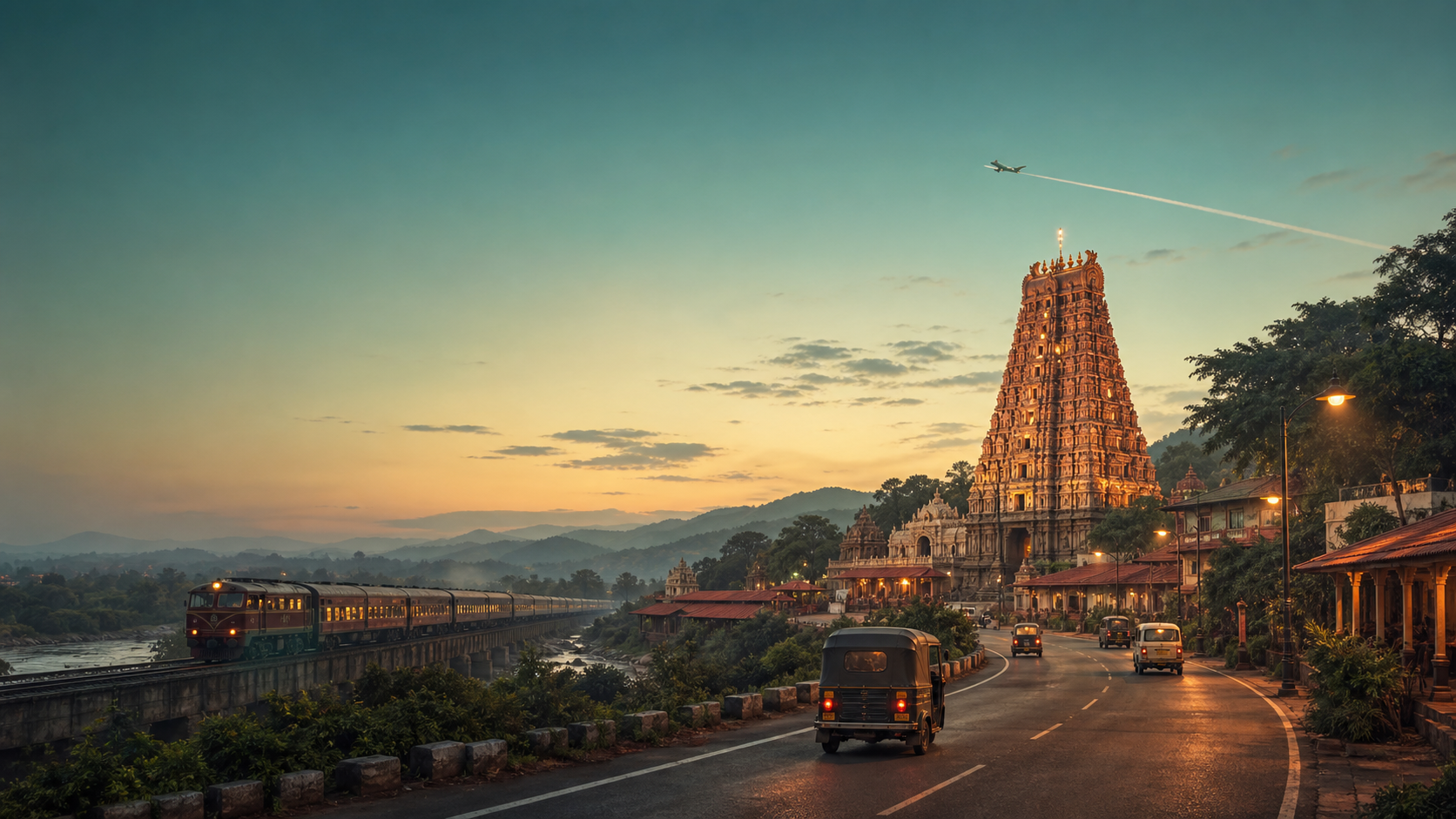
A complete pilgrim record drawn from the existing published article data.
The Stellate Marvel of Savadi: Brahmadeva Temple
The Brahmadeva Temple in Savadi stands as a remarkable architectural achievement, recognized as the earliest known fully stellate temple in northern Karnataka. Constructed between approximately 1050 and 1075 CE under the patronage of the Western Chalukya dynasty, this Jain Tirtha showcases a pioneering design. Its distinctive star-shaped plan, meticulously crafted from stone, represents a significant evolution in temple architecture, making it a unique landmark for both historical and artistic study. The temple's innovative structure highlights the advanced engineering and aesthetic sensibilities of its era.
Pioneering Stellate Design
The temple's fully stellate ground plan is its defining characteristic, setting a precedent for subsequent architectural developments in the region.
Western Chalukya Heritage
Built during the height of the Western Chalukya dynasty, the temple exemplifies their distinctive Vesara style, blending northern and southern Indian architectural elements.
A Jain Tirtha
As a significant Jain pilgrimage site, the Brahmadeva Temple has served as a center of devotion for centuries, dedicated to Yaksha Brahmadev.
The Presiding Deity: Yaksha Brahmadev and Local Reverence
At the spiritual core of the Brahmadeva Temple lies its dedication to Yaksha Brahmadev, a revered figure within the Jain tradition. This temple serves as a significant Jain Tirtha, embodying a legacy of devotion that traces back to at least the 2nd century CE, when Savadi was known as Sabatha. The annual Rathayatra of Brahmayaksha, held in January during Amavasya, underscores the deep local reverence. This chariot festival, celebrated at Stavanidhi and by a broader network of Brahmadev temples, draws devotees who honor Yaksha Brahmayaksha with fervent devotion, continuing ancient spiritual practices.
Jain Tradition and Deity
The temple is dedicated to Yaksha Brahmadev, a prominent deity revered within the Jain faith, making it a crucial center for Jain worship.
Ancient Devotion
The temple's connection to Yaksha Brahmadev extends to ancient times, with its site mentioned in historical texts as a place of spiritual significance.
Rathayatra Festival
The annual Rathayatra of Brahmayaksha in January is a testament to the enduring local reverence, attracting devotees from across the region.
Journey to Savadi: A Guide for Pilgrims and Enthusiasts
Visiting the Brahmadeva Temple in Savadi offers a rewarding experience, best enjoyed between October and March when the weather is most favorable. While specific timings and entry details require direct contact with the temple office, its location near Belgaum makes it relatively accessible. Belgaum Junction Railway Station is approximately 45 km away, and Belgaum Airport (IXG) is about 50 km. For bus and car routes, including parking information, it is advisable to contact the temple office. Allow 1–2 hours for a thorough visit to appreciate its unique architecture and spiritual ambiance.
Optimal Visiting Period
The months from October to March are recommended for a visit, offering pleasant weather conditions for exploration.
Accessibility and Transport
The temple is accessible via Belgaum, with train and airport facilities within a reasonable distance. Specific routes should be confirmed.
Planning Your Visit
Visitors should allocate one to two hours to fully experience the temple, contacting the temple office for current timings and other essential information.
| Deity | Yaksha Brahmadev |
|---|---|
| Form | A specific form of Brahma revered within the Jain tradition. |
| Consort | Devi Padmavati |
| Sampradaya | Jain |
| Significance | Savadi is an ancient Jain center associated with the worship of Yaksha Brahmadev. The temple functions as a Jain Tirtha, a sacred pilgrimage site with historical roots extending to at least the 2nd century CE. |
The Ancient Legacy of Yaksha Brahmadev
Deep in the heart of Savadi, a sacred site known as Sabatha in ancient texts, lies a temple dedicated to the revered Yaksha Brahmadev. This venerable center of Jain worship boasts a lineage stretching back to at least the 2nd century CE, a testament to its enduring spiritual significance. For centuries, pilgrims have journeyed to this hallowed ground, seeking blessings and solace. The temple's origins are intertwined with early land grants, marking its importance in regional history and continuous devotion through the powerful Western Chalukya period. It stands today as a living chronicle of faith, where the ancient echoes of devotion to Yaksha Brahmadev continue to resonate.
A stellate marvel, echoing centuries of devotion, the Brahmadeva temple stands as a testament to ancient Jain heritage in northern Karnataka.
From Sabatha to Savadi, this sacred ground has been a beacon of faith, where the blessings of Yaksha Brahmadev continue to inspire pilgrims.
Related temples: Aakkoor Thanthondreeswarar Temple | Aazhimala Shiva Temple
A Legacy Etched in Stone: Western Chalukya's Architectural Vision
The Brahmadeva Temple at Savadi is a profound testament to the architectural prowess of the Western Chalukya dynasty, who flourished in Central India. Its construction, spanning from approximately 1050 to 1075 CE, marks a pivotal period when the Chalukyas were shaping regional temple aesthetics. While the specific builder remains unknown, the temple embodies the sophisticated Vesara style, a hallmark of their empire. Savadi itself, known as Sabatha in Ptolemy's Geography from the 2nd century CE, signifies the long-standing importance of this location, which continued through the Chalukya era with significant endowments.
Chalukya Patronage
The temple's creation during the mid-11th century reflects the Western Chalukya dynasty's commitment to monumental religious architecture.
Evolution of Vesara Style
It represents a refined example of the Western Chalukya Vesara style, integrating intricate carvings with a unique structural plan.
Ancient Roots of Savadi
The site's historical significance dates back to the 2nd century CE, indicating its enduring spiritual and cultural importance prior to Chalukya construction.
The Geometry of Devotion: Unpacking the Stellate Design
The Brahmadeva Temple's architectural distinction lies in its groundbreaking fully stellate plan, a complex geometric arrangement that sets it apart. This star-shaped layout, meticulously executed in stone, is a prime example of the innovative Vesara style, specifically the Western Chalukya Vesara variant. The design is not merely aesthetic but reflects a sophisticated understanding of sacred geometry, creating dynamic interplay of light and shadow on its faceted exterior. This architectural choice underscores the temple's importance as both a place of worship and a masterpiece of medieval Indian craftsmanship. Its intricate details and precise construction showcase the advanced skills of the artisans.
Stellate Plan Elaboration
The "fully stellate" design involves a star-shaped ground plan for the entire temple structure, including the sanctum and hall.
Vesara Style Characteristics
This temple beautifully illustrates the Vesara style, characterized by a blend of Nagara (North Indian) and Dravida (South Indian) architectural features.
Material and Craftsmanship
Constructed entirely from durable stone, the temple's intricate carvings and precise joinery highlight the exceptional skill of the Western Chalukya builders.
Scholarly Studies and Architectural Analysis
The Brahmadeva Temple at Savadi has attracted significant attention from art historians and archaeologists due to its distinctive and rare fully stellate plan, a feature that sets it apart within the architectural landscape of Central India. Early surveys by colonial-era scholars provided initial documentation, but more recent academic endeavors have delved deeper into its stylistic nuances and chronological placement. Researchers like M.A. Dhaky and Michael W. Meister have often referenced such unique structures in their broader studies of Indian temple architecture, using the Savadi temple as a crucial data point for understanding regional variations and the evolution of the Bhumija style. These studies meticulously analyze the temple's sculptural program, iconographic details, and epigraphic evidence to establish its precise dating and its relationship with contemporary dynasties and artistic schools, offering invaluable insights into its historical context.
Architectural analysis of the Brahmadeva Temple primarily focuses on its exceptional stellate ground plan, where the entire structure, from the plinth to the shikhara, follows a star-shaped configuration. Unlike temples where only the shikhara or parts of the superstructure are stellate, Savadi's temple exhibits this complexity throughout its design, presenting a significant challenge and triumph for its ancient builders. Scholars examine the precise geometric principles employed, the construction techniques used to achieve such intricate angles with stone, and the potential symbolic meanings behind this specific form. Comparative studies with other stellate temples, particularly those in the Deccan and Malwa regions, help to contextualize its uniqueness and trace the diffusion of architectural ideas. This detailed scrutiny reveals not only the advanced engineering skills of the period but also the profound aesthetic and cosmological considerations that guided its creation, making it a pivotal subject in the study of medieval Indian temple architecture.
🗺 How to Reach
Hover a card to animate the journey on the map
Route to Temple
Common Questions
Where is Brahmadeva Temple, Savadi: Shiva's Stellate Architectural Gem located?
Brahmadeva Temple, Savadi: Shiva's Stellate Architectural Gem is documented at Savadi, near Belgaum.
Which deity is associated with Brahmadeva Temple, Savadi: Shiva's Stellate Architectural Gem?
Brahmadeva Temple, Savadi: Shiva's Stellate Architectural Gem is associated with Brahma.
A Living Covenant