



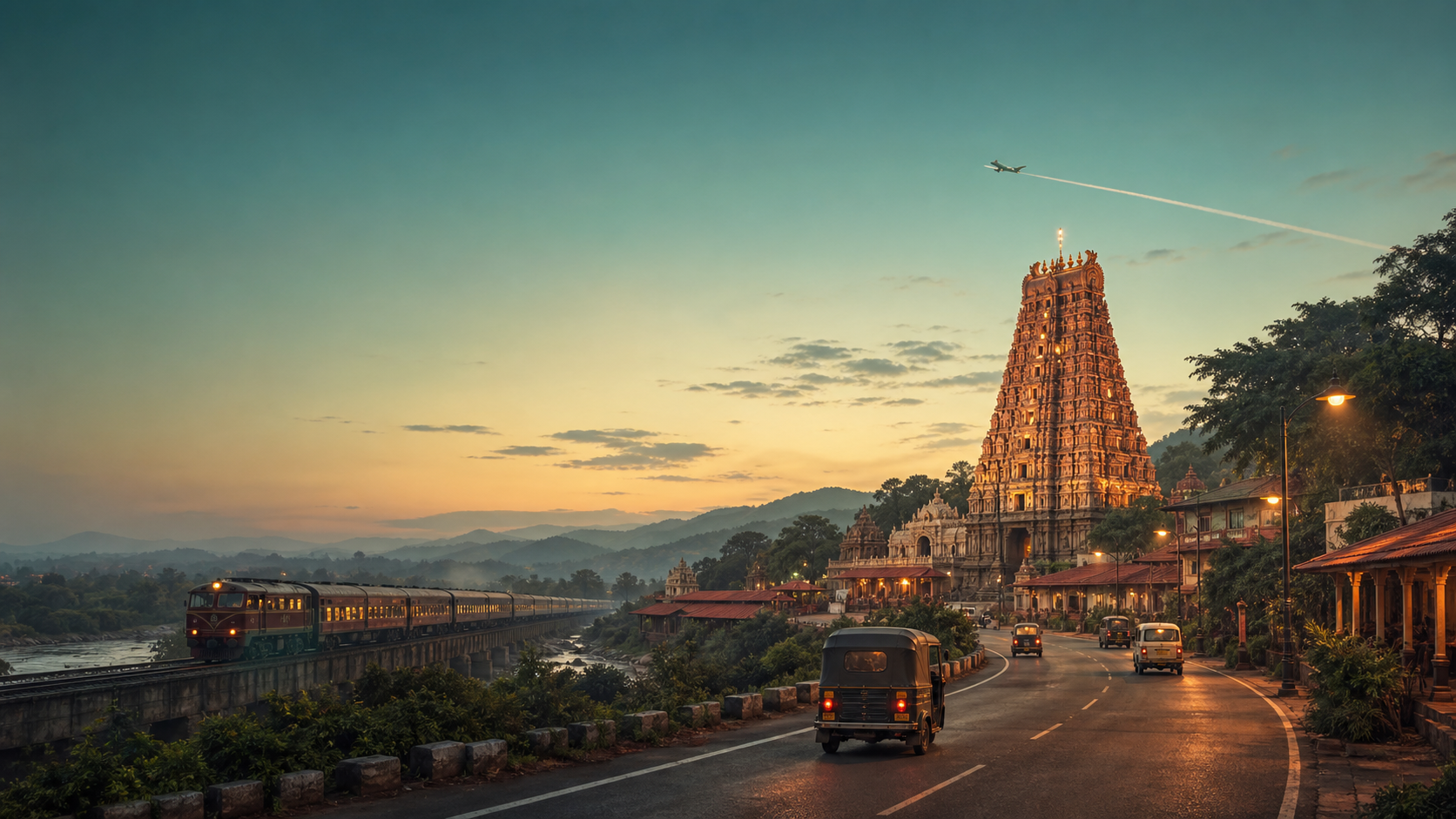
A complete pilgrim record drawn from the existing published article data.
Historical Foundation
Ancient Origins and Pandya Restoration
Later Renovations and Royal Patronage
Architecture & Craftsmanship

The imposing entrance of the Janardanaswamy Temple from the foot of the hill.
Characteristic Kerala Style Elements
Sculptural Marvels and Artistic Highlights
"The confluence of Kerala's distinctive circular sanctum with the ancient Pandya undertones, exemplified by the intricate wooden Navagraha carvings, makes Janardanaswamy Temple a unique architectural masterpiece."
Unique Structural and Decorative Features

Detail of the Navagraha carvings on the mandapa ceiling, a highlight of Kerala craftsmanship.
The Presiding Deity
Janardanaswamy: The Four-Armed Protector
Iconographic Uniqueness and Kali Yuga Prophecy
Secondary Deities and Composite Worship

The unique depiction of Lord Janardana in the sanctum, with his hand raised.
Festivals & Living Traditions
Annual Celebrations and Temple Fairs
- Arattu Festival (Meenam/March–April): Ten-day festival featuring Kodiyettam, Kathakali, elephant procession, and the sacred sea bath of the deity.
- Karkidaka Vavu (Karkidakam/July–August): An auspicious Amavasya day specifically dedicated to ancestral rites (pitrkarma), attracting thousands seeking to honor their forefathers.
- Ashtami Rohini (Chingam/August–September): Celebrations marking the birth of Lord Krishna, observed with special pujas and devotional activities.
- Vaikuntha Ekadashi (Margashira/December–January): A major Vaishnava observance, considered highly sacred for devotees of Lord Vishnu, featuring special prayers and fasting.
- Rama Navami (Chingam/August–September): Celebrates the birth of Lord Rama, with devotional singing and offerings.
Sacred Rituals and Daily Worship

Elephants adorned for the procession during the vibrant Arattu Festival, showcasing Kerala's cultural richness.
Plan Your Visit
Getting There and Accessibility
The temple is conveniently located in Varkala, making it accessible for both domestic and international visitors.
- Nearest City: Thiruvananthapuram, approximately 35 km away.
- Nearest Airport: Trivandrum International Airport (TRV), around 35 km from Varkala, offering good connectivity.
- Nearest Railway Station: Varkala Railway Station, just 2 km from the temple, providing easy access by local transport.
- Road Access: Varkala is well-connected by road, with regular bus services and taxis available from major cities in Kerala.
Best Time to Visit and Suggested Duration
Pro Tip: Combine Pilgrimage with Wellness
Varkala is also a renowned Ayurveda treatment center and known for its medicinal springs. Consider extending your visit to experience traditional Ayurvedic therapies or enjoy the therapeutic benefits of the mineral-rich waters near the cliffside.
Visitor Guidelines and Nearby Attractions
For those interested in exploring the wider temple circuit of Kerala, consider visiting:
- Sree Padmanabhaswamy Temple in Thiruvananthapuram, known for its immense wealth and architectural splendor.
- Neyyattinkara Sree Krishna Swamy Temple, another significant Vaishnava shrine in the region.
- Kappil Devi Temple, offering a glimpse into local devotional practices.
Related temples: Aazhimala Shiva Temple | Abhimanyu Temple, Vayotthidam
Sacred Stories & Mythology
Brahma's Curse and the Origin of Varkala
The Papanasam Pond and Sin Redemption
According to legend, Lord Vishnu himself created the Papanasam pond (now Papanasam Beach) with his divine Sudarshana Chakra to aid the devas in their penance. The word 'Papanasam' literally translates to 'destruction of sins'. It is a deeply held belief that a holy bath in the waters of Papanasam Beach washes away all sins, making it a pivotal pilgrimage spot, especially for ancestral rites.
Vishnu's Cosmic Intervention
Miracles and Folk Beliefs

Devotees at Papanasam Beach, known for its sacred waters that cleanse sins and aid ancestral rites.
Saints, Poets & Devotees
Ancient References and Pilgrim Visits
A Hub for Ancestral Liberation
Key Takeaway: The 'Gaya of the South'
The Janardanaswamy Temple is one of the few places outside Gaya (Bihar) considered exceptionally potent for performing ancestral rites, granting liberation (moksha) to departed souls. Its coastal location at Papanasam Beach offers a unique setting for these sacred ceremonies.
Records, Marvels & Heritage
The Janardanaswamy Temple holds a distinguished position in India's religious and cultural heritage, marked by unique records, engineering marvels, and a rich legacy that has earned it several esteemed titles.
Epithets of Sanctity and Recognition
Elevation: The temple is situated on a coastal tableland at an impressive elevation of 53.28 meters (175 feet) above sea level, providing panoramic views.
Engineering Feats and Natural Wonders
Unique Artefacts and Heritage Status
Definition: Pitrkarma
Pitrkarma refers to the Hindu rituals and ceremonies performed for departed ancestors (pitrus) to ensure their peace, liberation, and well-being in the afterlife. These rites are believed to help clear ancestral debts and bless the living descendants.
🗺 How to Reach
Hover a card to animate the journey on the map
Route to Varkala
Common Questions
Where is Janardanaswamy Temple: Varkala's Ancient Vishnu Shrine located?
Janardanaswamy Temple: Varkala's Ancient Vishnu Shrine is documented at Varkala, Kerala.
Which deity is associated with Janardanaswamy Temple: Varkala's Ancient Vishnu Shrine?
Janardanaswamy Temple: Varkala's Ancient Vishnu Shrine is associated with Vishnu.
Related Temples


A Living Covenant