



A complete pilgrim record drawn from the existing published article data.
The Genesis and Legacy of the Black Pagoda
The Konark Sun Temple was commissioned in the 13th century CE by King Narasingha Deva I of the Eastern Ganga Dynasty. Following his victory over Muslim invaders of Bengal, the king embarked on this ambitious project as a tribute to Surya. The temple's construction, primarily using khondalite stone, marked a significant period of artistic and architectural flourishing under his patronage. Its dark appearance led European sailors to call it the "Black Pagoda," a navigational landmark. Despite its partial ruin, its legacy as a monumental achievement endures.
Royal Patronage and Construction
King Narasingha Deva I of the Eastern Ganga Dynasty initiated the temple's construction in the 13th century CE, as evidenced by an inscription confirming his patronage.
The "Black Pagoda" Moniker
Due to its dark appearance, European mariners referred to Konark as the "Black Pagoda," using it as a significant landmark for navigation along the coast.
Architectural Material
The temple was predominantly constructed using khondalite stone, a type of metamorphic rock, which contributed to its imposing structure.
Konark Sun Temple: A Marvel of Kalinga Architecture
The Konark Sun Temple, located in Odisha, India, stands as an outstanding example of Kalinga architecture. This monumental 13th-century CE temple, dedicated to the Sun God Surya, is renowned for its intricate carvings and unique design. It was inscribed as a UNESCO World Heritage Site in 1984, recognizing its universal value and profound cultural significance. The temple's grandeur reflects the zenith of ancient Indian architectural prowess and artistic expression. It remains a powerful symbol of India's rich heritage.
UNESCO World Heritage Status
Inscribed in 1984, the Konark Sun Temple is recognized for its outstanding universal value, representing a masterpiece of human creative genius.
Kalinga Architectural Style
The temple exemplifies the distinct Kalinga architectural style, characterized by its curvilinear towers (rekha deula) and intricate sculptural ornamentation.
Cultural Significance
Konark holds profound cultural significance as a testament to India's rich artistic and religious traditions, particularly the worship of the Sun God.
The Chariot of the Sun: Iconography and Engineering
Konark is famously designed as a colossal chariot for the Sun God, Surya, complete with twelve pairs of intricately carved wheels and seven spirited horses. Each of the twenty-four wheels functions as a sundial, accurately telling time with the shadows cast by its spokes. The temple's surfaces are adorned with a wealth of iconography, including celestial beings, dancers, musicians, mythical creatures, and scenes of daily life. These sculptures, executed in the Kalinga style, showcase exceptional artistic skill and a deep understanding of religious symbolism. The engineering feat of constructing such a massive structure on the sandy coast highlights the advanced knowledge of its builders.
Colossal Chariot Design
The temple's unique design represents Surya's celestial chariot, featuring 12 pairs of wheels and seven horses, symbolizing the months and days of the week.
The Sundial Wheels
Each of the 24 intricately carved wheels on the temple's base functions as a precise sundial, capable of indicating the time of day.
Rich Sculptural Iconography
The temple's walls are covered with a vast array of sculptures depicting deities, mythical beasts, daily life, and erotic scenes, reflecting its diverse iconography.
Experiencing the Sun Temple: A Visitor's Guide
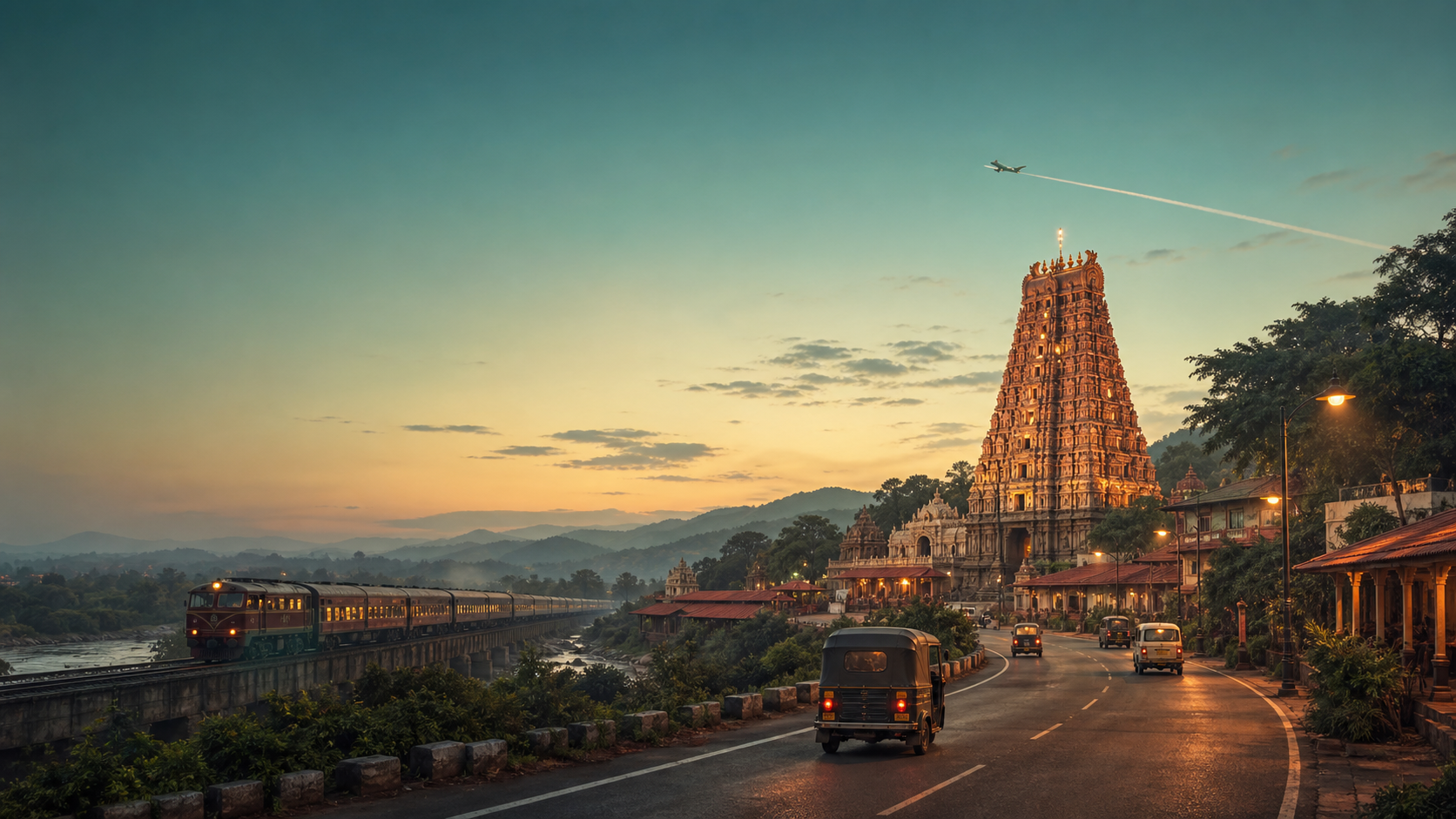
Visitors to the Konark Sun Temple can experience its splendor optimally from October to March, when the weather is pleasant. The temple complex is managed by ASI, and an entry fee applies. Respectful attire is advised, and footwear should be removed before entering preserved structures. The site is approximately 65 km from Bhubaneswar Airport and 35 km from Puri Railway Station, with good road connectivity. Allow 3-4 hours to explore the intricate carvings and grand scale of this UNESCO World Heritage Site.
Best Time to Visit
The ideal period for visiting Konark is between October and March, offering comfortable weather conditions for exploration.
Accessibility and Entry
The temple is easily accessible by road from Puri (35 km) and Bhubaneswar (65 km). An entry fee is applicable, managed by the Archaeological Survey of India.
Visitor Guidelines
Respectful attire is recommended, and visitors are requested to remove footwear before entering certain preserved areas of the temple complex.
| Deity | Surya |
|---|---|
| Form | Surya is depicted standing, holding lotus flowers, and riding a chariot. This chariot is traditionally drawn by seven horses, though only six remain extant. |
| Consort | Usha and Pratyusha |
| Sampradaya | Vaishnava-influenced Smarta tradition with strong solar worship (Saura) |
| Significance | Surya, the Sun God, is revered as the source of all energy and time, and the temple uniquely integrates timekeeping and astronomy into its iconography. The site is also associated with Puranic solar theology, particularly the Samba Purana, which narrates Samba's penance to Surya for healing. |
Samba's Penance and Healing Grace
Long ago, as chronicled in the ancient Samba Purana, Samba, the son of Lord Krishna, was afflicted with the dreadful disease of leprosy. Desperate for a cure, he sought divine intervention and was guided to the sacred sands of Konark. Here, for twelve arduous years, Samba undertook severe penance, dedicating himself entirely to the worship of Surya, the benevolent Sun God. His unwavering devotion touched the heavens, and Surya, moved by his profound faith, manifested his healing grace. Samba was miraculously cured of his ailment, and this event marked the profound establishment of sun worship in Konark, transforming it into a revered center for devotees seeking health and divine blessings from the celestial orb.
Konark is not merely a temple; it is a colossal poem in stone, a silent hymn to the sun, and a testament to the boundless imagination of its creators.
The Sun Temple at Konark stands as a magnificent chariot, its wheels marking time, its sculptures narrating devotion, and its grandeur reflecting the divine journey of Surya.
Related temples: Aisanyesvara Siva Temple | Akhadachandi Temple
Surya, The Sun God: Deity and Mythology
Surya, the principal deity of Konark, holds immense mythological significance in Hinduism as the life-giving Sun God. He is revered as the source of light, warmth, and sustenance, often depicted riding a chariot pulled by seven horses. The temple's iconography extensively features Surya in various forms, alongside other deities and celestial figures. The Samba Purana recounts Samba's healing from leprosy through penance to Surya at Konark, underscoring the site's importance in solar worship. This tradition, influenced by Vaishnava-Smarta beliefs, emphasizes Surya's role in the cosmic order.
Principal Deity: Surya
The Konark Sun Temple is primarily dedicated to Surya, the Hindu Sun God, revered as the source of life, light, and energy in the cosmos.
Mythological Significance
Surya is a central figure in Hindu mythology, often depicted as a golden warrior riding a chariot, symbolizing his journey across the sky.
Solar Worship Tradition
Konark is a significant site for the Saura tradition, a Vaishnava-influenced Smarta tradition focused on the worship of Surya, as highlighted in texts like the Samba Purana.
Scholarly Studies and Interpretation
The intricate iconography of Konark Temple has been a fertile ground for scholarly inquiry since its rediscovery. Art historians, archaeologists, and Indologists have dedicated extensive research to deciphering the narratives, symbolism, and artistic techniques embedded within its stone carvings. These studies often involve meticulous documentation, comparative analysis with other Odishan and Indian temple art, and interpretation through ancient texts like the Puranas and Agamas. Scholars delve into the stylistic evolution of the Kalinga school of architecture and sculpture, tracing influences and innovations. The sheer volume and diversity of the sculptural program, from celestial musicians and mythical beasts to daily life scenes and ritualistic depictions, offer an inexhaustible source for understanding medieval Indian society, religion, and artistic expression. Key areas of scholarly debate and focus include the precise dating of the temple, the identity and roles of the numerous deities, and the esoteric meanings behind the more explicit erotic sculptures. Researchers have explored the temple's astronomical alignments and its function as a cosmic calendar, linking specific iconographic elements to celestial phenomena. The syncretic nature of Konark's pantheon, blending Shaiva, Vaishnava, and Shakti traditions, also receives significant attention, highlighting the religious pluralism of the Ganga dynasty era. Contemporary scholarship often incorporates digital humanities tools for mapping and analyzing the sculptural program, offering new perspectives on its original design and subsequent transformations, thereby continually enriching our understanding of this monumental artistic achievement.🗺 How to Reach
Hover a card to animate the journey on the map
Route to Temple
Common Questions
Where is Konark Temple: Intricate Iconography Revealed located?
Konark Temple: Intricate Iconography Revealed is documented at Odisha, India.
Which deity is associated with Konark Temple: Intricate Iconography Revealed?
Konark Temple: Intricate Iconography Revealed is associated with Surya.
Related Temples

A Living Covenant