



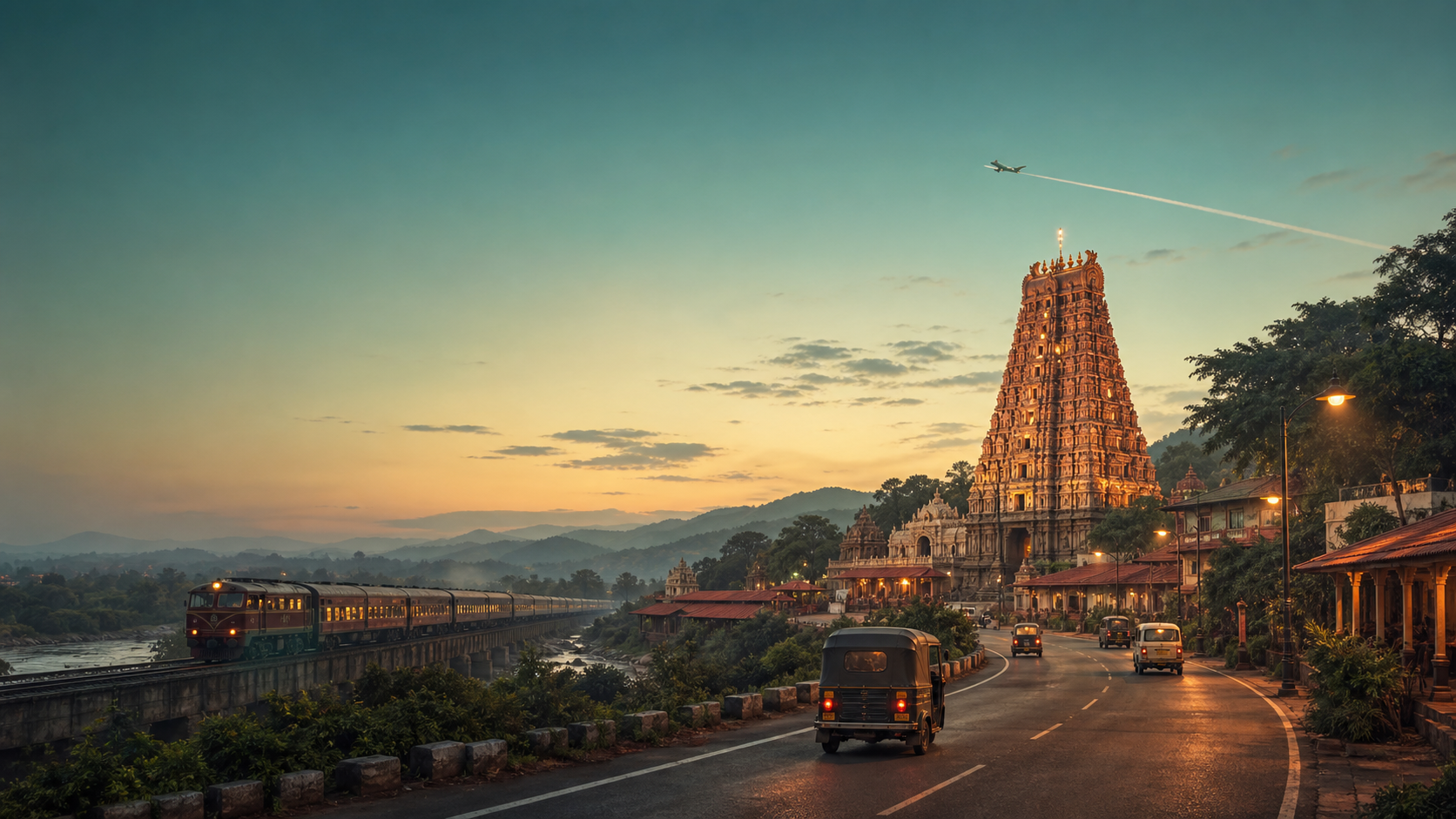
A complete pilgrim record drawn from the existing published article data.
Kalinga Architecture: A Symphony in Stone
The temples of Puri, most notably the Jagannath Temple, are prime examples of the distinctive Kalinga architecture, also known as Odishan Kalinga style. This architectural tradition is characterized by its towering curvilinear shikhara (sanctum tower) and the jagamohana (assembly hall) in front of it. Constructed primarily from chlorite, laterite, and sandstone, these structures feature intricate carvings depicting deities, mythical creatures, and floral motifs. The architectural style emphasizes a unique blend of grandeur and delicate artistry, making it a significant contribution to Indian temple architecture and a visual narrative of religious devotion.
Distinctive Kalinga Style
Kalinga architecture is recognized by its unique rekha deula (sanctum tower) and pidha deula (assembly hall) forms, which rise majestically from the temple base.
Materials and Craftsmanship
The temples were built using durable materials like chlorite, laterite, and sandstone, allowing for intricate carvings that adorn every surface with mythological narratives.
Architectural Elements
Key elements include the vimana (sanctum), jagamohana (audience hall), natamandapa (dancing hall), and bhogamandapa (offering hall), arranged axially.
Puri: The Sacred Abode of Lord Jagannath
Puri, a coastal city in Odisha, is a paramount pilgrimage destination, globally recognized for its magnificent Hindu temples. At its heart stands the Jagannath Temple, a spiritual epicenter dedicated to Lord Jagannath. This sacred abode is revered as a Divya Desam, Purushottama Tirtha, and Martya Vaikuntha, signifying its immense religious importance. It attracts millions of devotees annually, seeking spiritual solace and participating in its unique traditions. The city itself, often called Shankha Kshetra, embodies a deep cultural and religious heritage, making it a vital center for Vaishnava worship and a testament to Odisha's rich spiritual landscape.
A Prominent Pilgrimage Destination
Puri is one of the four cardinal Dhams (pilgrimage sites) of Hinduism, making it a crucial destination for devotees across India. Its spiritual significance is deeply embedded in ancient texts and traditions.
Heritage and Sacred Names
The city and its temple are known by various sacred names, including Purushottama Tirtha, Tirtharaja, Martya Vaikuntha, and Shankha Kshetra, reflecting its profound religious and historical importance.
Tracing the Legacy: The Eastern Ganga Dynasty and Temple Construction
The construction of the Jagannath Temple in Puri is intrinsically linked to the powerful Eastern Ganga Dynasty. King Chodaganga Deva initiated its grand construction around the 12th century CE, marking a pivotal moment in Odishan history. His successors, particularly King Anangabhima Deva III, oversaw the completion of the magnificent complex by approximately 1238 CE. The dynasty's patronage extended beyond construction, ensuring the temple's maintenance and religious prominence. This enduring legacy established the temple as a symbol of their architectural prowess and deep devotion, shaping the region's spiritual and cultural identity for centuries.
Initiation by Chodaganga Deva
King Chodaganga Deva of the Eastern Ganga Dynasty began the temple's construction in the 12th century CE, laying the foundation for this monumental structure.
Completion under Anangabhima Deva III
The grand temple complex was largely completed under the reign of King Anangabhima Deva III around 1238 CE, solidifying its architectural and religious stature.
Continued Royal Patronage
Subsequent rulers, including the Gajapati and Bhoi dynasties, continued to provide patronage, undertaking renovations and ensuring the temple's enduring legacy and maintenance.
The Unique Deities of Puri: A Family of Gods
Central to Puri's spiritual identity is the worship of Lord Jagannath, uniquely accompanied by his elder brother Balabhadra and sister Subhadra. This familial representation in Hindu iconography is rare, distinguishing Puri from other Vaishnava traditions. The deities are not carved from stone or metal but from sacred neem wood, giving them a distinct and abstract form. This tradition underscores a blend of Vaishnava, Tantric, and tribal influences. The profound connection to the divine is further exemplified by the Nava Kalevara ritual, where these wooden deities are periodically replaced in a secret, sacred ceremony.
The Wooden Deities
Unlike most Hindu deities, Jagannath, Balabhadra, and Subhadra are carved from sacred neem wood, symbolizing their unique origin and connection to tribal traditions.
Familial Representation
The presence of Lord Jagannath with his siblings, Balabhadra and Subhadra, is a distinctive feature, representing a rare familial triad in Hindu worship.
The Nava Kalevara Ritual
This highly significant ritual, occurring every 12-19 years, involves the ceremonial replacement of the old wooden idols with newly carved ones, maintaining the deities' spiritual vitality.
Visiting Puri: A Guide to Pilgrimage and the Rath Yatra
Puri offers a profound spiritual experience for pilgrims and tourists, centered around its vibrant temple life and annual festivals. Daily rituals and darshan provide opportunities for devotion. The city is globally renowned for the Rath Yatra, the grand chariot festival of Lord Jagannath, Balabhadra, and Subhadra, which attracts millions. Visitors can plan their trip from October to March for pleasant weather. Traditional attire and respect for temple customs, including removing footwear and abstaining from leather items, are essential for a fulfilling visit to this sacred destination.
The Grand Rath Yatra
The annual Rath Yatra, held in June/July, is the world's largest chariot festival, where the deities are ceremonially pulled in massive chariots through Puri's streets.
Optimal Visiting Period
The best time to visit Puri is from October to March, offering comfortable weather for temple visits, sightseeing, and experiencing local culture.
Temple Etiquette and Dress Code
Visitors should adhere to the temple's dress code, preferring traditional attire and removing footwear. Leather items are prohibited inside the complex.
| Deity | Jagannath |
|---|---|
| Form | Jagannath is an abstract wooden icon (daru), interpreted as Purushottama/Vishnu in his primordial form. This non-anthropomorphic deity is depicted as a dark log with large eyes, intentionally deviating from conventional murti-making rules. |
| Consort | Goddess Vimala |
| Sampradaya | Vaishnava (Ramanuja-influenced, later integrated with Tantric and tribal traditions) |
| Significance | As Purushottama/Vishnu, Jagannath represents a primordial and universal aspect of the divine. The deity's unique abstract form and the cyclical Nava Kalevara ritual underscore a profound spiritual tradition that blends Vaishnava, Tantric, and tribal influences. |
The Divine Origin of Lord Jagannath
In the ancient land of Utkala, King Indradyumna, moved by a divine vision, embarked on a fervent quest to locate the elusive deity, Nilamadhava, hidden deep within the forest near Puri. Despite his sincere efforts, the divine form remained veiled. Undeterred, the devout king performed a great yajna, a sacred fire ritual. From the flickering flames, Lord Narasimha, the lion-man avatar of Vishnu, manifested and bestowed upon the king a profound instruction: to install new wooden idols. When the original, enigmatic idol mysteriously vanished, Lord Vishnu himself appeared in Indradyumna's dream, guiding him to carve new sacred images from a magnificent divine neem log that had miraculously washed ashore. Thus, through divine will and royal devotion, Jagannath, along with his siblings, was established as the eternal resident of Puri. Lord Vishnu further vowed that Puri would never be abandoned, even if its grand temple were to fall, signifying the eternal presence of the divine here.
Lord Vishnu vowed that Puri would never be abandoned, even if its grand temple were to fall, signifying the eternal presence of the divine here.
Jagannath's abstract wooden icon, deviating from conventional murti-making, represents a primordial and universal aspect of the divine.
Related temples: Aisanyesvara Siva Temple | Akhadachandi Temple
Restoration & Conservation
The ancient Hindu temples of Puri district, particularly the iconic Jagannath Temple, face significant challenges in their preservation. Decades, and even centuries, of exposure to the saline coastal environment, monsoonal rains, and the sheer passage of time have taken a toll on their intricate sandstone carvings and structural integrity. Pollution from increased human activity and past, sometimes misguided, restoration attempts have also contributed to degradation. The unique Kalingan architectural style, with its delicate sculptures and towering shikhara, requires specialized conservation techniques. Maintaining the structural stability of these massive stone edifices while preserving their aesthetic and historical authenticity is a continuous battle against the elements and the wear of time, making ongoing vigilance and expert intervention absolutely essential for their survival. Recognizing their immense cultural and religious significance, various bodies are actively involved in the restoration and conservation of Puri's temples. The Archaeological Survey of India (ASI) plays a pivotal role, undertaking scientific conservation work, including chemical cleaning, structural consolidation, and documentation. Local temple administration committees, such as the Shree Jagannath Temple Administration (SJTA), also collaborate with experts to maintain the sanctity and physical condition of the shrines. International organizations and academic institutions occasionally contribute through research and funding, aiming to employ modern, less invasive techniques. These efforts are not merely about repair but also about understanding the original construction methods and materials to ensure that future generations can continue to witness and experience the grandeur of these sacred architectural marvels.🗺 How to Reach
Hover a card to animate the journey on the map
Route to Temple
Common Questions
Where is Puri Temples: Jagannath's Ancient Legacy & Spiritual Hub located?
Puri Temples: Jagannath's Ancient Legacy & Spiritual Hub is documented at Puri district (Odisha).
Which deity is associated with Puri Temples: Jagannath's Ancient Legacy & Spiritual Hub?
Puri Temples: Jagannath's Ancient Legacy & Spiritual Hub is associated with Krishna.
Related Temples

A Living Covenant