



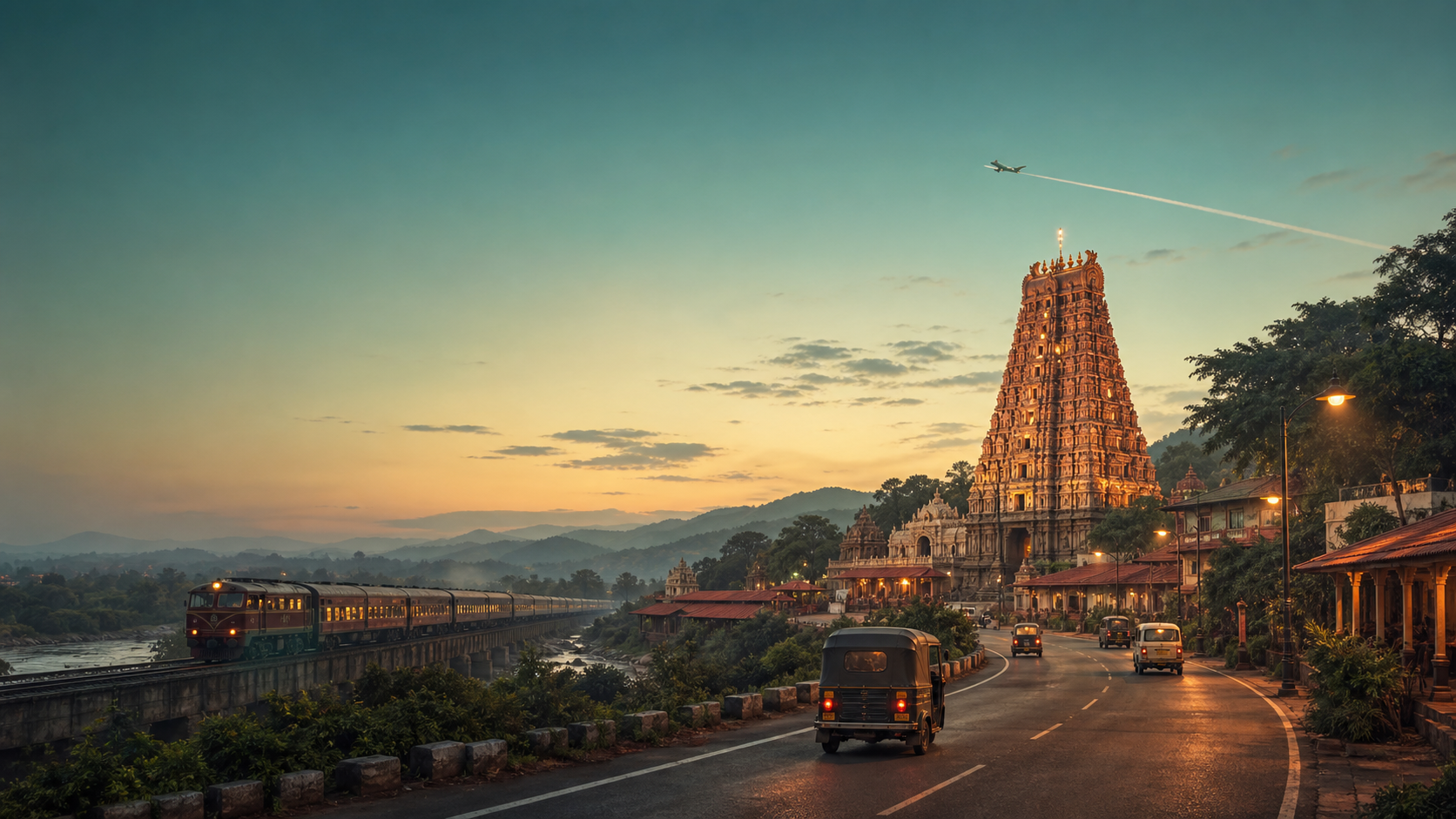
A complete pilgrim record drawn from the existing published article data.
Unveiling India's Ancient Rock-Cut Sanctuaries
The Hindu cave temples of Maharashtra, primarily sculpted by the Chalukya dynasty between the 6th and 8th centuries CE, represent a profound spiritual and architectural legacy. These rock-cut sanctuaries, dedicated predominantly to Lord Shiva, are masterpieces of ancient Indian devotion and craftsmanship. They transformed natural cliffs into sacred spaces, offering a unique glimpse into the artistic and religious fervor of their creators. Sites like Badami, Aihole, Ellora, and Elephanta stand as enduring testaments to this monumental undertaking.
Chalukyan Masterpieces
The Chalukya kings were instrumental in the creation of these rock-cut temples, pioneering a distinctive style that merged architectural grandeur with intricate sculptural detail.
A Legacy of Devotion
These temples are not just architectural marvels but also embody deep religious significance, serving as centers of worship for centuries and reflecting the Shaiva tradition.
The Chalukya Dynasty and the Dawn of Rock-Cut Temples
The Chalukya dynasty, reigning from the 6th to 8th centuries CE, played a pivotal role in shaping India's temple architecture, particularly in the Deccan region of Maharashtra. They were the primary patrons and builders of these monumental rock-cut structures, establishing a foundational phase for Indian temple design. Sites like Badami, with its earliest systematically planned Hindu rock-cut temples, exemplify their pioneering spirit. The Chalukyas transformed natural rock formations into elaborate spiritual complexes, showcasing an unprecedented blend of engineering prowess and artistic vision. This era marked a significant evolution in religious architecture.
Royal Patronage
Chalukya kings, such as those responsible for the Badami caves, actively commissioned and supported the creation of these elaborate rock-cut temples, dedicating vast resources to their construction.
Architectural Genesis
The 6th century CE saw the establishment of Badami as a crucial site, marking the beginning of systematically planned Hindu rock-cut temples in the Deccan, setting a precedent for future developments.
Shiva's Abode: Deities and Spiritual Significance
At the spiritual heart of these Hindu cave temples lies the veneration of Lord Shiva, the main deity. Belonging to the Shaiva tradition, these sanctuaries are replete with forms of Shiva, from the iconic Shiva lingam to his dynamic manifestations as Nataraja. While Shiva is central, other gods and goddesses of the Hindu pantheon are also depicted. The Puranas, particularly the Skanda and Shiva Puranas, underscore the sanctity of these Deccan tirthas. Stories like Shiva's penance at Mahakuta, leading to the sacred spring, highlight the profound mythological and religious practices embedded within these hallowed spaces, where devotees still observe festivals like Maha Shivaratri.
Centrality of Shiva
Lord Shiva is the principal deity, with numerous sculptures and shrines dedicated to his various forms, embodying the core of the Shaiva tradition in these temples.
Sacred Narratives
Mythological tales, such as Shiva's penance and the resulting sacred spring at Mahakuta, are woven into the spiritual fabric, attracting pilgrims seeking blessings and healing.
Journey to the Past: Planning Your Visit to the Cave Temples
Embarking on a journey to the Hindu cave temples of Maharashtra offers an immersive experience into India's ancient heritage. Pattadakal is a UNESCO World Heritage Site, while Badami, Aihole, Ellora, Elephanta, and Ajanta are protected by the Archaeological Survey of India (ASI), underscoring their immense cultural importance. The best time to visit is from October to March, allowing for comfortable exploration. Visitors should plan for a 3-5 day circuit to comprehensively cover key sites like Badami, Aihole, and Pattadakal. Modest dress and removal of footwear are required. Ongoing preservation efforts ensure these invaluable testaments to history endure for future generations.
Visitor Essentials
The optimal time to visit is between October and March. Visitors should wear modest clothing and remove footwear before entering the shrines.
Heritage Preservation
Sites like Pattadakal (UNESCO) and others (ASI protected) receive continuous conservation efforts to safeguard their architectural and historical integrity for posterity.
| Deity | Shiva |
|---|---|
| Form | Shiva is primarily depicted in the form of a lingam, symbolizing his aniconic presence and creative energy. He is also prominently featured as Nataraja, the cosmic dancer, showcasing his dynamic and destructive aspects. |
| Consort | Parvati |
| Sampradaya | Shaiva |
| Significance | As the main deity, Shiva is revered as the supreme being, responsible for creation, preservation, and destruction. The temples serve as sacred abodes for his worship, with legends associating sites like Mahakuta with his penance and the emergence of sacred springs. |
The Sacred Spring of Mahakuta
Deep within the ancient lands, at the revered site of Mahakuta, Lord Shiva once undertook an arduous penance, a tapas of immense power and devotion. As the Puranas attest to the sanctity of such holy places, it was during this divine meditation that a miracle unfolded. From the very earth, a sacred spring emerged, its waters pure and life-giving. This spring-fed pool, born from Shiva's tapas, is not merely a source of water but is believed to possess profound healing properties, a direct blessing from the ascetic deity. Pilgrims still seek solace and cure in its sacred waters, a testament to the enduring power of Shiva’s penance and his benevolent presence.
The Chalukya kings carved devotion into living rock, transforming cliffs into divine dwellings for Lord Shiva.
Witness the cosmic dance of Nataraja, immortalized in stone, where Shiva's rhythm governs creation and dissolution.
Related temples: Aakkoor Thanthondreeswarar Temple | Aazhimala Shiva Temple
Carved from Stone: Engineering and Art in Cave Temples
The Hindu cave temples are a testament to extraordinary architectural techniques, where entire shrines were meticulously carved from living sandstone cliffs. This rock-cut style involved intricate planning and precision, transforming solid rock into multi-chambered temples adorned with exquisite sculptural artistry. Detailed depictions of deities, mythological narratives, and celestial beings grace the walls, pillars, and ceilings. Iconic forms, such as the eighteen-armed Nataraja at Badami Cave 1 and the Shiva lingam at Ravana Phadi, exemplify the Chalukyan sculptors' skill in bringing stone to life, creating sacred spaces that blend engineering marvels with profound artistic expression.
Rock-Cut Methodology
Builders carved these temples by excavating downwards and inwards, meticulously shaping chambers, pillars, and sculptures directly from the sandstone bedrock.
Sculptural Narratives
The cave interiors are rich with intricate carvings, illustrating Puranic stories and depicting various forms of Shiva, including rare early Nataraja poses, and other deities.
Restoration & Conservation Efforts
The preservation of Hindu cave temples in Maharashtra presents a formidable challenge, given their age and the unique rock-cut nature of their construction. These ancient marvels are constantly battling natural forces such as erosion from wind and rain, water seepage through porous rock, and the occasional seismic tremor, all of which contribute to the gradual degradation of their intricate facades and interior chambers. Beyond natural decay, human activity, including unchecked tourism, pollution, and historical instances of vandalism, has also left its mark. Maintaining the delicate balance of these structures, many adorned with exquisite sculptures and remnants of murals, requires specialized conservation techniques that respect the original materials and craftsmanship, often necessitating extensive archaeological and geological studies to diagnose and mitigate deterioration effectively. Significant efforts are underway by organizations like the Archaeological Survey of India (ASI) and various state archaeological departments to protect and restore these invaluable heritage sites. Conservation strategies often involve a multi-disciplinary approach, combining traditional knowledge with modern scientific methods. This includes chemical treatment for cleaning and preserving rock surfaces, structural reinforcement where necessary, and implementing measures to control humidity and temperature within the caves to safeguard delicate artwork. A crucial aspect of these efforts is balancing the need for preservation with the desire for public access, promoting sustainable tourism models that educate visitors on responsible behavior. Community engagement and raising public awareness about the cultural significance of these temples are also vital components in ensuring their long-term survival for future generations.🗺 How to Reach
Hover a card to animate the journey on the map
Route to Temple
Common Questions
Where is Hindu Cave Temples: Ancient Shiva Shrines of Mumbai located?
Hindu Cave Temples: Ancient Shiva Shrines of Mumbai is documented at Maharashtra, India.
Which deity is associated with Hindu Cave Temples: Ancient Shiva Shrines of Mumbai?
Hindu Cave Temples: Ancient Shiva Shrines of Mumbai is associated with Shiva.
Related Temples


A Living Covenant