



A complete pilgrim record drawn from the existing published article data.
A Journey Through Time: History of Ajanta
The history of the Ajanta Caves spans two distinct phases of Buddhist patronage, primarily under the Satavahana and Vakataka dynasties, showcasing a remarkable evolution in artistic and architectural styles. The initial phase, under the Satavahanas, began in the 2nd century BCE, establishing early Hinayana caves. After a period of dormancy, construction resumed vigorously in the 5th century CE under the Vakatakas, leading to the creation of numerous Mahayana caves, before major activity concluded around 480 CE.
The Early Satavahana Phase
Commencing in the 2nd century BCE, the first phase saw the creation of Hinayana caves like Caves 9 and 10. These early rock-cut structures featured aniconic representations of the Buddha, reflecting the Theravada tradition prevalent at the time, primarily during the Satavahana period.
The Flourishing Vakataka Period
The second major phase of construction and carving occurred during the 5th century CE under the Vakataka dynasty. This period, marked by inscriptions from patrons like Varahadeva and Upendragupta, introduced Mahayana Buddhist themes, characterized by iconic Buddha images and elaborate murals.
Introduction: The Marvel of Ajanta Caves
The Ajanta Caves, nestled in the horseshoe-shaped gorge of the Waghora River in Maharashtra, represent a breathtaking ensemble of ancient Indian Buddhist rock-cut cave temples. Carved into basalt rock from the 2nd century BCE to around 480 CE, these caves are globally renowned for their exquisite mural paintings and sculptural artistry. Designated a UNESCO World Heritage Site in 1983, Ajanta stands as a pivotal pilgrimage site, showcasing the profound artistic and spiritual achievements of early Indian Buddhism through two distinct phases of construction and artistic development. Its walls narrate centuries of devotion.
A UNESCO World Heritage Site
Recognized for their outstanding universal value, the Ajanta Caves were inscribed as a UNESCO World Heritage Site in 1983. This designation acknowledges their significance as a masterpiece of human creative genius and a unique testimony to a cultural tradition of early Indian Buddhism.
Location and Significance
Situated in the state of Maharashtra, the caves are carved into a cliff face above the Waghora River. This secluded location provided an ideal environment for monastic life and artistic endeavors, fostering a vibrant Buddhist monastic community for centuries.
The Spiritual Narrative: Buddha and Buddhist Philosophy
The art and architecture of Ajanta are deeply imbued with Buddhist teachings, primarily depicting the life of Buddha and the Jataka tales, which illustrate his previous incarnations. These visual narratives served as moral lessons and spiritual guides for the monastic community and pilgrims. The transition from aniconic representations in early Hinayana caves to iconic Buddha images in later Mahayana caves reflects the evolving philosophical and devotional practices within Buddhism.
Depictions of the Buddha's Life
The cave walls vividly illustrate significant events from the life of Siddhartha Gautama, the Buddha. These depictions include his birth, enlightenment, first sermon, and parinirvana, serving as a comprehensive visual biography of the founder of Buddhism.
The Jataka Tales
A prominent feature of Ajanta's murals are the Jataka Tales, stories of the Buddha's past lives as a Bodhisattva. These narratives, such as the Chhadanta Jataka or the Mahajanaka Jataka, exemplify virtues like compassion, sacrifice, and wisdom, guiding devotees on the path to enlightenment.
Planning Your Visit: Experiencing Ajanta
Visiting the Ajanta Caves offers a profound journey into India's rich cultural and spiritual heritage, requiring careful planning to fully appreciate its historical and artistic significance. The site is a UNESCO World Heritage Site and an ASI Protected Monument. The best time to visit is between October and March, when the weather is most favorable for exploration. A full day, approximately 6–8 hours including travel and a guided tour, is recommended to experience the site thoroughly.
Getting There
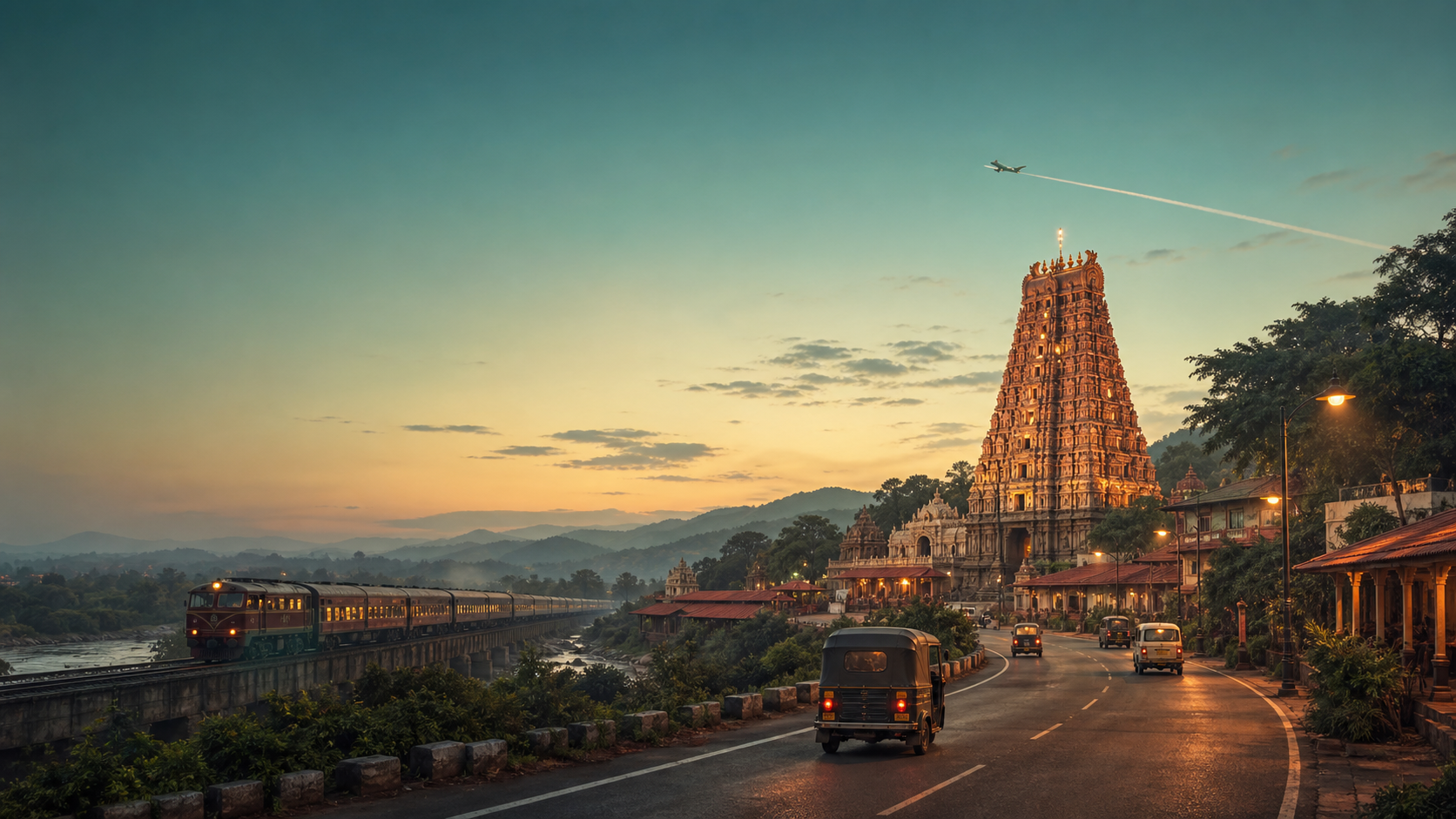
Ajanta is well-connected to Aurangabad, approximately 100-105 km away, via regular bus services, taxi, or car. Aurangabad itself has a railway station (AWB) and an airport (IXU) with domestic flights to major Indian cities.
Best Time to Visit and Practical Tips
The ideal period for a visit is from October to March, avoiding the monsoon and summer heat. Visitors are advised to wear modest clothing and note that footwear is not allowed inside the caves. It is recommended to contact ASI for current timings and entry fees.
| Deity | Buddha |
|---|---|
| Form | The main deity, Buddha, is depicted in various forms, including seated or standing in abhaya/mudra poses, and a reclining Parinirvana form in Cave 26. |
| Consort | Unknown |
| Sampradaya | Buddhist (Theravada and Mahayana) |
| Significance | As the central figure of Buddhism, the Buddha represents enlightenment and the path to liberation. His life and teachings, particularly the Jataka tales, are extensively illustrated, serving as a spiritual guide and object of veneration for monks and pilgrims. |
The Buddha's Many Lives
Within the dimly lit halls of Ajanta, the walls themselves speak, not of the present, but of countless yesterdays. The vibrant murals, enduring through centuries, vividly narrate the Jataka Tales—the captivating past-life stories of the Buddha. Here, one can behold the magnificent six-tusked elephant, Chhadanta, embodying boundless compassion, or witness the profound self-sacrifice of Prince Sibi, who offered his own flesh to save a dove. The Mahajanaka Jataka, another masterpiece, illustrates a king's renunciation of worldly desires for enlightenment. These visual scriptures served as moral lessons and spiritual guides, reminding monks and pilgrims alike of the long and arduous path to Buddhahood, filled with acts of immense virtue and wisdom.
The walls of Ajanta speak, not of the present, but of countless yesterdays, narrating the Buddha's path to enlightenment.
Meticulously carved into living rock, these caves became a vibrant spiritual university, a testament to unwavering faith and artistic devotion.
Related temples: Abeyadana Temple | Ajanta Caves
Architectural Grandeur and Artistic Brilliance
Ajanta's caves are a testament to ancient Indian craftsmanship, featuring intricate rock-cut architecture alongside an unparalleled collection of mural paintings that define classical Indian art. Carved entirely from basalt, these structures include Chaityas (prayer halls) and Viharas (monasteries), demonstrating advanced engineering and artistic skill. The vibrant frescoes, painted using tempera techniques, depict narratives and figures with remarkable detail, color, and emotional depth, making them a cornerstone of art history.
Rock-cut Architecture
The temples are examples of rock-cut cave architecture, meticulously carved directly into the basalt cliff face. This involved excavating large chambers, sculpting pillars, facades, and intricate decorative elements from the living rock, creating sophisticated multi-storied structures.
The Murals of Ajanta
The mural paintings at Ajanta are world-renowned for their beauty and preservation. They utilize a distinct style, characterized by rich colors, expressive figures, and narrative compositions, providing invaluable insights into ancient Indian life, culture, and religious beliefs.
Scholarly Studies and Influence
J. Griffiths' monumental two-volume work stands as a foundational pillar in the scholarly study of Ajanta's Buddhist cave paintings. Undertaken during a period when systematic art historical documentation was still nascent in India, Griffiths, as Principal of the Bombay School of Art, embarked on an ambitious project to meticulously copy and photograph the rapidly deteriorating frescoes. His methodology involved an extensive team of Indian art students who, under his direct supervision, produced thousands of hand-drawn facsimiles. This painstaking process, spanning over a decade, aimed to capture the intricate details, vibrant palette, and narrative complexity of the murals before they were lost forever. The sheer scale of this undertaking, coupled with the challenging conditions within the caves, underscores the dedication required to produce such an invaluable record. The publication of Griffiths' "Paintings in the Buddhist Cave Temples of Ajanta" profoundly impacted subsequent art historical and archaeological research. It provided an unprecedented visual archive, becoming an indispensable reference for scholars worldwide who sought to understand early Indian mural traditions, Buddhist iconography, and the social life depicted in the caves. While later photographic techniques and conservation efforts have offered new perspectives, Griffiths' detailed copies often preserve elements that have since faded or been damaged, making his work a critical primary source. His efforts laid the groundwork for future generations of researchers, inspiring deeper analyses of the Ajanta corpus and establishing a benchmark for the documentation of ancient Indian art, solidifying its place as a cornerstone in the field.🗺 How to Reach
Hover a card to animate the journey on the map
Route to Ajanta
Common Questions
Where is Ajanta Caves: Masterpieces of Ancient Buddhist Art located?
Ajanta Caves: Masterpieces of Ancient Buddhist Art is documented at Maharashtra, India.
Which deity is associated with Ajanta Caves: Masterpieces of Ancient Buddhist Art?
Ajanta Caves: Masterpieces of Ancient Buddhist Art is associated with Buddha.
Related Temples

A Living Covenant