



A complete pilgrim record drawn from the existing published article data.
Historical Foundation
Ancient Roots and Medieval Association
What is the Ganapatya Sect?
The Ganapatya sect is one of the major branches of Hinduism, devoted primarily to the worship of Ganesha as the Supreme Being (Saguna Brahman). Adherents of the Ganapatya tradition regard Ganesha not merely as a remover of obstacles but as the creator, preserver, and destroyer of the universe, the ultimate reality from which all other deities emanate. Morgaon is considered its Adhya Pitha, or foremost spiritual seat.
Peshwa Patronage and Maratha Era Flourishing
"The Peshwas, with their deep devotion to Ganesha, transformed Morgaon into a beacon of faith, adding much of the architectural splendor we witness today. Their patronage was instrumental in establishing the Ashtavinayaka circuit."
— Historical records on Peshwa era donations
Key Historical Milestones
Architecture & Craftsmanship
Maratha Grandeur with Unique Blends
Symbolic Gates and Iconic Sculptures
Understanding Puruṣārtha
In Hinduism, Puruṣārtha refers to the four proper goals or aims of human life: Dharma (righteous conduct, moral values), Artha (prosperity, economic values), Kama (pleasure, love, psychological values), and Moksha (liberation, spiritual values). These four aims provide a framework for a meaningful life.
"The Morgaon temple is a rare confluence of architectural aesthetics and profound cosmology, where every gate, every sculpture, and even the unique placement of Nandi, speaks volumes about its spiritual depth."
— Temple historian's observation
The Presiding Deity
Mayureshwar: The Peacock-Mounted Ganesha
Mayureshwar Ganesha Profile
- Main Deity: Ganesha (Mayureshwar/Moreshwar)
- Form: Seated, four-armed, trunk-left, svayambhu (self-manifested) icon.
- Unique Features: Depicted with peacock mount (Mayura); diamond-embedded navel and eyes on the idol; covered in a thick layer of sindoor (vermilion).
- Consorts: Riddhi and Siddhi (also known as Siddhi and Buddhi).
- Iconographic Uniqueness: Only Ganesha temple where Ganesha is worshipped as Mayureshwar (peacock-mounted).
- Spiritual Significance: Adhya Pitha of the Ganapatya sect.
The svayambhu icon, believed to be self-manifested, is continuously covered in a thick layer of sindoor (vermilion), a traditional practice that adds to its mystique. This layer is believed to peel off naturally once every century, a phenomenon last recorded in 1882, and prior to that in 1788, reinforcing the temple's ancient and miraculous aura. The idol's navel and eyes are famously embedded with diamonds, radiating a subtle brilliance from beneath the sindoor.
A Pantheon of Deities and Sacred Icons
Festivals & Living Traditions
Annual Celebrations and Palkhi Processions
Pilgrim Footfall
The Shri Mayureshwar Temple records the largest pilgrim footfall in the entire Ashtavinayaka circuit, especially during major festivals like Ganesh Chaturthi and Ganesh Jayanti.
Daily Rituals and Monthly Observances
Plan Your Visit
Getting There and Best Time
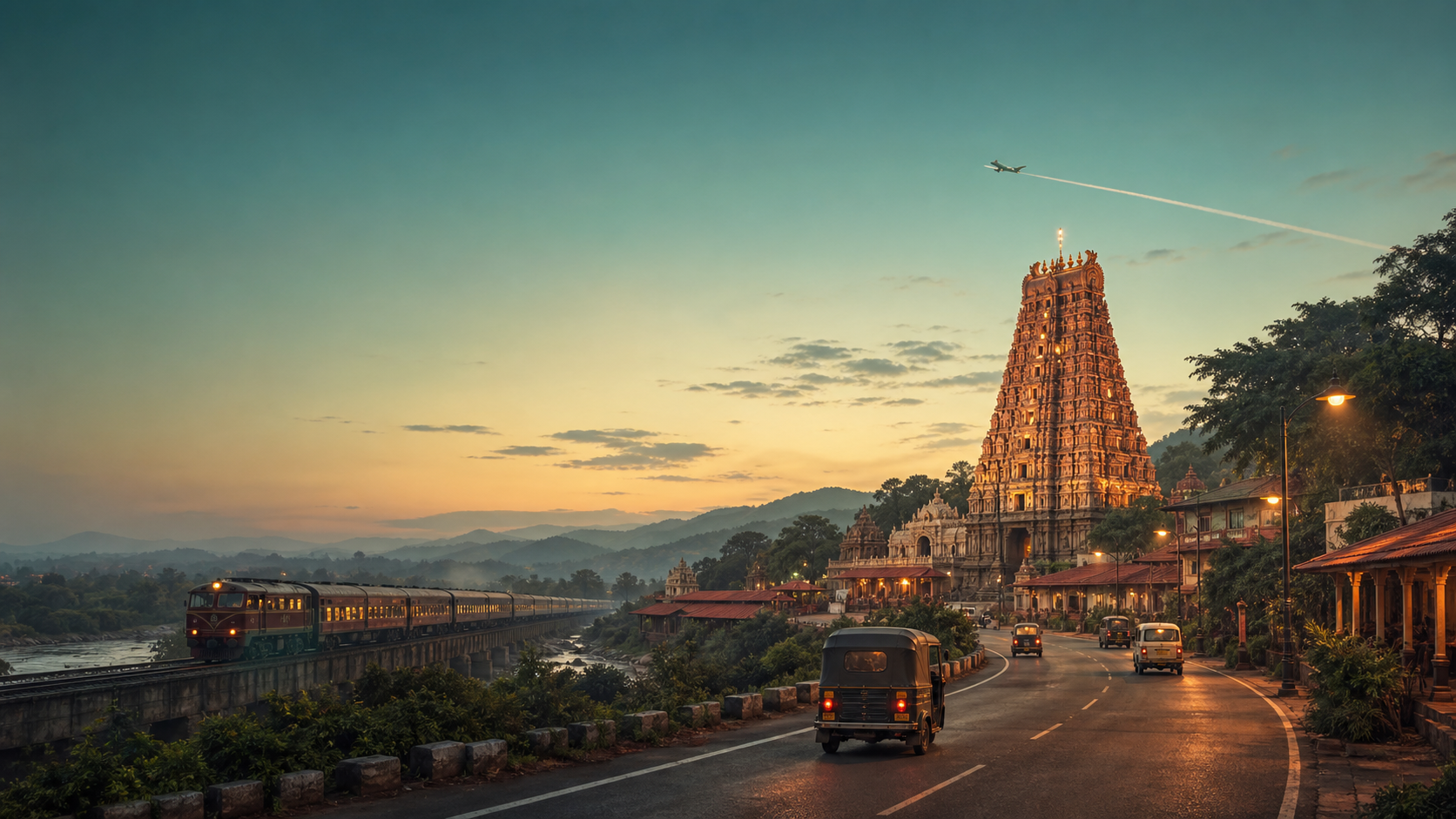
The Shri Mayureshwar Temple is conveniently located approximately 65 km from Pune city, making it accessible for both local and international visitors.
- Nearest City: Pune, Maharashtra.
- Nearest Airport: Pune International Airport (PNQ), approximately 65 km away. Taxis and private cars are readily available for hire from the airport.
- Nearest Railway: Pune Junction Railway Station, also around 65 km from Morgaon. From the railway station, you can easily find buses or private vehicles to reach the temple.
- By Road: Morgaon is well-connected by road networks. State transport buses and private tour operators frequently ply the route from Pune and other major cities in Maharashtra.
Visitor Information and Nearby Attractions
Pro-Tip for Visitors
Consider hiring a local guide to understand the intricate mythological narratives associated with each of the four cardinal gates and their symbolic Ganesha forms. Their insights can significantly enrich your appreciation of the temple's unique cosmology and iconography.
Key Takeaway for Morgaon
Morgaon's Shri Mayureshwar Temple offers a profound spiritual journey, being the Adhya Pitha of the Ganapatya sect and a crucial starting and ending point for the revered Ashtavinayaka pilgrimage. Its unique architecture, rich mythology, and living traditions make it an indispensable site for devotees and cultural enthusiasts alike.
Related temples: Abeyadana Temple | Ajanta Caves
Sacred Stories & Mythology
The Legend of Mayureshwar and Sindhu
Brahma's Purification and the Karha River
Another significant mythological event tied to Morgaon involves Lord Brahma. Legend has it that Brahma, having committed an incestuous sin, sought purification. He meditated at a site called Turiya Tirtha and bathed in sacred waters. These waters, believed to have been spilled by Brahma during his ritual, transformed into the Karha river, which flows past Morgaon. This legend connects the temple not only to Ganesha's valor but also to the creation of a sacred river and a site of profound purification for the Trimurti themselves.
Cosmic Significance in Puranic Texts
Saints, Poets & Devotees
Morya Gosavi: The Revered Ganapatya Saint
"The spiritual magnetism of Morgaon was significantly amplified by the profound devotion of Morya Gosavi, whose life exemplified unwavering faith in Lord Ganesha."
— Devotional literature on Morya Gosavi
Samarth Ramdas and Devotional Contributions
Records, Marvels & Heritage
Unique Distinctions and Engineering Feats
Morgaon holds several distinctions that firmly place it as one of India's most significant Ganesha temples:
- It is famously known as both the first and last temple of the Ashtavinayaka pilgrimage, symbolizing the cyclical nature of Ganesha's divine presence.
- It is recognized as India's foremost Ganesha pilgrimage site, a testament to its ancient origins and Puranic endorsement.
- Uniquely, Morgaon is the only Ashtavinayaka temple with a Nandi sculpture placed directly before the Ganesha shrine, an unusual placement that, according to local belief, occurred miraculously.
- It is the only Ganesha temple where Ganesha is explicitly depicted with a peacock mount (Mayura), a rare iconography that reflects his specific incarnation as Mayureshwar.
Literary References and Modern Significance
🗺 How to Reach
Hover a card to animate the journey on the map
Route to Morgaon
Common Questions
Where is Ganesha Temple, Morgaon: Ashtavinayaka's Foremost Shrine located?
Ganesha Temple, Morgaon: Ashtavinayaka's Foremost Shrine is documented at Morgaon, Maharashtra.
Which deity is associated with Ganesha Temple, Morgaon: Ashtavinayaka's Foremost Shrine?
Ganesha Temple, Morgaon: Ashtavinayaka's Foremost Shrine is associated with Ganesha.
Related Temples


A Living Covenant