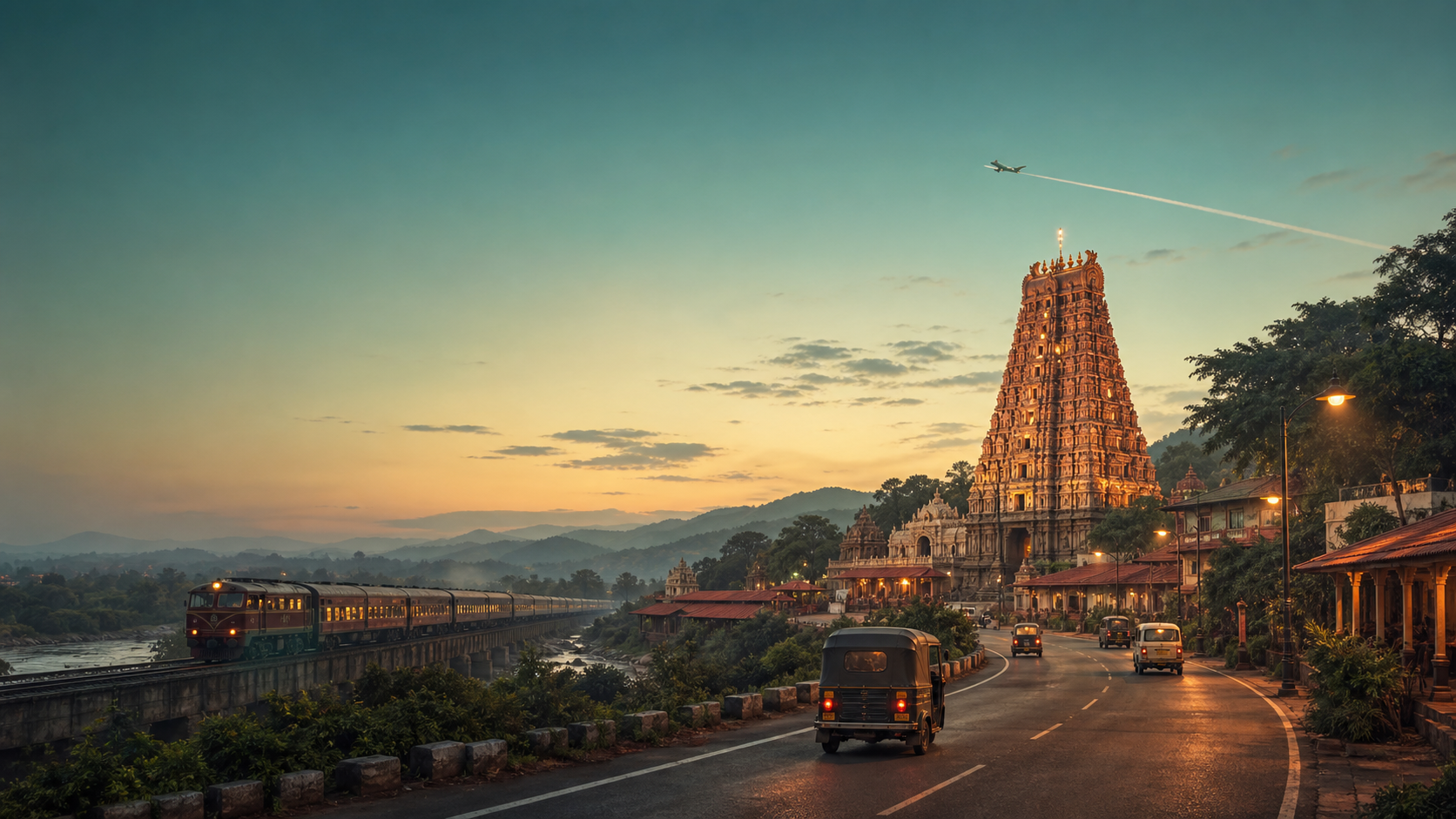
A complete pilgrim record drawn from the existing published article data.
Centuries of Devotion: The History of Ellora
Spanning from the 6th to the 10th centuries CE, the Ellora Caves were excavated and patronized by successive dynasties, reflecting a rich historical narrative of religious evolution. The earliest Buddhist caves (1-12) were built under Kalachuri and early Chalukya patronage. Subsequently, Hindu cave excavations commenced in the 8th century, with the Rashtrakuta dynasty, particularly Krishna I, commissioning the monumental Kailasa Temple. The final phase saw the creation of Jain caves (30-34) from the 9th to 10th centuries, supported by Jain merchant patrons, completing this multi-faith complex.
Early Buddhist Patronage
The first phase of construction, from c. 600-800 CE, saw the creation of the Buddhist caves (1-12), supported by the Kalachuri and early Chalukya dynasties.
Rashtrakuta Era and Kailasa
The 8th and 9th centuries marked the peak of Hindu cave construction, notably the Kailasa Temple (Cave 16), a project of Krishna I of the Rashtrakuta dynasty.
Jain Contributions
The final phase, from the 9th to 10th centuries CE, involved the excavation of the Jain caves (30-34), largely funded by affluent Jain merchant communities.
Carved from the Mountain: Architectural Grandeur
The architectural brilliance of Ellora lies in its monumental rock-cut structures, a testament to the skill of ancient Indian artisans. The entire complex is carved from a single basalt cliff face, showcasing an advanced understanding of engineering and sculpture. Most notably, the Kailasa Temple (Cave 16) is a freestanding, multi-storeyed temple, meticulously carved from the top down, replicating a structural temple in a monolithic form. Its intricate carvings, depicting deities and mythological scenes, cover every surface, transforming the rock into a vibrant narrative. This unparalleled feat of rock-cut architecture remains a marvel of human endeavor.
The Monolithic Kailasa Temple
Cave 16, the Kailasa Temple, is the crown jewel of Ellora. It is a monumental, multi-storeyed temple carved entirely from a single piece of rock, designed to resemble a freestanding structural temple.
Rock-Cut Technique
The caves were excavated using a top-down method, allowing for the intricate carving of ceilings, pillars, and sculptures directly from the living rock, revealing the interior spaces.
Basalt as Medium
The choice of local basalt stone provided a durable and workable medium for these massive excavations, contributing to their preservation over centuries.
Echoes of Faith: Deities and Mythology
Ellora's caves house a diverse pantheon of deities, each tradition contributing to a rich tapestry of spiritual narratives. The Buddhist caves feature serene Buddhas in various mudras, alongside Bodhisattvas like Avalokiteshvara and Manjushri. Within the Hindu caves, dynamic forms of gods such as Shiva, Vishnu, and their consorts dominate, depicting epic tales like Shiva's cosmic dance (Nataraja) and the lifting of Mount Kailash by Ravana in Cave 14. The Jain caves present the revered Tirthankaras, including Mahavira and Parshvanatha, often in meditative postures, reflecting their ascetic ideals.
Buddhist Iconography
The Buddhist caves are characterized by large, contemplative statues of Buddha, often accompanied by Bodhisattvas, reflecting the Mahayana tradition.
Hindu Deities and Puranic Tales
Hindu caves are replete with sculptures of Shiva in his various forms, Vishnu, Brahma, and goddesses, illustrating stories from the Puranas and Epics, such as the Ramayana.
Jain Tirthankaras
The Jain caves feature sculptures of the Tirthankaras, often depicted nude and in meditative poses, symbolizing their renunciation and spiritual liberation.
Experiencing Ellora: A Visitor's Guide
To fully appreciate the grandeur and spiritual depth of Ellora, visitors should plan their journey to explore the distinct Buddhist, Hindu, and Jain cave complexes. Allow a full day (6-8 hours) for a comprehensive visit. The best time to visit is from October to March, when the weather is pleasant. Modest attire is recommended, and footwear must be removed in some cave temples. Entry fees apply, managed by the Archaeological Survey of India (ASI). Aurangabad, approximately 30 km away, serves as the primary hub for accommodation and transport.
Planning Your Visit
The optimal time to explore Ellora is during the cooler months, from October to March. A full day is recommended to cover all major caves.
Accessibility and Transport
Ellora is easily accessible from Aurangabad by bus, car, or taxi. Aurangabad has a railway station and an airport, connecting it to major Indian cities.
Essential Tips
Visitors should wear modest clothing and be prepared to remove footwear in designated areas. Water and comfortable walking shoes are advisable for exploring the extensive complex.
| Deity | Shiva |
|---|---|
| Form | Shiva is primarily worshipped in the form of a Lingam in the Kailash Temple sanctum. He is also depicted dynamically as Nataraja and in the iconic Ravana-shaking-Kailash relief. |
| Consort | Parvati |
| Sampradaya | Shaiva |
| Significance | The site is believed to represent Mount Kailash, Shiva’s celestial abode, physically manifested through the monolithic excavation of Cave 16, highlighting his cosmic power and dwelling. |
The Divine Mountain: Kailasa Temple's Genesis
Deep within the heart of Ellora lies the magnificent Kailasa Temple, not merely a structure, but a profound spiritual endeavor. Local tradition whispers that this monumental rock-cut temple is a physical manifestation of Mount Kailash itself, the celestial abode of Lord Shiva. It is believed to have been brought into being either through divine intervention, a miracle etched in stone, or by the unyielding devotion of King Krishna I. His vision was to replicate the sacred Himalayan peak, a breathtaking act of faith and artistry, offering Shiva a dwelling place carved entirely from a single, living rock.
To carve a temple from living rock, not build it stone by stone, is an act of devotion that defies imagination.
Ellora stands as a testament to ancient India's religious harmony, where Buddhist, Hindu, and Jain faiths found their eternal expression in stone.
Related temples: Abeyadana Temple | Ajanta Caves
Ellora Caves: A Symphony in Stone
The Ellora Caves, a UNESCO World Heritage Site in Maharashtra, represent an unparalleled achievement in rock-cut architecture. Carved from basalt cliffs between 600 and 1000 CE, these 34 caves showcase a remarkable religious harmony. They house monasteries, chapels, and temples dedicated to Buddhist, Hindu, and Jain traditions, coexisting peacefully side-by-side. This monumental complex stands as a testament to ancient Indian artistry and spiritual tolerance, offering a unique glimpse into the diverse religious landscape of early medieval India.
A Confluence of Faiths
Ellora uniquely brings together three major Indian religions – Buddhism, Hinduism, and Jainism – within one complex. This coexistence highlights the period's religious tolerance and artistic exchange.
UNESCO Recognition
Inscribed as a UNESCO World Heritage Site in 1983, Ellora is celebrated globally for its outstanding universal value, encompassing its architectural brilliance and cultural significance.
Restoration & Conservation
The preservation of the Ellora Caves, a UNESCO World Heritage Site, presents a monumental and ongoing challenge, constantly battling the relentless forces of nature and the passage of time. These ancient rock-cut sanctuaries are susceptible to a myriad of threats, including weathering from monsoon rains, wind erosion, temperature fluctuations, and seismic activity. Biological growth such as moss, lichen, and fungi also poses a significant risk, slowly degrading the rock surfaces and obscuring intricate details. The Archaeological Survey of India (ASI) has been at the forefront of conservation efforts for over a century, employing a range of techniques from chemical cleaning and consolidation of fragile rock to improving drainage systems to prevent water ingress. The colossal scale and architectural complexity of structures like the Kailasa Temple (Cave 16) demand specialized engineering and continuous vigilance to ensure their structural integrity and artistic brilliance endure. Modern conservation strategies at Ellora have increasingly adopted scientific and sustainable approaches, often in collaboration with international experts and guided by UNESCO's directives for World Heritage Sites. These contemporary methods include non-invasive techniques for cleaning and consolidation, detailed digital documentation through laser scanning and photogrammetry, and comprehensive environmental monitoring to track deterioration patterns. While significant progress has been made, persistent challenges include managing the ever-growing influx of tourists, mitigating the environmental impact of surrounding urban development, and protecting the delicate remnants of ancient murals and sculptures from further degradation. Continuous research into advanced materials and methodologies for rock consolidation and surface protection is vital to ensure the long-term safeguarding of this irreplaceable cultural and architectural marvel for posterity.🗺 How to Reach
Hover a card to animate the journey on the map
Route to Temple
Common Questions
Where is Ellora Caves: UNESCO's Rock-Cut Legacy of Faiths located?
Ellora Caves: UNESCO's Rock-Cut Legacy of Faiths is documented at Ellora, Maharashtra.
Which deity is associated with Ellora Caves: UNESCO's Rock-Cut Legacy of Faiths?
Ellora Caves: UNESCO's Rock-Cut Legacy of Faiths is associated with Shiva.
Related Temples


A Living Covenant