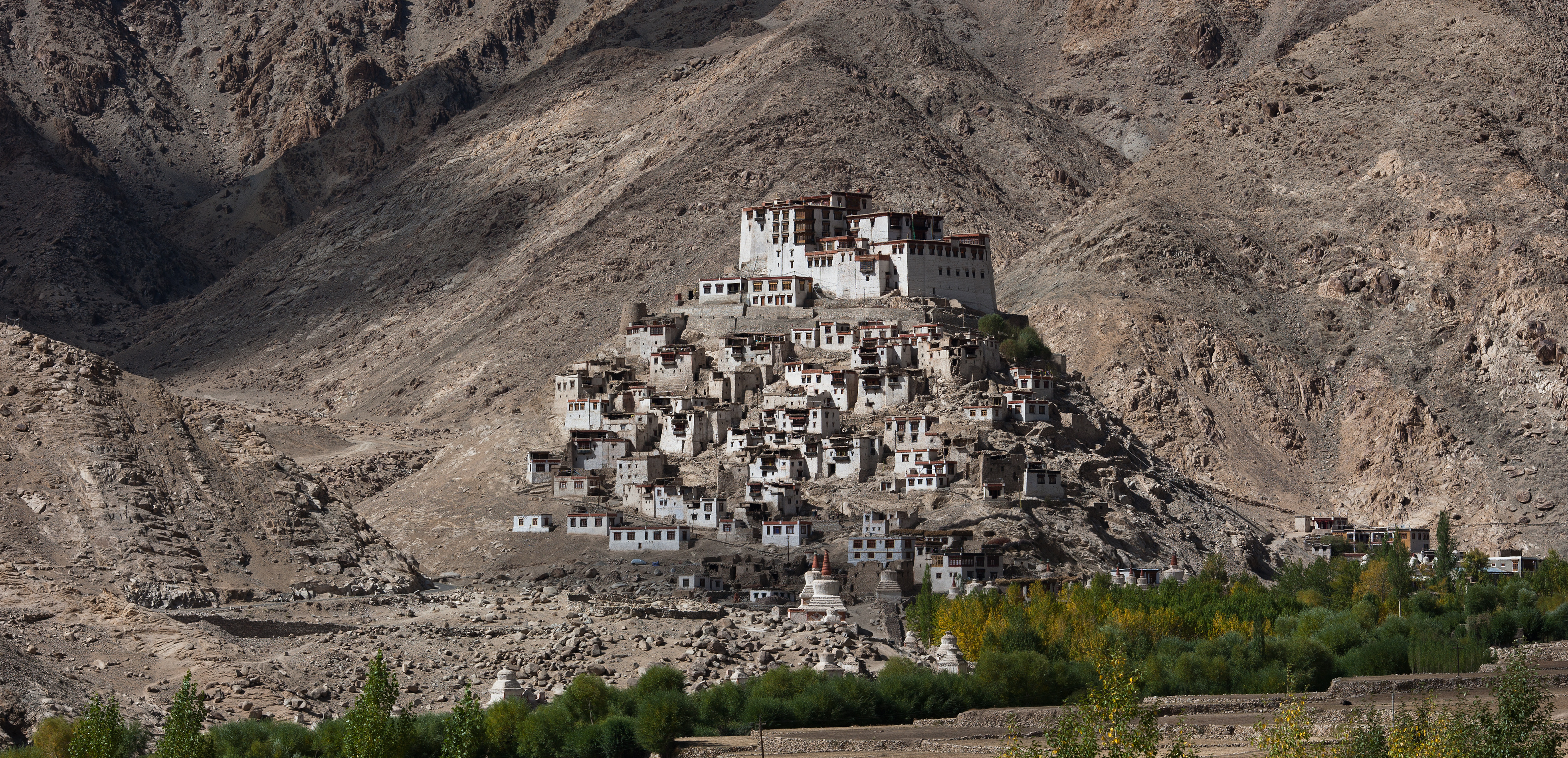
A complete pilgrim record drawn from the existing published article data.
Key Takeaway: Chemrey Monastery represents the deep integration of Buddhist philosophy with the rugged geography of Ladakh, serving as a vital cultural and spiritual hub for centuries.
The Genesis: A Foundation in History
Key Moments in Chemrey Monastery's History
Royal Patronage and Visionary Foundation
The King's Devotion and Lama's Wisdom
The story of Chemrey's genesis is a testament to shared devotion. Legend suggests that King Sengge Namgyal, a devout ruler, sought to further entrench Buddhist teachings within his realm. He entrusted the esteemed Lama Tagsang Raschen with the task of establishing a prominent monastic institution that would serve as a beacon of the Dharma. Under the Lama's spiritual guidance and the King's benevolent patronage, the foundation stones of Chemrey Monastery were laid in 1664, manifesting a powerful collaboration between temporal authority and spiritual wisdom. This partnership ensured the monastery's strategic importance and its lasting legacy.
The Drukpa Lineage and Its Enduring Influence
Did You Know? The establishment of Chemrey Monastery in 1664 reflects the broader historical process of Buddhism taking root and solidifying its presence in the high-altitude regions of what is now Ladakh. It powerfully demonstrates the profound and lasting influence of the Drukpa Kagyu school in shaping the spiritual landscape of the Himalayas.
"The monastery is more than stone and mortar; it is the living embodiment of the Drukpa spirit, a silent witness to centuries of Himalayan spirituality, standing sentinel against the Leh sky."
Architectural Marvels in the High Altitude
Sacred Layout and Structural Harmony
The Revered Statue of Padmasambhava
The most arresting feature within the monastery is undoubtedly the towering statue of Padmasambhava, revered as the "Second Buddha." Positioned prominently, this magnificent figure serves as the spiritual focal point, reminding every visitor of the enlightened master who was instrumental in bringing the Dharma into the Himalayan realms. The presence of such a significant icon speaks volumes about the monastery's deep commitment to the core teachings and spiritual lineage of Tibetan Buddhism.
Padmasambhava (Guru Rinpoche)
Padmasambhava, meaning "Lotus-Born," is revered across Himalayan Buddhism as Guru Rinpoche, the "Precious Master." He is credited with establishing Vajrayana Buddhism in Tibet in the 8th century and is considered a central figure in the Nyingma school, though his influence spans all traditions. His images often depict him with a staff, a skullcup, and a wrathful yet compassionate expression, symbolizing his mastery over obstacles and his profound wisdom. At Chemrey, his large statue underscores his pivotal role in spreading the Dharma across Ladakh and the wider Tibetan cultural sphere.
Visitor Tip: When visiting, take time to observe the way the natural light interacts with the intricate murals and statues within the prayer halls. The subtle artistry reflects the unique blend of Tibetan and local Ladakhi artistic sensibilities, revealing new details as the day progresses.
Rhythms of Devotion: Festivals and Celebrations
The Grandeur of Chemrey Angchok Festival
1664Annual Cycles of Faith and Practice
Visitor Tip: If planning your visit around a festival like Chemrey Angchok, book accommodations well in advance as the region experiences a surge in visitors. Remember to dress respectfully, remain silent during sacred dances, and seek permission before taking photographs, especially during rituals.
The Enduring Legacy of Himalayan Monasticism
A Beacon of Ladakhi Buddhist Heritage
Did You Know? Ladakh, often referred to as "Little Tibet," boasts a rich tapestry of Buddhist monasteries, or gompas, each with its own unique history and traditions. Chemrey is one of many such jewels, collectively forming a vibrant network of spiritual learning and practice in the remote high desert.
The Timeless Resonance of Faith
"The silence of the high mountains mirrors the deep meditation practiced within these walls, offering a perspective on life that is both austere and infinitely rich in spiritual meaning."


Related temples: Bardan Monastery | Diskit Monastery
Treasures of Wisdom: Scriptures and Artifacts
Beyond its sacred architecture, the true wealth of Chemrey Monastery resides in its invaluable collection of sacred texts and ancient artifacts. The monastery houses a remarkable repository of scriptures, representing a vast ocean of wisdom for scholars and spiritual seekers alike. These texts are far more than mere books; they are living conduits of ancient wisdom, meticulously preserved across countless generations by dedicated monastic caretakers.
The Luminous Silver and Gold Manuscripts
One of the most celebrated and exquisite assets of the monastery is its extraordinary collection of scriptures, notably a 29-volume set known as the Kanjur. These invaluable manuscripts are meticulously inscribed in shimmering silver and gold letters, a rare and extraordinary feat of artistry and devotion. To gaze upon these illuminated texts is to witness the unparalleled dedication of monastic life to the preservation of the Dharma, ensuring that the profound wisdom of the past continues to illuminate the present and future generations.
"These illuminated texts, penned in precious metals, are not just historical documents; they are sacred vessels, holding the very voice of ancient masters in tangible, radiant form, embodying centuries of spiritual endeavor."
Preservation of Ancient Buddhist Knowledge
Key Takeaway: Chemrey Monastery's collection of rare scriptures, especially the silver and gold Kanjur, highlights its critical role as a conservator of Tibetan Buddhist literary and artistic heritage, ensuring the longevity of sacred teachings.
A Traveller’s Guide to Chemrey
Navigating the High Himalayan Terrain
Respectful Exploration and Essential Advice
- Acclimatization is Crucial: Due to the monastery’s high altitude (around 3,600 meters or 11,800 feet), visitors must allow ample time—typically 2-3 days—to acclimatize in Leh before undertaking any strenuous travel or extended stays at higher elevations. This helps prevent altitude sickness.
- Dress Warmly and Modestly: Ladakh’s climate is severe, with temperatures often dropping significantly. Layering is essential; bring heavy, insulated clothing suitable for extreme cold, even during summer evenings. Moreover, dress modestly out of respect for the monastic environment.
- Observe Monastic Etiquette: Maintain a high degree of decorum and respect the quiet, contemplative nature of the monastery, especially during prayer times. Silence is appreciated in the assembly halls, and photography may be restricted in certain areas.
- Engage Respectfully: When interacting with monks or local residents, approach with humility and a genuine desire to learn. Understand that Chemrey is a place of deep spiritual practice and communal life, not solely a tourist destination.
🗺 How to Reach
Hover a card to animate the journey on the map
Route to Sakti
Common Questions
Where is Chemrey Monastery: Discover the Ancient Buddhist Heart of Ladakh located?
Chemrey Monastery: Discover the Ancient Buddhist Heart of Ladakh is documented at Leh, Ladakh.
Which deity is associated with Chemrey Monastery: Discover the Ancient Buddhist Heart of Ladakh?
Chemrey Monastery: Discover the Ancient Buddhist Heart of Ladakh is associated with Padmasambhava.
Related Temples


A Living Covenant