



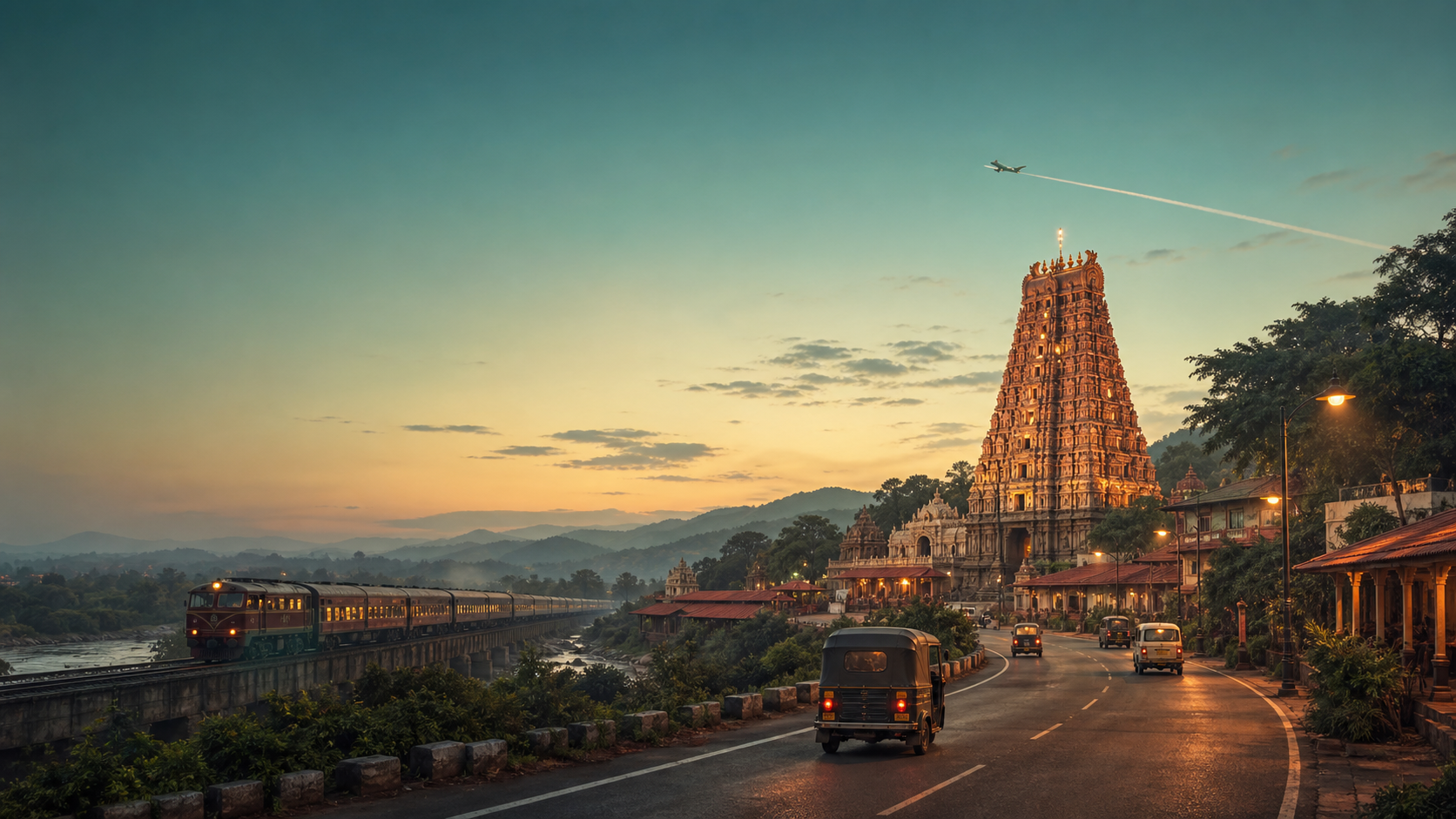
A complete pilgrim record drawn from the existing published article data.
Centuries of Faith: The History of the Cave Temples
The construction of these cave temples spanned over eight centuries, primarily under the patronage of the Satavahana and Vakataka dynasties. The early phase, beginning around 200 BCE, saw the creation of Hinayana-style chaityas and viharas, often supported by donations from Satavahana officials. A significant transition occurred around the 5th century CE, marking the advent of the Mahayana phase. During this period, Vakataka kings, such as Harishena, and their ministers, like Varahadeva, provided substantial royal patronage, leading to elaborate new constructions and artistic embellishments.
Early Patronage: The Satavahanas
The Satavahana dynasty initiated the earliest rock-cut excavations, fostering the Hinayana tradition with donations recorded in 2nd-1st century BCE inscriptions.
The Vakataka Era and Mahayana Flourishing
The Vakataka period, particularly from the 5th century CE, witnessed a resurgence of activity and royal support, ushering in the Mahayana phase of construction and artistic development.
Evolution of Monastic Life
Over centuries, the caves transformed from simple monastic retreats to elaborate complexes, reflecting changing Buddhist practices and increasing patronage.
Rock-Cut Wonders: Architecture and Murals of the Caves
The Buddhist caves are renowned for their distinctive rock-cut architecture, meticulously carved from basalt cliffs. The complexes comprise two main types of structures: chaityas, or prayer halls, characterized by stupas and nave-like interiors, and viharas, monastic dwelling halls with cells for monks and sometimes central shrines. Beyond their structural ingenuity, the caves are celebrated for their unparalleled mural paintings. These vibrant frescoes adorn walls and ceilings, depicting intricate Buddhist narratives, including Jataka tales, and scenes from the life of the Buddha, offering invaluable insights into ancient Indian art and society.
Chaityas: Prayer Halls
The chaityas are large, rectangular halls with a stupa at one end, serving as congregational spaces for worship and circumambulation.
Viharas: Monastic Dwellings
Viharas are residential complexes, often multi-storied, featuring central courtyards surrounded by cells for monks, and later, shrines with Buddha images.
Mural Masterpieces
The exquisite mural paintings, executed with natural pigments, illustrate a rich tapestry of Buddhist stories and secular life, showcasing remarkable artistic skill and narrative depth.
Spiritual Narratives: Deity and Mythology
The central deity revered within these caves is the Buddha, depicted in various forms and postures reflecting his life and teachings. The iconography evolves from early Hinayana aniconic representations to later Mahayana anthropomorphic images. A significant aspect of the caves' artistic program is the vivid depiction of Jataka tales. These narratives, drawn from both Pali Canon and Sanskrit literature, illustrate the previous lives of the Buddha, emphasizing virtues such as compassion, sacrifice, and wisdom. They served as moral and spiritual guidance, inviting devotees to reflect on the path to enlightenment.
The Centrality of Buddha
Buddha is the primary focus, with his image and symbols evolving to reflect doctrinal shifts from early aniconism to later iconic representations.
Jataka Tales: Moral Fables
Murals extensively illustrate Jataka tales, such as the Chhadanta, Sibi, and Vidhurapandita Jatakas, providing ethical lessons and insights into the Buddha's journey.
Iconography and Symbolism
The rich iconography within the caves visually communicates key Buddhist concepts, parables, and the historical and mythological events surrounding the Buddha.
Journey to Enlightenment: A Visitor's Guide
Visiting the Buddhist caves offers a profound journey through ancient history and art. The optimal time for a visit is from October to March, when the weather is most favorable. The site is accessible via Aurangabad, a major hub for bus, train, and flight connections, approximately 103-104 km away. A full day, typically 6-8 hours, is recommended to explore the extensive complex. Visitors are requested to remove footwear before entering the caves, respecting the sacred nature of the site. Conservation efforts by the Archaeological Survey of India (ASI) ensure the preservation of this UNESCO World Heritage Site.
Planning Your Visit
The best time to visit is during the cooler months from October to March, allowing for comfortable exploration of the extensive cave complex.
Accessibility and Transport
The caves are well-connected to Aurangabad, which serves as a central point for bus, train, and air travel, with regular services to the site.
Conservation and Respect
As a protected UNESCO World Heritage Site, visitors are encouraged to follow guidelines, including removing footwear, to help preserve these invaluable cultural treasures.
| Deity | Buddha |
|---|---|
| Form | Seated or standing Buddha in meditation or teaching posture; stupa as aniconic focus in early caves. |
| Consort | Unknown |
| Sampradaya | Buddhist (both Hinayana and Mahayana traditions) |
| Significance | The Buddha is revered as the enlightened one, whose teachings form the core of the Buddhist tradition. In these caves, his presence fostered a vibrant center for monastic life, meditation, and the study of his previous lives through Jataka tales. |
The Silent Sentinels of Wagora
Deep within the steep ravine of the Wagora River, generations of devoted Buddhist monks embarked on a monumental task: carving sacred spaces directly into the rock face. Seeking secluded havens for meditation and worship, their tireless efforts, sustained by royal patronage and the unwavering devotion of lay followers, transformed these caves over eight centuries. The site flourished into a vibrant epicentre of Buddhist learning, art, and spiritual practice, attracting scholars and practitioners alike. However, after the 7th century, this once-thriving sanctuary gradually receded into silence, awaiting rediscovery.
These rock-cut caves are not merely structures; they are living testaments to the profound spiritual journey and artistic brilliance of ancient Buddhist India.
The walls whisper tales of the Awakened One's many lives, offering moral guidance and a glimpse into the path to enlightenment.
Related temples: Abeyadana Temple | Ajanta Caves
The Enduring Legacy of Maharashtra's Buddhist Caves
The Buddhist caves in Maharashtra, designated a UNESCO World Heritage Site, represent a monumental achievement in ancient Indian art and architecture. Carved into basalt rock from c. 200 BCE to 650 CE, these sanctuaries bear witness to the evolution of Buddhist thought and artistic expression across both Hinayana and Mahayana traditions. They stand as a profound testament to the skill and devotion of their creators, showcasing unparalleled rock-cut craftsmanship and intricate mural paintings that continue to inspire.
UNESCO Recognition
These caves are recognized globally for their outstanding universal value, preserving a vital chapter of Buddhist monastic life and artistic development in India.
Architectural Marvels
The site exemplifies rock-cut architecture, where entire monastic complexes, including prayer halls and living quarters, were meticulously sculpted from solid rock.
Artistic and Spiritual Heritage
The caves served as vibrant centers for spiritual practice, learning, and artistic creation, reflecting the rich cultural tapestry of ancient India.
Restoration & Conservation Efforts
The preservation of Maharashtra's Buddhist caves has been a continuous and challenging endeavor, spanning centuries. Early efforts by colonial administrators, notably during the British Raj, marked the initial recognition of their historical and artistic value, leading to some rudimentary protective measures. However, these ancient rock-cut sanctuaries have faced relentless threats from natural weathering, including water seepage, erosion, and seismic activity, which have gradually degraded their intricate carvings and delicate murals. Human factors, such as past vandalism, uncontrolled tourism, and the impact of surrounding development, have also contributed to their deterioration. The Archaeological Survey of India (ASI) has been at the forefront of these efforts since its inception, working to document, protect, and stabilize these fragile structures, often grappling with limited resources and the sheer scale of the sites. Modern conservation strategies employ a multi-faceted approach to safeguard these invaluable heritage sites. Chemical cleaning techniques are used to remove accumulated grime and biological growth without damaging the original rock or pigments, while structural reinforcement addresses cracks and instability in the cave facades and interiors. Extensive documentation, including 3D scanning and digital mapping, helps in monitoring their condition and planning future interventions. International organizations, alongside local communities and academic institutions, increasingly collaborate with the ASI, bringing specialized expertise and funding. Despite these advancements, ongoing challenges include securing adequate financial resources, training skilled conservators, and managing the increasing influx of tourists sustainably. The long-term survival of these caves depends on a delicate balance between active preservation, public awareness, and responsible visitation practices.🗺 How to Reach
Hover a card to animate the journey on the map
Route to Temple
Common Questions
Where is Buddhist Caves in Maharashtra: Ancient Art & Spiritual Retreat located?
Buddhist Caves in Maharashtra: Ancient Art & Spiritual Retreat is documented at Maharashtra.
Which deity is associated with Buddhist Caves in Maharashtra: Ancient Art & Spiritual Retreat?
Buddhist Caves in Maharashtra: Ancient Art & Spiritual Retreat is associated with Buddha.
Related Temples


A Living Covenant