
A complete pilgrim record drawn from the existing published article data.
This guide delves into the enduring heritage of these sacred sites, exploring their historical foundations, architectural nuances, and the legends that have sustained them through millennia.

History & Foundation
Early Civilizations & Empires
The region's earliest foundations trace back to the Indus Valley Civilization, followed by migrations of Indo-Aryan peoples. This rich pre-history set the stage for the development of early religious practices and structures. Following Alexander the Great's invasion in the 4th century BCE, Chandragupta Maurya, with the aid of Punjabi republics, established the Maurya Empire.
This period marked a significant era of state-sponsored development, likely influencing early temple construction or the establishment of sacred sites. Successive reigns of the Indo-Greek Kingdom, Kushan Empire, and Indo-Scythians further shaped the region's cultural and religious landscape.
Historical Depth: Punjab's heritage spans over 5000 years, from the Indus Valley Civilization to modern times.
Resilience Through Dynasties
The Tomara and Katoch Dynasties controlled eastern Punjab, steadfastly resisting Ghaznavid invasions. These periods of both conflict and consolidation undoubtedly influenced the patronage and architectural styles of the ancient temples, reflecting the resilience and spiritual depth of the Punjabi people.
"Punjab: where ancient rivers carved the cradle of civilization and empires rose and fell, leaving behind echoes in stone."

Architecture & Deity
Architectural Influences
Given Punjab's historical trajectory, its ancient temple architecture would have absorbed elements from various periods. Early structures might have shown simple, indigenous styles, evolving under the Mauryan Empire's patronage towards more formalized designs. The subsequent Indo-Greek and Kushan periods introduced Hellenistic and Central Asian artistic motifs, which could have been integrated into religious iconography and structural ornamentation.
Later dynasties, such as the Vardhanas and Hindu Shahis, would have continued to develop styles reflecting broader North Indian temple architecture, characterized by intricate carvings, distinct shikhara (spire) types, and mandapa (hall) layouts. The use of local materials, primarily stone and brick, would have also defined their aesthetic.
Deities of the Ancient Punjab


Festivals & Traditions
Ancient temples in Punjab would have been vibrant centers of community life, hosting a myriad of festivals and traditions that celebrated both religious devotion and the rhythms of agricultural life.
Ancient Observances
Beyond agricultural festivals, major pan-Indian Hindu festivals, such as those dedicated to Shiva (Maha Shivaratri), Vishnu (Janmashtami), or Devi (Navaratri), would have been observed with regional variations, reflecting local customs and interpretations.
Cultural Heritage
Understanding these ancient observances offers a glimpse into the daily lives and spiritual aspirations of the people who built and worshipped in these venerable structures.

Visiting the Temple
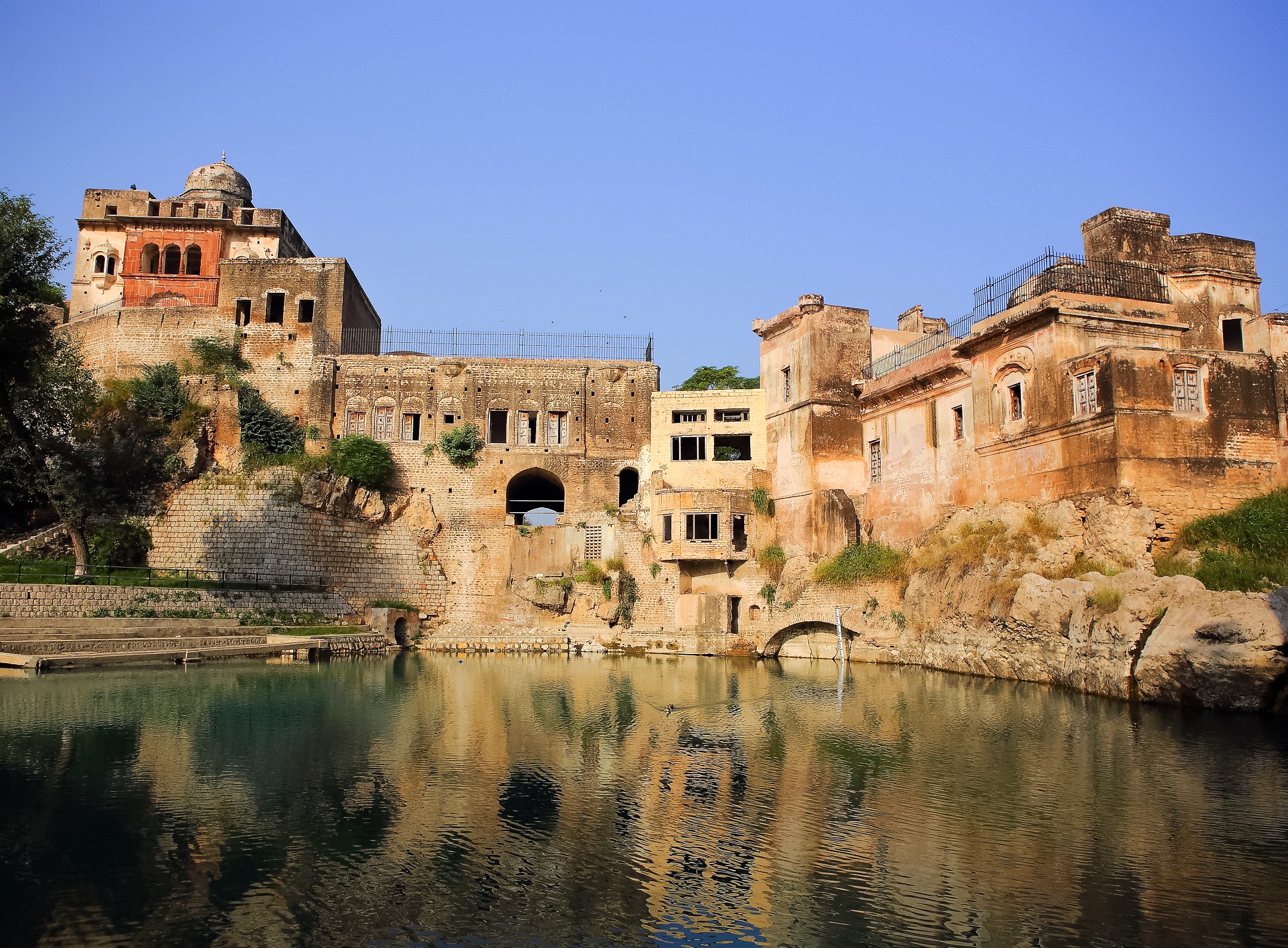
Exploring the ancient temples and historical sites of Punjab offers a unique journey into India's profound past. While many sites are ruins, their historical significance and the stories they hold are immense.
Exploring Punjab's Heritage
Consider visiting archaeological museums in the region, which often house artifacts recovered from these ancient temple sites, providing invaluable insights into their original form and purpose. The historical boundaries of Punjab mean exploring sites in both modern-day India and Pakistan.
Pro Tip: Respect Local Customs
When visiting any ancient or religious site, always dress modestly, remove footwear where required, and seek permission before photographing people or specific rituals. Respecting local customs ensures a meaningful and respectful experience for everyone.
Preserving the Past
These sites are not just stones; they are custodians of memory, offering tangible links to the Indo-Aryan peoples, Maurya Empire, and countless other civilizations that shaped this extraordinary land. Discover more about Punjab's historical significance.


Key Takeaway: The ancient temples of Punjab are more than just structures; they are enduring symbols of a region's deep historical roots, cultural resilience, and spiritual evolution, reflecting millennia of human endeavor and devotion.
Sacred Stories
The ancient temples of Punjab, even in their ruins, are imbued with a rich tapestry of sacred stories and mythological narratives. These tales connect the physical structures to the spiritual beliefs and cultural identity of the people.
Legends of the Land
The region of Punjab, being a cradle of civilization and a crossroads of ancient trade routes, is naturally associated with numerous legends. While specific temple-centric myths are often lost to time or localized, the broader narratives of Indo-Aryan traditions, including elements from the Vedas and early Puranas, would have formed the spiritual bedrock.
Stories of gods, goddesses, sages, and epic heroes would have been recounted within these temple precincts, serving to educate and inspire devotees. These narratives often highlighted themes of dharma, devotion, and the cosmic order, reflecting the philosophical depth of ancient Indian thought.
Mythological Significance
"Every stone in Punjab's ancient temples holds a silent story, a whisper from the divine past."
Definition: Janapadas
Ancient Indian kingdoms or republics, literally 'foothold of a people', that flourished from the Vedic period onwards, often forming strong regional identities.


Restoration and Conservation Efforts
Related temples: Katas Raj Temples | Krishna Temple, Rawalpindi
🗺 How to Reach
Hover a card to animate the journey on the map
Route to گرمکھ سنگھ والا
Related Temples


A Living Covenant