

A complete pilgrim record drawn from the existing published article data.
Discovering the Ancient Grandeur of Wangath Temple Complex
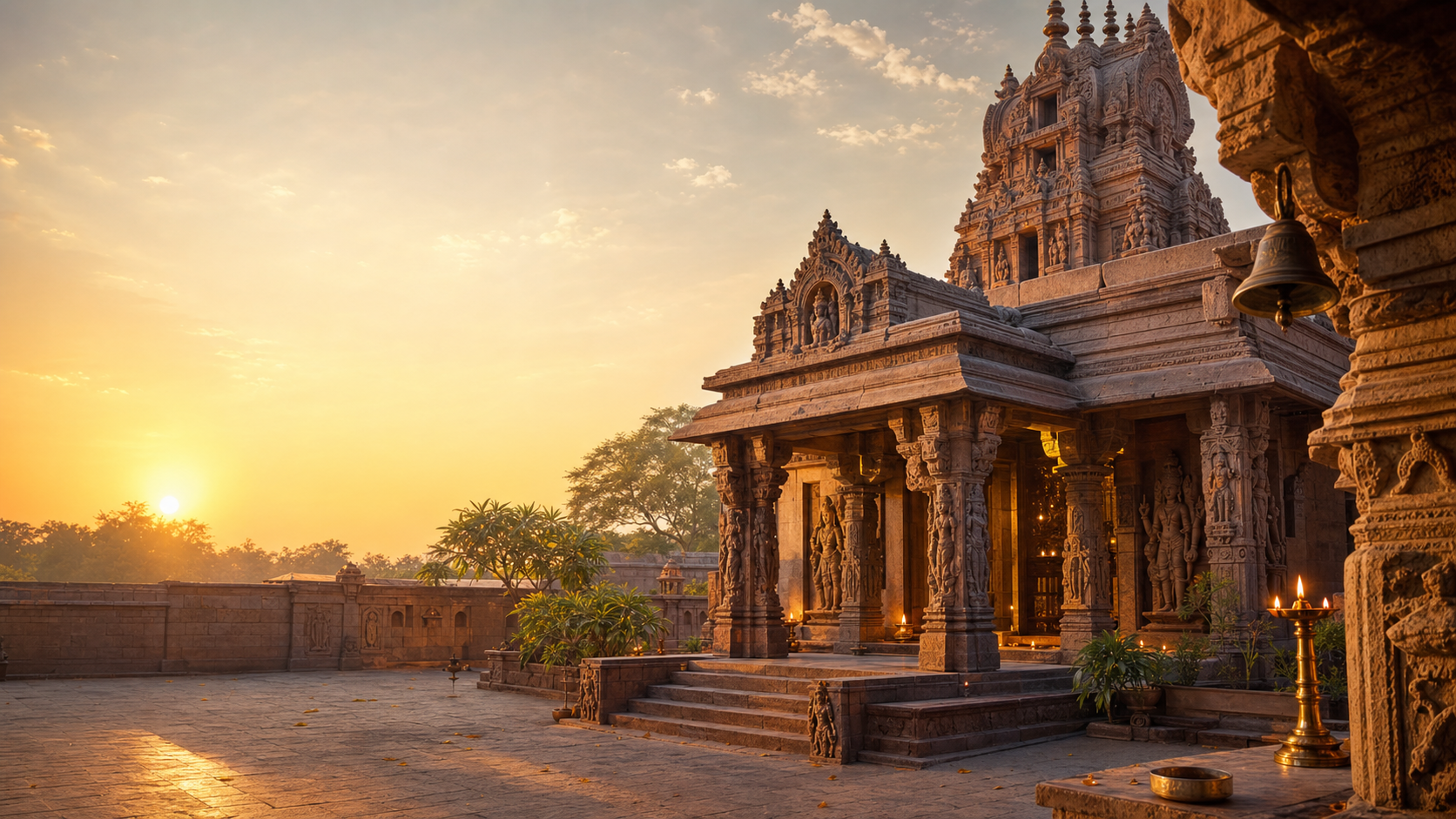
Nestled amidst the breathtaking landscapes of the Naranag valley in Jammu & Kashmir, the Wangath Temple Complex represents a profound testament to ancient Kashmiri architectural prowess and deep-rooted religious devotion. This historic site, dedicated to Shiva, offers a captivating journey into a rich spiritual and cultural legacy that has endured for centuries. Its weathered stone structures, though largely in ruins, still convey a sense of their original magnificence, inviting visitors to ponder the lives and beliefs of those who worshipped here. The complex serves as a crucial archaeological landmark, shedding light on the region's past.
Location and Setting
The complex is situated in Naranag, a picturesque village renowned for its natural beauty and historical significance, making it a serene backdrop for spiritual contemplation.
Architectural Significance
Wangath showcases a distinctive Kashmiri architectural style, characterized by its unique construction techniques and artistic elements that reflect a blend of regional influences.
Spiritual Heritage
As a Hindu temple complex primarily dedicated to Lord Shiva, it has served as a pivotal center for worship and pilgrimage, drawing devotees from across the region for generations.
Unveiling the Architectural Splendor of Wangath
The Wangath Temple Complex stands as a prime example of the distinctive Kashmiri architectural style, showcasing a unique blend of influences. Characterized by its iconic pyramidal roofs, elegant trefoil arches, and meticulously carved stone facades, the architecture reflects a synthesis of Gandharan, Gupta, and indigenous artistic traditions. The use of large, finely dressed stone blocks, often without mortar, demonstrates advanced construction techniques. Each structure within the complex, though varying in size, adheres to a consistent aesthetic, highlighting the skilled craftsmanship of ancient Kashmiri artisans who sculpted narratives and deities into stone.
Key Architectural Features
Prominent features include the distinctive pyramidal roofs and the use of trefoil arches, which are hallmarks of Kashmiri temple architecture.
Stone Carvings and Artistry
Intricate stone carvings adorn the walls and plinths, depicting deities, mythological scenes, and decorative motifs with remarkable detail.
Influence and Fusion
The architectural style at Wangath represents a unique fusion of Gandharan, Gupta, and local Kashmiri artistic elements, creating a regional identity.
A Journey Through Time: The History of Wangath
Tracing its origins back to the 8th century CE, the Wangath Temple Complex emerged as a significant pilgrimage site and a vibrant hub of religious activity under various Kashmiri dynasties. Its construction and subsequent expansions are often attributed to rulers like Lalitaditya Muktapida of the Karkota Dynasty. The ruins today narrate a compelling saga of centuries marked by cultural evolution, political transitions, and the enduring faith of its patrons. Over time, the complex witnessed periods of prosperity and decline, yet its spiritual essence persisted, leaving behind a rich historical tapestry for present-day exploration.
Early Foundations
The earliest structures are believed to date from the 8th century CE, establishing the complex as one of Kashmir's oldest religious sites.
Dynastic Patronage
Successive dynasties, including the Karkotas, contributed to the complex's development, indicating its sustained importance as a religious center.
Archaeological Insights
Excavations and studies of the ruins provide invaluable insights into the historical, religious, and architectural trends of ancient Kashmir.
Lord Shiva and the Sacred Lore of Naranag
Dedicated primarily to Lord Shiva, the Wangath Temple Complex is deeply embedded in mythology and local legends, making it a site of profound spiritual significance. It is widely believed to be a sacred spot where Shiva himself was worshipped, attracting countless devotees seeking spiritual solace, blessings, and liberation. The presence of numerous Shiva lingams and subsidiary shrines reinforces its identity as a prominent Shaivite center. The serene environment of Naranag, coupled with the ancient ruins, creates an atmosphere conducive to devotion and introspection, connecting visitors to centuries of faith and reverence for the Destroyer and Transformer within the Hindu pantheon.
Primary Deity
The complex is predominantly dedicated to Lord Shiva, evidenced by multiple Shiva lingams and the overall Shaivite orientation of the shrines.
Mythological Connections
Local legends and folklore associate the site directly with Lord Shiva, enhancing its sanctity and drawing pilgrims for spiritual experiences.
Pilgrimage Importance
Historically and presently, Wangath serves as a significant pilgrimage destination for devotees of Shiva, who visit to offer prayers and seek blessings.
Visiting Wangath: A Guide to This Ancient Pilgrimage Site
For visitors planning a trip to the Wangath Temple Complex, understanding key logistical details is essential for an enriching experience amidst its historical ruins and the natural beauty of Naranag. The best time to visit is generally from May to October, when the weather is pleasant and the trekking routes are accessible. Entry to the complex is free, allowing everyone to explore its ancient wonders. Modest attire is recommended, and footwear must be removed before entering the sacred areas. A visit typically spans 1-2 hours, providing ample time to appreciate the architecture and soak in the tranquil atmosphere of this revered site.
Optimal Visit Period
The months from May to October are considered ideal for visiting, offering favorable weather conditions for exploration and travel.
Accessibility and Entry
The complex is freely accessible to all visitors, though it requires a short trek from the nearest road point in Naranag village.
Etiquette and Dress Code
Visitors are advised to wear modest clothing and remove footwear as a sign of respect when exploring the temple premises.
| Deity | Shiva |
|---|---|
| Form | Shiva is often depicted as a meditative ascetic, the cosmic dancer Nataraja, or an aniconic lingam, symbolizing his various aspects. |
| Consort | Unknown |
| Sampradaya | Hindu |
| Significance | He is a principal deity in Hinduism, known as the Destroyer within the Trimurti, representing transformation, dissolution, and spiritual liberation. |
The Ascetic's Abode
Nestled amidst the majestic peaks, ancient Shiva temples like Wangath often evoke tales of Lord Shiva's deep asceticism. Legends speak of Shiva meditating in the Himalayas, his divine energy permeating the sacred landscape. Devotees believe that such sites are imbued with his spiritual power, offering solace and a path to liberation. The serene environment of Wangath would have been a perfect setting for such profound spiritual practices, drawing seekers to its hallowed grounds for centuries.
Shiva, the Destroyer, is also the transformer, representing the cycle of creation and dissolution, a timeless presence in ancient sanctuaries.
In the serene embrace of nature, ancient stones whisper tales of devotion, echoing the eternal spirit of the divine.
Related temples: Aakkoor Thanthondreeswarar Temple | Aazhimala Shiva Temple
Restoration & Conservation
The Wangath Temple complex, despite its profound historical and architectural significance, has endured centuries of neglect, natural erosion, and the ravages of time, leading to its current state of partial ruin. Its remote location in the Naranag valley, coupled with the delicate nature of its stone architecture, has historically posed significant challenges for preservation. Early efforts at documentation and stabilization were often piecemeal, lacking a comprehensive, long-term strategy to combat the relentless decay. The temples, constructed predominantly from local grey granite, exhibit extensive weathering, structural vulnerabilities, and the loss of intricate sculptural details, necessitating urgent and scientifically informed conservation interventions to prevent further deterioration and safeguard this invaluable heritage.
In recent decades, there has been a concerted push towards the systematic and scientific conservation of the Wangath Temple complex, often involving collaborative efforts between the Archaeological Survey of India (ASI), local heritage organizations, and sometimes international experts. These initiatives typically commence with detailed architectural surveys, photogrammetry, and 3D modeling to create precise records of the existing structures before any physical intervention. Stabilization techniques, including careful repointing of masonry, grouting of cracks, and the judicious reconstruction of fallen elements using original materials where possible, are employed to secure vulnerable sections. The overarching goal is to conserve the site's historical fabric and authenticity for future generations, while also making it accessible for scholarly study and controlled tourism.
🗺 How to Reach
Hover a card to animate the journey on the map
Route to Temple
A Living Covenant