



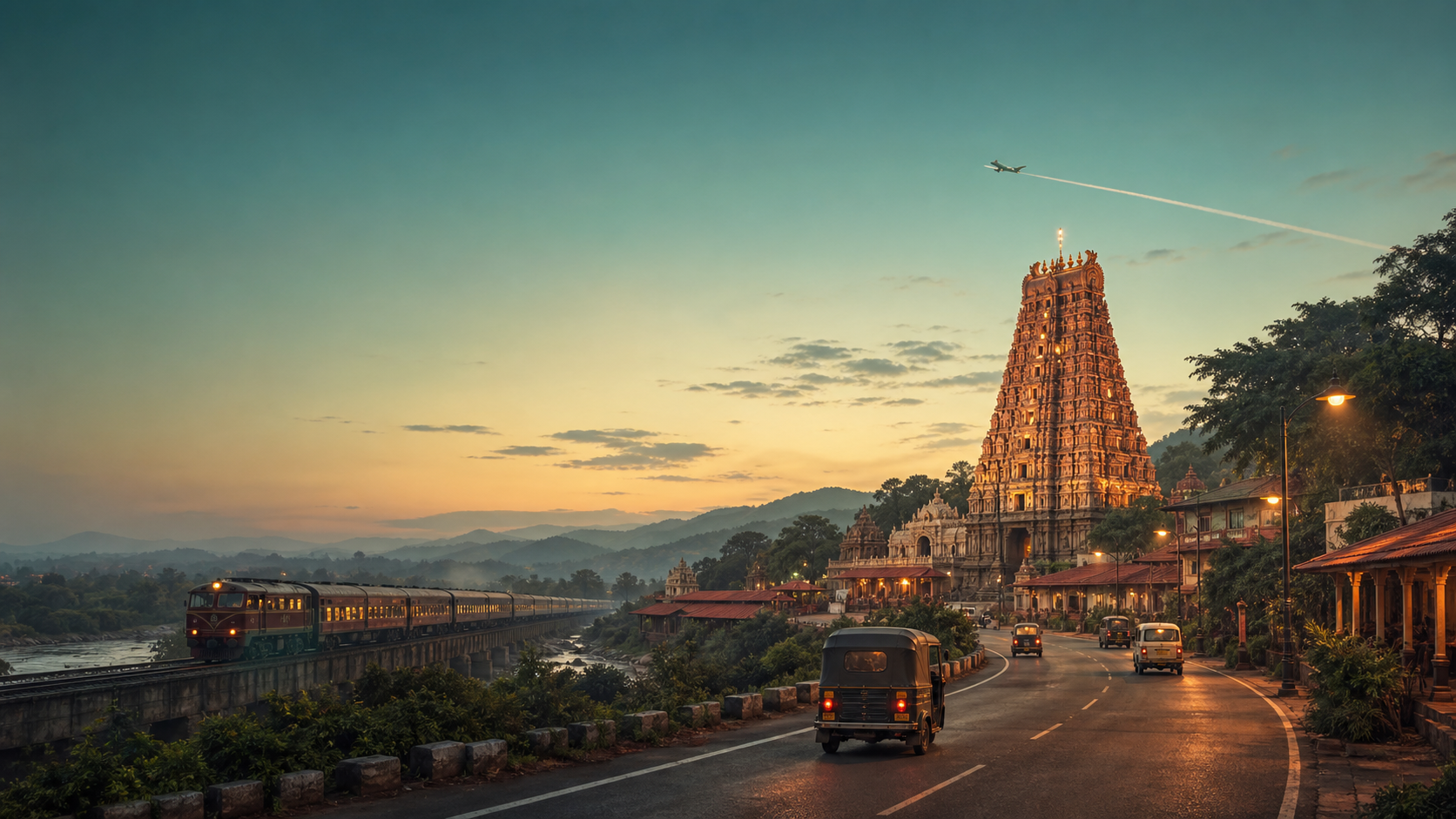
A complete pilgrim record drawn from the existing published article data.
Tracing the Legacy: The History of Shree Govindajee Temple
The history of Shree Govindajee Temple is a testament to enduring faith and royal dedication. Its origins trace back to Maharaja Jai Singh's divine vision in 1776 CE, leading to the carving of the Govindaji idol and its consecration in a palace temple in 1779 CE, coinciding with the first Ras Lila performance. The present temple structure was commissioned by Maharaja Nara Singh of the Manipur Kingdom's Meitei dynasty in 1846 CE. After suffering damage from an earthquake, it was rebuilt in 1876 CE. Further reconsecrations and renovations, including a significant modern project in 2012–2013, underscore its continuous evolution as a vital spiritual center.
Idol's Divine Genesis
The temple's spiritual legacy began in 1776 CE when Maharaja Jai Singh received a divine vision, leading to the carving of the Govindaji idol from a jackfruit tree and its consecration in 1779 CE.
Royal Construction and Resilience
Maharaja Nara Singh commissioned the temple's original construction in 1846 CE. It was subsequently rebuilt in 1876 CE following an earthquake, demonstrating the kingdom's commitment to its primary deity.
Architectural Marvel: The Distinctive Features of Govindajee Temple
Shree Govindajee Temple is a distinguished example of indigenous Meitei temple architecture, thoughtfully integrated with Vaishnava influences. Constructed primarily from brick and mortar, its design features a unique blend of traditional Manipuri aesthetics and devotional functionality. The temple is renowned for its iconic twin gold-plated domes, which crown the main sanctum and add to its majestic appearance. Its architectural plan often incorporates integrated Salas (halls or pavilions), facilitating congregational worship and cultural performances. Recognized as a State Protected Monument, its design reflects the rich artistic heritage of the Manipur Kingdom.
Indigenous Meitei Style
The temple exemplifies indigenous Meitei temple architecture, characterized by its distinct form and aesthetic principles, harmoniously blended with Vaishnava architectural elements.
Structural Composition
Built with brick and mortar, the temple features a robust construction. Its design includes traditional components such as integrated Salas and is notable for its majestic twin gold-plated domes.
The Divine Presence: Radha Krishna and the Meitei Ras Lila
At the heart of Shree Govindajee Temple's spiritual life are the central deities, Radha and Krishna, worshipped in the form of Govindaji. This sacred shrine is a focal point for the Vaishnava tradition, embodying the divine love and pastimes of the Lord. The temple holds profound significance as the birthplace of the Meitei Ras Lila tradition, a classical dance-drama initiated by Maharaja Jai Singh in 1779 CE. These performances, deeply rooted in the Bhagavata Purana, are not merely cultural expressions but are believed to invoke the direct presence of Radha Krishna, celebrating their eternal divine love and blessings.
Govindaji and Radha
The primary deities enshrined are Krishna, known as Govindaji, accompanied by Radha. Their worship forms the core of the temple's spiritual practice within the Vaishnava tradition.
Genesis of Meitei Ras Lila
Shree Govindajee Temple is celebrated as the origin point for the Meitei Ras Lila, a classical dance form that beautifully enacts the divine love stories of Radha and Krishna, first performed in 1779 CE.
Cultural Impact and Community Life
Shree Govindajee Temple transcends its primary role as a place of worship, deeply embedding itself into the cultural fabric of West Bengal, particularly within its immediate vicinity. It serves as a vibrant epicenter for various local traditions, influencing indigenous art forms, music, and dance. Many regional folk performances and classical recitals draw inspiration from the temple's deities and narratives, often being staged within its precincts or during its major festivals. The temple's annual Rath Yatra, for instance, is not merely a religious procession but a grand cultural spectacle, attracting artisans, musicians, and performers who showcase their talents, thereby preserving and promoting the rich cultural heritage of the area. This continuous interaction between faith and artistry ensures the temple remains a living museum of local customs and expressions.
Beyond its spiritual significance, Shree Govindajee Temple functions as a vital social anchor for the surrounding community, fostering a strong sense of belonging and collective identity. It frequently hosts community gatherings, educational workshops, and charitable initiatives, making it a central point for social interaction and welfare. Local residents often participate in the temple's daily rituals and seasonal celebrations, strengthening intergenerational bonds and reinforcing shared values. The temple also provides a platform for dialogue and mutual support, acting as a de facto community center where important decisions are sometimes discussed, and collective efforts are organized. This deep integration into daily life ensures the temple's enduring relevance as both a spiritual sanctuary and a cornerstone of local society.
Experience the Sacred: A Visitor's Guide to Shree Govindajee Temple
Visiting Shree Govindajee Temple offers a deeply enriching spiritual and cultural experience. Located conveniently in Imphal city, near the Imphal International Airport, it is accessible for travelers. The best time to visit is during the cool, dry months of October to March, particularly during the Kartik Purnima Ras Lila or Janmashtami festivals for a vibrant atmosphere. Visitors are advised to adhere to a strict dress code: men in white kurta/dhoti, and women in traditional Pungou phanek & innafi, salwar kameez, or sari. Plan for approximately 2-3 hours to fully experience darshan, circumambulation, and mandapa visits respectfully.
Location and Accessibility
The temple is situated within Imphal city, easily accessible, with Imphal International Airport (IXM) being the nearest air travel hub for visitors.
Optimal Visiting Period
The ideal time to visit is from October to March, offering pleasant weather. Attending during Kartik Purnima Ras Lila or Janmashtami provides a particularly vibrant cultural experience.
Dress Code Guidelines
A strict dress code is enforced: men should wear white kurta/dhoti, while women are expected to wear traditional Pungou phanek & innafi, salwar kameez, or a sari.
| Deity | Krishna |
|---|---|
| Form | Govindaji, a wooden idol carved from a jackfruit tree as per a divine vision received by Maharaja Jai Singh. |
| Consort | Radha |
| Sampradaya | Vaishnava (Gaudiya-influenced Meitei Vaishnavism) |
| Significance | Govindaji is revered as the royal deity, central to Gaudiya Vaishnava theology and Krishna-lila narratives, particularly the Ras Lila, reflecting his divine dance with gopis. |
The Divine Revelation and the Sacred Idol
Maharaja Jai Singh received a profound divine vision from Lord Krishna, instructing him to carve an idol of Govindaji from a special jackfruit tree in Kaina. Following these celestial directives, the exquisite Govindaji idol was meticulously carved in 1776. Three years later, in November 1779, this divinely-ordained idol was consecrated within a palace temple. This moment also heralded the very first performance of the enchanting Ras Lila, forever intertwining the deity's presence with this sacred dance tradition. The belief that the idol self-manifested through divine dream guidance underscores its profound spiritual significance, making its origin story a cornerstone of the temple's mythology.
A divine vision led to the carving of Govindaji, establishing a sacred tradition of devotion and the enchanting Ras Lila, a cornerstone of the temple's profound spiritual significance.
As the royal deity, Govindaji became the spiritual heart of the Manipur Kingdom, inspiring architectural grandeur and cultural heritage, a living testament to its sacred origins.
Related temples: A. C. Bhaktivedanta Swami Prabhupada | Bahula Temple
Shree Govindajee Temple: A Jewel of Manipur's Vaishnava Heritage
The Shree Govindajee Temple stands as a paramount spiritual and cultural landmark in Manipur, serving as the largest Vaishnava temple in Imphal. It is the spiritual heart of the Manipur Kingdom, deeply intertwined with the Meitei dynasty and their rich heritage. Dedicated to Radha Krishna (Govindaji), the temple embodies the region's strong Vaishnava tradition, particularly its Gaudiya-influenced Meitei Vaishnavism. Its significance extends beyond worship, representing a cornerstone of Manipuri identity and artistic expression, especially through its connection to the Ras Lila tradition. The temple's enduring presence reflects centuries of devotion and royal patronage.
Royal Patronage
The temple's establishment and subsequent rebuilding were primarily driven by the patronage of the Manipur Kingdom's Meitei dynasty, notably Maharaja Nara Singh, who commissioned its original construction in 1846 CE.
Vaishnava Core
As a central site for Gaudiya-influenced Meitei Vaishnavism, Shree Govindajee Temple enshrines Radha Krishna (Govindaji), reflecting a deep-rooted spiritual tradition that shapes local culture and devotion.
🗺 How to Reach
Hover a card to animate the journey on the map
Route to Kolkata
Common Questions
Where is Shree Govindajee Temple: Manipur's Grand Vaishnava Shrine located?
Shree Govindajee Temple: Manipur's Grand Vaishnava Shrine is documented at Kolkata, West Bengal.
Which deity is associated with Shree Govindajee Temple: Manipur's Grand Vaishnava Shrine?
Shree Govindajee Temple: Manipur's Grand Vaishnava Shrine is associated with Krishna.
Related Temples

A Living Covenant