



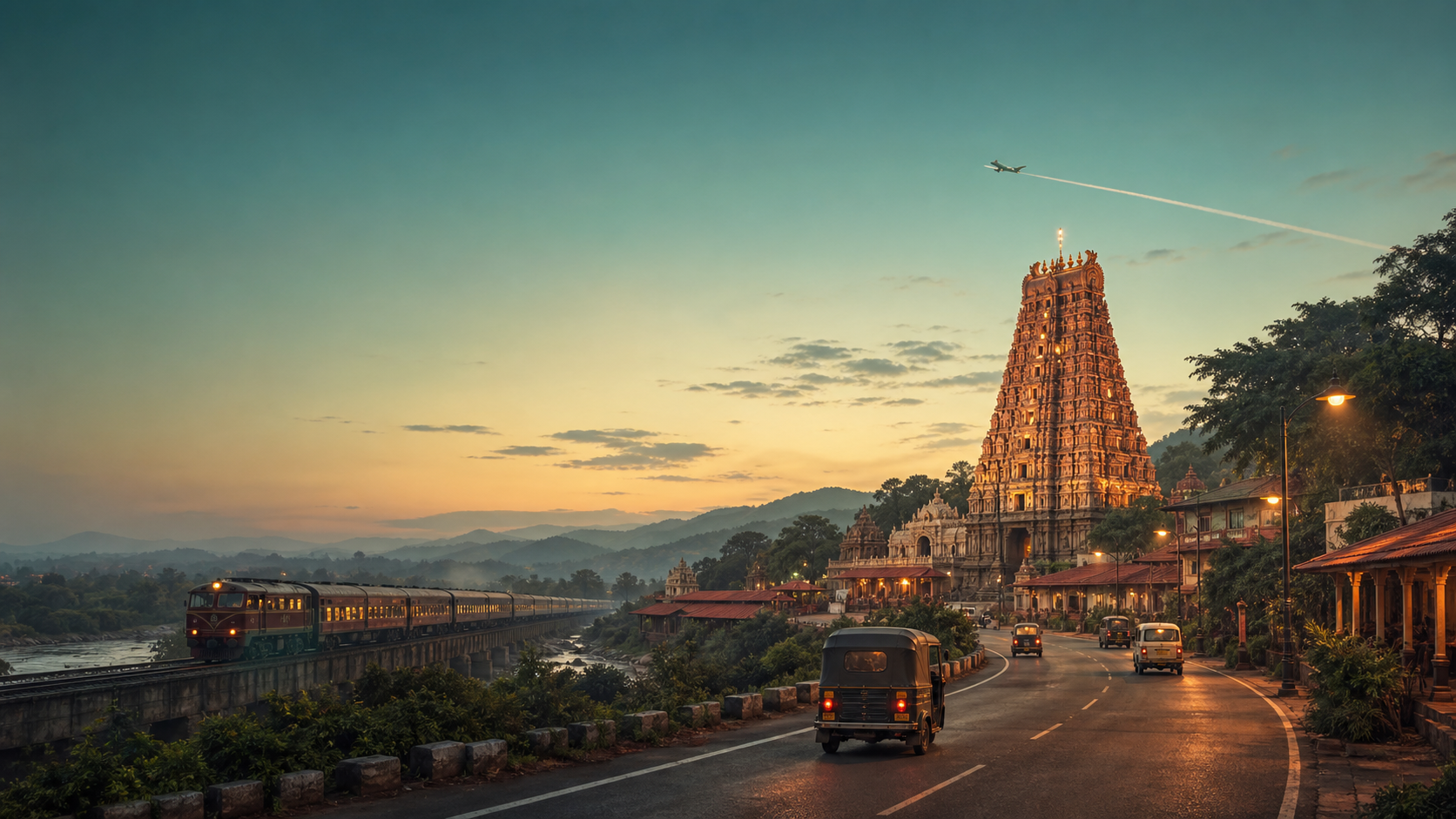
A complete pilgrim record drawn from the existing published article data.
Historical Roots and Evolution of Jharkhand's Temple Festivals
The historical roots of Jharkhand's temple festivals extend deep into antiquity, with the region, once known as Kark Khand, mentioned in the Mahabharata. During the Eastern Ganga dynasty from the 11th to 15th centuries, Jharkhand emerged as a significant forested sacred geography, linking major Shaiva and Vaishnava sites. This historical context shaped the evolution of its festive traditions, integrating indigenous practices with influences from powerful regional empires. The development of these festivals reflects centuries of cultural amalgamation, preserving ancient rites while adapting to changing socio-religious landscapes. Many practices observed today echo rituals performed by ancestors across millennia.
Ancient Origins
The region's festive traditions are rooted in ancient times, with references to Kark Khand found in the epic Mahabharata, indicating early spiritual significance.
Eastern Ganga Influence
During the Eastern Ganga dynasty, Jharkhand's sacred geography flourished, influencing the development and spread of temple-based celebrations.
Amalgamation of Traditions
Over centuries, festivals evolved through the blending of local indigenous customs with broader Hindu religious practices, creating a unique synthesis.
Deities, Legends, and Mythology Behind the Celebrations
The festivals of Jharkhand venerate a pantheon of deities, primarily focusing on Shiva, Shakti, and various local folk gods and goddesses. Baidyanath Dham, a prominent Jyotirlinga, underscores the region's strong Shaivite tradition, especially during Shravan. Shakti worship is also central, with numerous temples dedicated to forms of the Divine Mother, often accompanied by ancient legends of her valor. Local deities, deeply intertwined with the region's indigenous communities, also play a significant role, their worship rooted in ancestral stories and nature-based mythologies. These narratives often speak of creation, protection, and the triumph of good over evil, enriching the spiritual experience.
Shaivite and Shakta Devotion
Many festivals revolve around the worship of Lord Shiva, particularly at Baidyanath Dham, and various forms of the Divine Mother (Shakti).
Local Deities and Folkloric Narratives
Indigenous communities celebrate their own folk deities, whose worship is deeply connected to ancient ancestral stories and local mythologies.
Mythological Underpinnings
The celebrations are imbued with rich mythological narratives and legends that explain the origins of deities and the significance of specific rituals.
Introduction to Jharkhand's Sacred Festivals
Jharkhand, a land steeped in ancient history and spiritual lore, hosts a vibrant tapestry of temple festivals that serve as profound cultural expressions. These celebrations, deeply rooted in the region's diverse traditions, reflect the spiritual fervor of its people. From grand annual gatherings to intimate local observances, each festival offers a unique glimpse into Jharkhand's rich religious heritage and communal life. They are not merely events but living traditions, connecting devotees to ancient deities and timeless narratives. These festivals are characterized by their colorful rituals, devotional music, and collective participation, making them central to the state's identity.
Cultural Significance
Jharkhand's festivals are vibrant cultural expressions, showcasing the region's unique blend of indigenous and mainstream religious practices.
Diversity of Celebrations
The state hosts a wide array of festivals, ranging from major annual pilgrimages to localized village-level observances, each with distinct traditions.
Spiritual Landscape
These events are integral to Jharkhand's spiritual identity, reflecting the deep devotion and historical connection of its people to various deities.
Planning Your Festival Visit: A Practical Guide
Planning a visit to Jharkhand's temple festivals requires careful consideration for a fulfilling experience. The best time to visit is generally from October to March, though the Shravan month (July–August) is crucial for the Baidyanath Dham pilgrimage. Ranchi is a well-connected hub, accessible by train (Ranchi Junction, RNC), flight (Ranchi Airport, IXR, ~5 km), and bus. Local transport within Ranchi includes city buses and auto-rickshaws. For specific temple timings, entry details, and dress codes, direct contact with the respective temple offices is recommended. It is advisable to book accommodation in advance, especially during major festival periods. Respect local customs and maintain decorum in sacred spaces.
Optimal Travel Periods
The months of October to March are ideal for visiting, with July–August being prime for the Baidyanath Dham pilgrimage.
Transportation and Logistics
Ranchi is well-connected by air (IXR), rail (RNC), and bus, with local transport options like auto-rickshaws available for city travel.
Practical Tips and Etiquette
Always confirm temple timings and dress codes in advance; booking accommodation early and respecting local customs are essential for a smooth visit.
Key Festival Traditions and Rituals Across Jharkhand
Jharkhand's temple festivals are marked by unique customs and deeply spiritual rituals, reflecting a blend of tribal and mainstream Hindu traditions. Key practices often include elaborate _puja_ ceremonies, devotional _bhajans_ and _kirtans_, and vibrant processions carrying deity idols. Animal sacrifices are also common in some local traditions, particularly in festivals honoring folk deities or Shakti forms. Specific rituals like the _chhau_ dance performances, often associated with _Chhau_ festivals, contribute to the distinctive cultural fabric. These traditions emphasize communal participation, fasting, offerings, and the invocation of divine blessings for prosperity and well-being.
Ritualistic Practices
Festivals feature intricate _puja_ ceremonies, devotional singing (_bhajans_ and _kirtans_), and ceremonial processions of idols, central to worship.
Cultural Performances
Unique cultural elements like the _chhau_ dance are often integrated into festival celebrations, adding to their distinctiveness and artistic expression.
Communal Participation
Fasting, making offerings, and collective prayers are common, fostering a strong sense of community and shared spiritual purpose among devotees.
Experiencing the Spiritual Vibrancy of Jharkhand's Festivals
Experiencing Jharkhand's temple festivals offers an immersive journey into the heart of its spiritual and cultural identity. Beyond mere observation, participating in these vibrant celebrations allows visitors to connect with centuries-old traditions and the profound devotion of the local communities. The rhythmic chants, the aroma of incense, and the collective energy create an atmosphere of deep reverence and joy. Embracing the spiritual richness of these events provides a unique perspective on the resilience of faith and the enduring power of communal heritage. It is an opportunity to witness living history and foster a deeper appreciation for India's diverse religious tapestry.
Immersive Cultural Experience
Participation in Jharkhand's festivals offers a unique opportunity to directly engage with ancient traditions and the vibrant local culture.
Spiritual Resonance
The collective devotion, chants, and rituals create an atmosphere of profound spiritual energy and communal harmony that deeply resonates with visitors.
Lasting Impressions
Witnessing these living traditions provides a deep appreciation for the enduring faith and rich heritage of Jharkhand, leaving a memorable impact.
| Deity | Multiple |
|---|---|
| Form | The temples in Jharkhand host various forms of Hindu deities, including Shiva as a Jyotirlinga at Baidyanath Dham, and other Vaishnava deities. |
| Consort | Unknown |
| Sampradaya | Shaiva, Vaishnava |
| Significance | The region is significant as a sacred geography connecting major Shaiva and Vaishnava sites, including Baidyanath Dham, one of the twelve Jyotirlingas. It is also historically linked to the ancient Kark Khand mentioned in the Mahabharata. |
The Ancient Land of Kark Khand
Long before its modern name, the mystical land now known as Jharkhand bore a different, equally sacred identity: Kark Khand. This ancient region, nestled near the Tropic of Cancer (Kark Rekha), finds its mention woven into the very fabric of the Mahabharata, an epic testament to its enduring spiritual significance. Historically, during the glorious reign of the Eastern Ganga dynasty, Jharkhand emerged as a sprawling, contiguous forested sacred geography. It served as a vital spiritual corridor, linking some of the most revered Shaiva and Vaishnava sites across the eastern realms of Odisha and Bihar. Among these, it held a special connection to the profound Shiva worship at Baidyanath Dham, one of the twelve divine Jyotirlingas, solidifying its status as a land steeped in divine energy and mythological lore.
From the ancient Kark Khand mentioned in the Mahabharata to a sacred corridor linking revered Shaiva and Vaishnava sites, Jharkhand is a land steeped in divine energy.
Jharkhand's forested sacred geography served as a vital spiritual corridor, connecting profound Shiva worship at Baidyanath Dham with other eastern pilgrimage sites.
Related temples: Ajgaibinath Dham | Amreshwar Dham
🗺 How to Reach
Hover a card to animate the journey on the map
Route to Temple
Related Temples


A Living Covenant