



A complete pilgrim record drawn from the existing published article data.
Echoes of Antiquity: Unraveling the Kurukshetra War's Origins
The epic conflict at Kurukshetra was heralded by a series of fateful events, rooted in a long-standing dynastic struggle for the throne of Hastinapura between the Pandavas and Kauravas. Ancient narratives detail the injustices and political maneuvering that escalated tensions. Lord Krishna's peace mission to Hastinapura, which was ultimately rebuffed by Duryodhana, marked a critical turning point, making the war inevitable. Ominous portents, including three solar eclipses within thirty days, were interpreted as divine signals of the impending, tragic confrontation, underscoring the deep historical and mythological layers of this epic.
Dynastic Strife and Injustice
The seeds of war were sown in the rivalry for the Hastinapura throne, fueled by the Kauravas' envy and refusal to grant the Pandavas their rightful share of the kingdom.
Krishna's Failed Peace Mission
Lord Krishna's earnest attempts to broker peace and prevent the war were rejected by Duryodhana, sealing the fate of the warring factions and highlighting the inevitability of conflict.
Portents of War
The occurrence of three solar eclipses within a short period was seen as a grave omen, foreshadowing the immense destruction and loss that the Kurukshetra War would bring.
Landmarks of Legend: Exploring Kurukshetra's Associated Sites
While not a single temple, Kurukshetra is dotted with numerous sacred sites, ponds, and temples commemorating key events and figures of the war, offering tangible connections to the epic narrative. These locations allow visitors to walk through the very landscapes where pivotal moments of the Mahabharata unfolded. From Brahma Sarovar, believed to be where Brahma created the universe, to Jyotisar, the exact spot where Krishna delivered the Bhagavad Gita, each site holds deep spiritual significance, inviting pilgrims to reflect on the ancient stories and their moral lessons.
Brahma Sarovar
This ancient sacred water tank is revered for its association with Lord Brahma and is believed to be the spot where he performed a grand yajna (ritual sacrifice).
Jyotisar: Gita's Birthplace
Jyotisar is the hallowed spot under a banyan tree where Lord Krishna imparted the wisdom of the Bhagavad Gita to Arjuna, making it a pivotal spiritual landmark.
Other Sacred Ponds and Temples
Numerous other sites, including Sannihit Sarovar and various temples dedicated to Mahabharata figures, dot the region, each with its own story and spiritual significance.
Planning Your Pilgrimage: Essential Tips for Visiting Kurukshetra
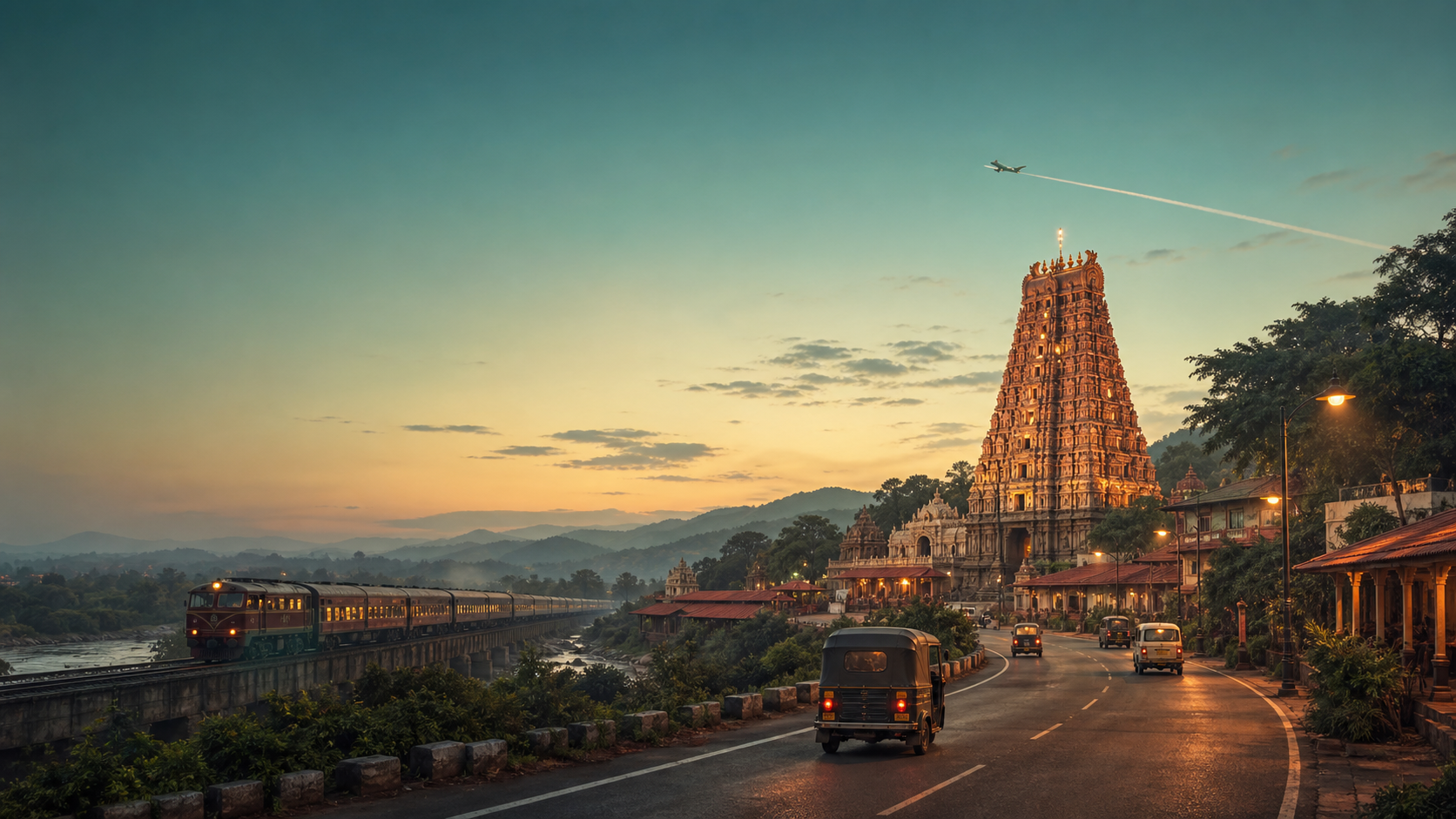
For pilgrims and tourists, Kurukshetra offers a rich historical and spiritual experience. The best time to visit is October–March, especially during the annual Kurukshetra Festival or solar eclipse observances. Transportation is convenient, with Kurukshetra Junction train station within city limits and major bus routes connecting to Kurukshetra Bus Stand. Indira Gandhi International Airport in Delhi is approximately 160 km away. Visitors are encouraged to spend 2–3 days to fully explore the pilgrimage circuit and immerse themselves in the sacred atmosphere. Contacting the temple office for specific timings, entry details, and dress code is advisable.
Optimal Visiting Times
The cooler months from October to March are ideal for visiting Kurukshetra, coinciding with the annual Kurukshetra Festival and significant astronomical events.
Travel and Accessibility
Kurukshetra is well-connected by rail and road, with its own junction and bus stand. Delhi's international airport provides air access, approximately 160 km away.
Pilgrimage Duration and Etiquette
A visit of 2–3 days allows for a comprehensive exploration of the sacred sites. Visitors should inquire about specific timings, entry norms, and dress codes for each location.
| Deity | Multiple Hindu Deities |
|---|---|
| Form | Various deities, including Krishna in his divine form as the charioteer of Arjuna, were present and active during the Kurukshetra War. |
| Consort | Unknown |
| Sampradaya | Hinduism |
| Significance | These deities played crucial roles in the unfolding of dharma, with Krishna serving as the divine guide, philosopher, and ultimate orchestrator of the epic battle, delivering the Bhagavad Gita. |
The Field of Dharma and Divine Counsel
Kurukshetra, revered as Dharmakshetra, is the sacred ground where the monumental war between the righteous Pandavas and the ambitious Kauravas unfolded. This land was not chosen by chance; ancient scriptures declared it so sanctified that sins committed here would be absolved, making it a spiritually charged arena for the climactic battle. It was amidst this tension, on the cusp of the first day's fighting, that Lord Krishna, charioteer to Arjuna, delivered the profound teachings of the Bhagavad Gita. His divine discourse, a timeless dialogue on duty, dharma, and devotion, transformed a battlefield into a classroom for eternal wisdom, forever cementing Kurukshetra's place as a cornerstone of Hindu philosophy.
His divine discourse, a timeless dialogue on duty, dharma, and devotion, transformed a battlefield into a classroom for eternal wisdom.
Lord Krishna (Bhagavad Gita)
Kurukshetra, revered as Dharmakshetra, is the sacred ground where the monumental war between the righteous Pandavas and the ambitious Kauravas unfolded.
Mahabharata
Related temples: Adi Kailasanathar Temple, Perundurai | Arapaleeswarar Temple, Kolli Hills
The Sacred Battlefield of Kurukshetra: A Nexus of Dharma and Destiny
Kurukshetra, revered as Dharmakshetra, is the sacred ground where the monumental war between the righteous Pandavas and the ambitious Kauravas unfolded. This land was not chosen by chance; ancient scriptures declared it so sanctified that sins committed here would be absolved, making it a spiritually charged arena for the climactic battle. The Kurukshetra War, central to the Hindu epic Mahabharata, transcends a mere battle, representing a profound spiritual and moral struggle that continues to resonate with millions, embodying the eternal conflict between good and evil.
Dharmakshetra's Significance
The designation of Kurukshetra as 'Dharmakshetra' — the field of righteousness — underscores its profound spiritual importance as a place where dharma was to be upheld or restored through conflict.
The Epic Conflict's Core
At its heart, the Kurukshetra War symbolizes the internal and external battles faced by humanity, making the Mahabharata a timeless epic of moral philosophy and human experience.
Enduring Spiritual Resonance
Even today, the events of Kurukshetra inspire contemplation on duty, sacrifice, and the ultimate victory of righteousness, maintaining its status as a vital pilgrimage site.
Divine Intervention and Philosophical Wisdom: The Role of Deities and the Bhagavad Gita
On the cusp of the first day's fighting, Lord Krishna, charioteer to Arjuna, delivered the profound teachings of the Bhagavad Gita. This divine discourse, a timeless dialogue on duty, dharma, and devotion, transformed a battlefield into a classroom for eternal wisdom, forever cementing Kurukshetra's place as a cornerstone of Hindu philosophy. Krishna's choice to serve as Arjuna's charioteer, declining to provide his army, exemplified his commitment to upholding dharma. Other prominent figures like Bhishma and Karna also played pivotal roles, their fates intertwined with the divine plan unfolding on the sacred ground.
The Bhagavad Gita's Revelation
The dialogue between Krishna and Arjuna on the battlefield of Kurukshetra encapsulates universal truths about duty, selflessness, and the nature of existence, guiding countless individuals.
Krishna as Divine Charioteer
Krishna's role as Arjuna's charioteer symbolizes divine guidance in human endeavor, offering strategic counsel and moral support without directly engaging in combat with his own army.
Fates of Mighty Warriors
The war saw the fall of legendary warriors such as Bhishma and Karna, whose courage and adherence to their respective oaths shaped the course of the battle and the epic narrative.
Cultural Impact
The Kurukshetra War, though an ancient event, casts an immense and enduring shadow over Indian culture, deeply influencing its art, literature, philosophy, and societal values. Its epic narrative, primarily enshrined in the Mahabharata, serves as a foundational text for understanding concepts of dharma (righteous conduct), karma (action and consequence), duty, and sacrifice. Generations have drawn moral lessons and ethical frameworks from the complex dilemmas faced by its characters, from Arjuna's existential crisis to Krishna's profound counsel. The war's themes of justice, betrayal, valor, and the ultimate futility of conflict have permeated storytelling traditions, classical music, dance forms like Kathakali and Bharatanatyam, and traditional theatre, ensuring its continuous presence in the collective consciousness of the subcontinent. Beyond traditional arts, the cultural impact of the Kurukshetra War resonates powerfully in modern media and contemporary thought. Its stories are constantly reinterpreted in popular television series, blockbuster films, graphic novels, and contemporary literature, making its complex characters and moral quandaries accessible to new generations. The Bhagavad Gita, a pivotal dialogue between Krishna and Arjuna on the battlefield, stands as a universal treatise on duty, devotion, and selfless action, transcending its religious context to offer profound spiritual and philosophical guidance to millions worldwide. Even in political discourse and leadership studies, parallels are often drawn to the strategies and ethical considerations presented in the Mahabharata, underscoring the war's timeless relevance in navigating human conflict and moral choices in the present day.🗺 How to Reach
Hover a card to animate the journey on the map
Route to Kurukshetra
Related Temples

A Living Covenant