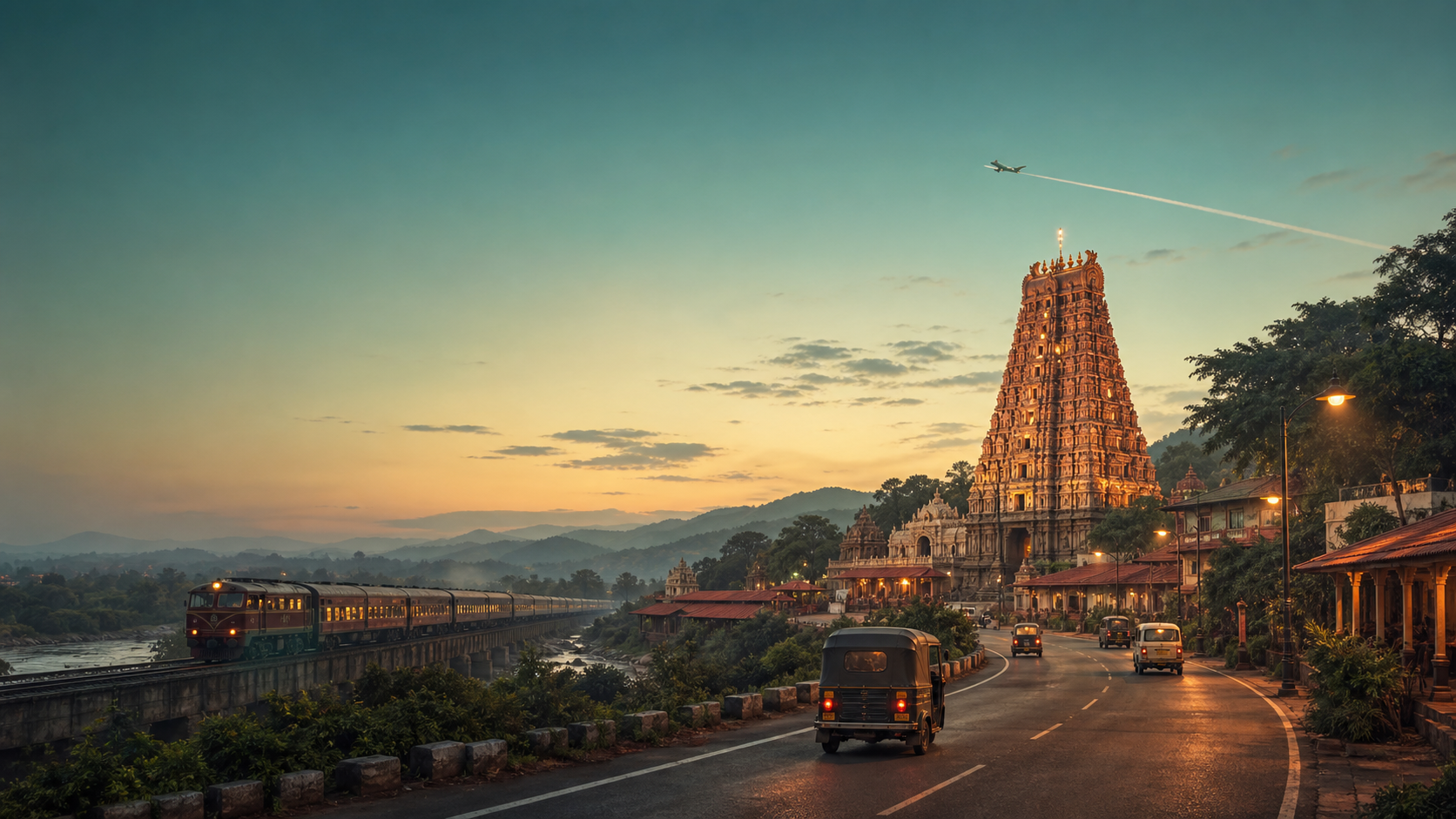
A complete pilgrim record drawn from the existing published article data.
The Ancient Roots of Kirateshwar Mahadev
The origins of Kirateshwar Mahadev Temple are deeply intertwined with ancient legends, shaping its enduring legacy. The most prominent tale recounts Lord Shiva's divine encounter with Arjuna during his penance. Shiva, disguised as a humble Kirata, tested Arjuna's valor before revealing his true form and bestowing the powerful Pashupatastra. This sacred spot is believed to be where a self-manifested (svayambhu) Shiva Lingam emerged, establishing the temple's profound spiritual significance.
Legend of the Kirata Avatar
Lord Shiva's appearance as a Kirata to Arjuna is central to the temple's identity, marking a pivotal moment of divine interaction and a test of devotion.
The Svayambhu Lingam
The temple houses a self-manifested Shiva Lingam, believed to have emerged naturally at the site of the divine encounter, making it a highly revered object of worship.
Architectural Splendor of the Himalayan Shrine
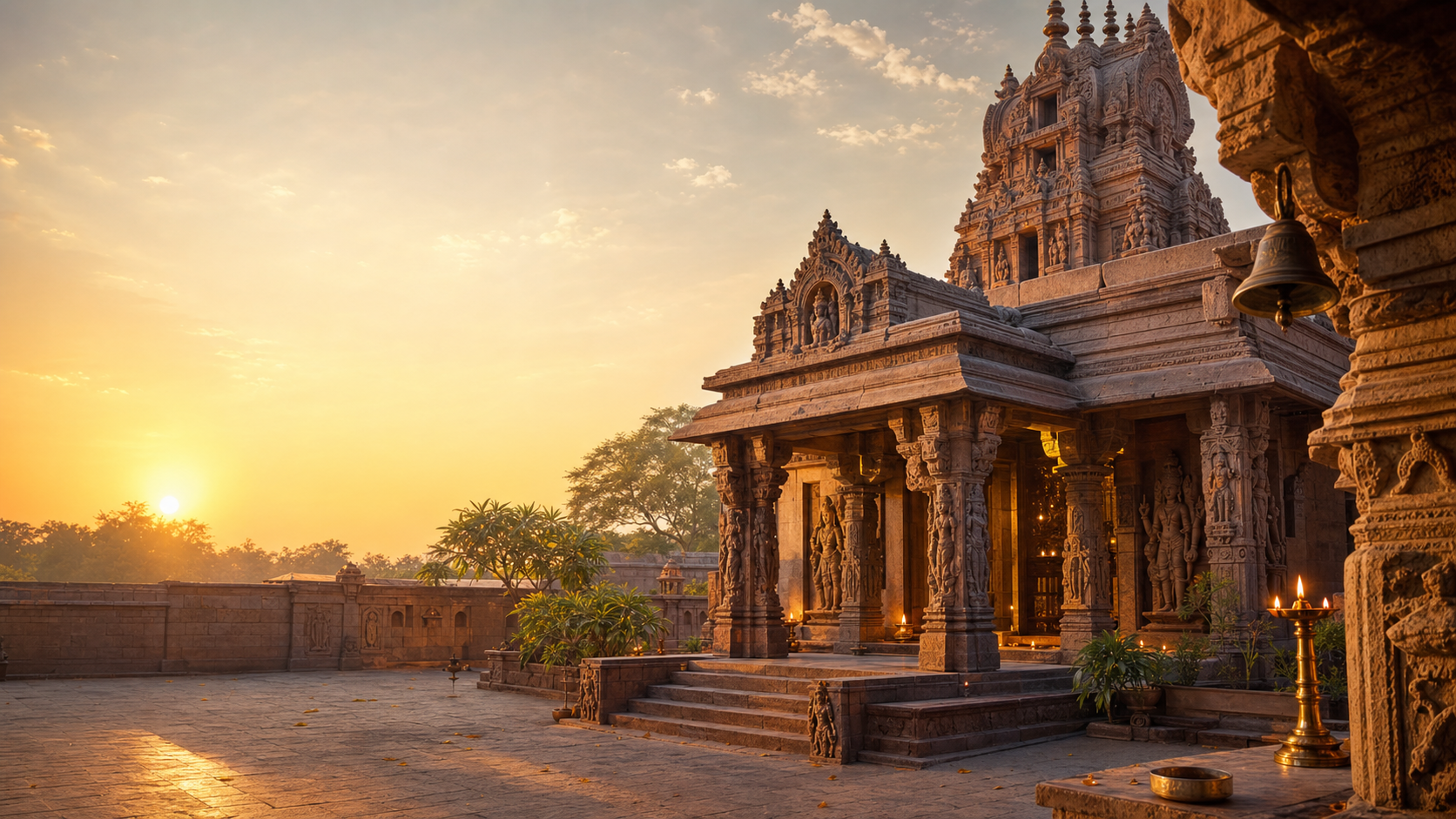
The Kirateshwar Mahadev Temple showcases an architectural style that harmonizes with its Himalayan surroundings. While specific details on its original construction materials and precise dynasty remain unknown, the temple typically features elements characteristic of traditional Hindu temple design, adapted to the mountainous terrain. Its structure reflects a blend of regional influences, providing a serene and sturdy edifice for worship amidst the natural beauty of Sikkim.
Regional Influences
The temple's design incorporates local architectural elements, allowing it to blend seamlessly with the natural landscape and cultural context of Sikkim.
Harmonious Design
Its construction reflects a thoughtful approach, integrating traditional Hindu temple aesthetics with practical considerations for a mountain environment.
Lord Shiva: The Presiding Deity and Local Legends
Kirateshwar Mahadev Temple is dedicated to Lord Shiva, revered primarily in his Kirata avatar. This form is central to the temple's identity, stemming from the ancient narrative where Shiva appeared as a tribal hunter to test Arjuna's prowess and devotion. The temple thus serves as a powerful testament to Shiva's diverse manifestations and his benevolent nature. Devotees honor Shiva here as the giver of strength and blessings, particularly celebrating his role in the Mahabharata epic. The Shaiva tradition is deeply embedded in the temple's practices and local folklore.
The Kirata Form of Shiva
Lord Shiva's manifestation as a Kirata, a tribal hunter, is the temple's namesake and a key element of its mythological significance, linking the divine to the indigenous culture.
Shaiva Tradition
As a prominent Shaiva temple, Kirateshwar Mahadev upholds the worship of Lord Shiva through various rituals, prayers, and festivals, particularly Maha Shivaratri.
Planning Your Pilgrimage to Kirateshwar Mahadev
To ensure a fulfilling and respectful experience at Kirateshwar Mahadev Temple, visitors should note key information. The best time to visit is between October and March, offering pleasant weather for exploration and devotion. For specific timings, entry details, and dress code requirements, it is advisable to contact the temple office directly. A half-day visit is generally sufficient to experience the serene ambiance and perform rituals.
Best Time to Visit
The period from October to March is recommended for visiting, as the weather is most conducive for a comfortable pilgrimage.
Travel and Accessibility
The temple is accessible by road, with Gyalshing being the nearest bus hub. New Jalpaiguri Railway Station (~120 km) and Pakyong Airport (~50 km) serve as major rail and air entry points, respectively.
Visitor Information
For current timings, entry procedures, and appropriate dress codes, visitors are advised to contact the temple office, ensuring a smooth and respectful experience.
| Deity | Shiva |
|---|---|
| Form | Shiva is worshipped here in his form as Kirateshwar, a hunter, and primarily as a naturally manifested Shiva Lingam. This form represents his appearance to Arjuna to test his valor and bless him. |
| Consort | Unknown |
| Sampradaya | Shaiva |
| Significance | Lord Shiva, as Kirateshwar, appeared to Arjuna during his penance, blessing him for victory in the Mahabharata War. The temple is revered as the site where Shiva tested Arjuna and granted him the Pashupatastra. |
The Divine Encounter of Kirateshwar
In the ancient forests, where the air hums with devotion, a profound tale unfolds, connecting the mighty warrior Arjuna with the supreme Lord Shiva. During his arduous penance to invoke divine blessings for the impending Mahabharata War, Arjuna’s unwavering devotion caught the attention of Lord Shiva. To test his valor and spiritual fortitude, Shiva appeared before him not in his divine form, but as a humble Kirata, a tribal hunter. A fierce, mock battle ensued, during which Shiva revealed his true identity, pleased by Arjuna's unmatched skill and piety. He bestowed upon Arjuna the powerful Pashupatastra, ensuring his victory in the great war. It is said that at this very sacred spot, where the divine encounter took place, a self-manifested (svayambhu) Shiva Lingam later emerged, a timeless testament to Shiva's grace and a central object of worship for generations.
Here, Shiva tested Arjuna's might, revealing his divine form and bestowing the ultimate weapon for victory.
A self-manifested Shiva Lingam stands as a timeless testament to divine grace and a warrior's unwavering devotion.
Related temples: Bhutia Busty Monastery | Char Dham
Discovering Kirateshwar Mahadev Temple
Kirateshwar Mahadev Temple, located in the serene landscapes of Gyalshing, Sikkim, is a significant pilgrimage site renowned for its profound spiritual ambiance and deep historical roots. It attracts devotees and visitors seeking solace and a connection with the divine amidst the tranquil Himalayan foothills. The temple stands as a testament to ancient faith and cultural heritage in the region.
Location and Setting
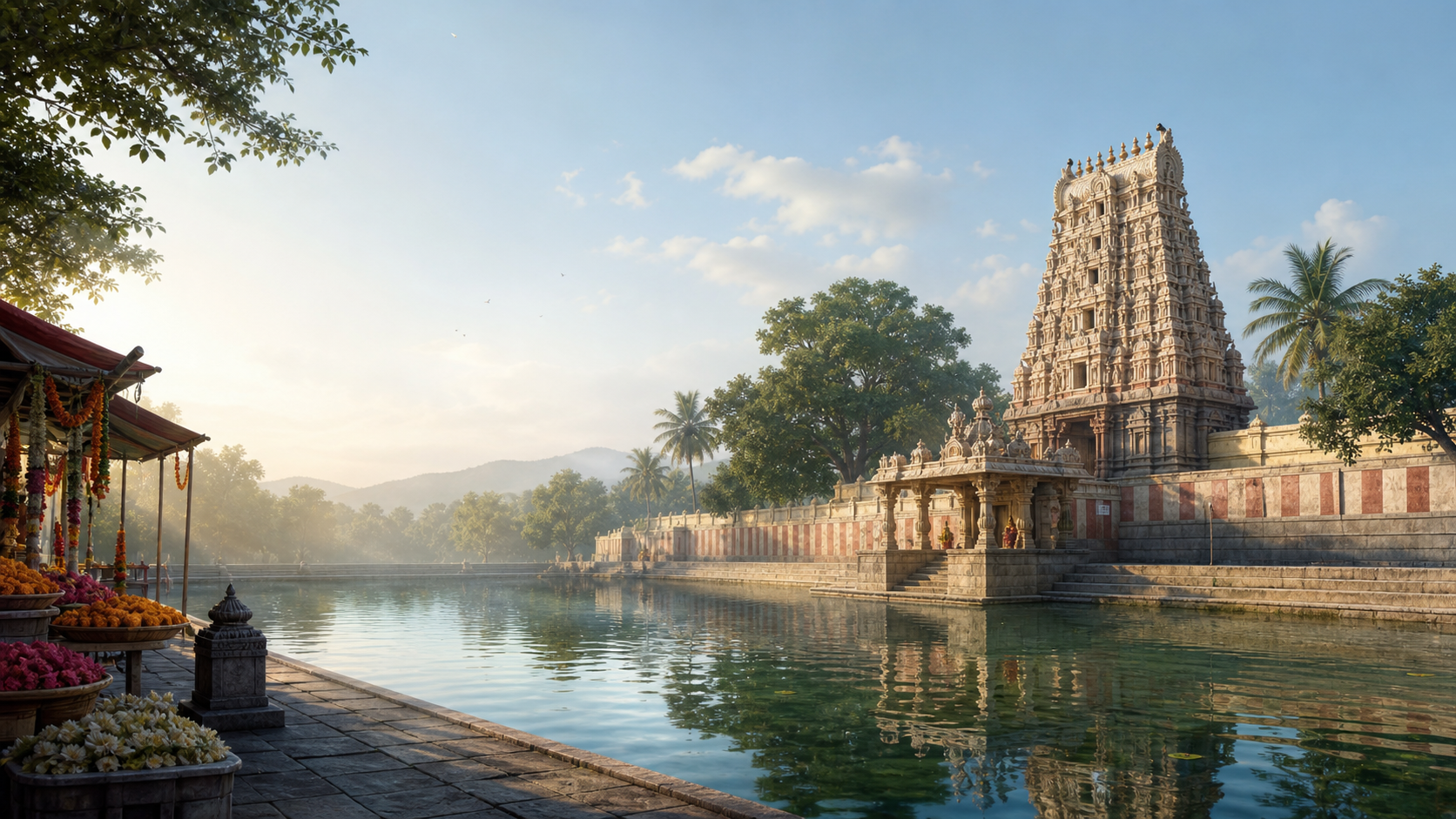
Situated in Gyalshing, West Sikkim, the temple is nestled in a picturesque natural environment, offering a peaceful retreat for spiritual contemplation.
Spiritual Significance
Revered as a sacred abode of Lord Shiva, the temple is a focal point for spiritual practices and attracts pilgrims from various parts of the country.
Cultural Impact and Local Traditions
The Kirateshwar Mahadev Temple holds profound cultural significance for the local communities, particularly the Limbu people, who trace their ancestry to the Kirati warriors mentioned in the Mahabharata. Beyond its primary role as a place of worship, the temple serves as a vital nexus for preserving indigenous traditions, fostering community cohesion, and celebrating a unique cultural identity. It is deeply interwoven with the folklore and historical narratives of the region, acting as a living testament to the spiritual heritage of the Kirati people. The temple’s presence reinforces a sense of belonging and continuity for the local populace, connecting them to their ancestral roots and the sacred landscape of Legship, making it more than just a religious edifice but a cornerstone of local culture.
The temple is especially vibrant during the annual Bala Chaturdashi Mela, also known as the Kirateshwar Mahadev Mela or Sakela, which attracts devotees and cultural enthusiasts from across Sikkim and beyond. This festival is a spectacular display of devotion and local traditions, featuring elaborate rituals, traditional music, and the distinctive Sakela dance performed by the Limbu community. These celebrations are not merely religious observances; they are powerful cultural expressions that unite people, showcase local artistry, and ensure the perpetuation of ancient customs and oral histories. The temple thus acts as a dynamic cultural hub, where the spiritual and the traditional converge, enriching the social fabric of Legship and drawing attention to its unique heritage.
🗺 How to Reach
Hover a card to animate the journey on the map
Route to Gayzing
Common Questions
Where is Kirateshwar Mahadev Temple: Sikkim's Sacred Riverine Shrine located?
Kirateshwar Mahadev Temple: Sikkim's Sacred Riverine Shrine is documented at Gyalshing.
Which deity is associated with Kirateshwar Mahadev Temple: Sikkim's Sacred Riverine Shrine?
Kirateshwar Mahadev Temple: Sikkim's Sacred Riverine Shrine is associated with Shiva.
Related Temples




A Living Covenant