



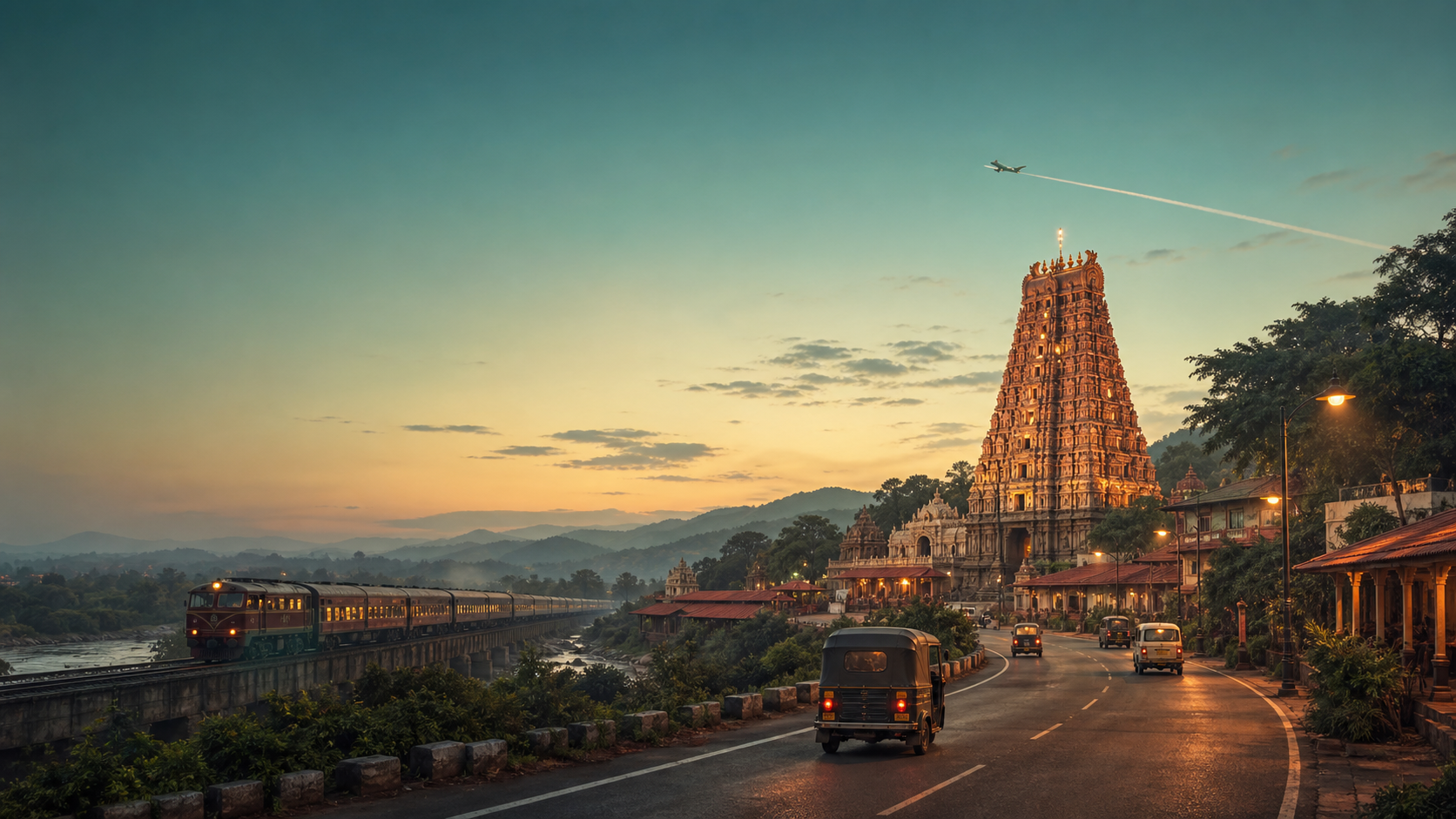
A complete pilgrim record drawn from the existing published article data.
Historical Roots of Karaikal Kailasanathar
The Karaikal Kailasanathar Temple boasts a profound history, believed to have been established over two millennia ago. This ancient origin positions it as the oldest known temple in the Karaikal district, reflecting a deep-rooted spiritual heritage. Its historical narrative is further enriched by significant contributions and influences from powerful dynasties, particularly the Pallavas, who left an indelible mark on its architecture and religious practices. The temple stands as a testament to the enduring devotion and architectural prowess of early South Indian civilizations, showcasing continuous worship and evolution over centuries.
Ancient Origins
The temple's foundation is traced back to a period preceding 2000 years ago, making it a pivotal historical and religious landmark in the region. This dating suggests its existence during the early Sangam era or even earlier, indicating a long-standing tradition of Shiva worship in Karaikal. Its original construction predates many other known structures in the area.
Pallava Dynasty Influence
In the 8th century, the temple experienced a significant phase under the patronage of the Pallava dynasty. While the exact nature is debated, historical records and architectural styles suggest either a substantial reconstruction or significant renovations were undertaken by the Pallavas. Their influence is evident in certain structural elements, aligning the temple with the distinctive architectural characteristics of the Pallava period.
Architectural Grandeur and Design
The Karaikal Kailasanathar Temple showcases a classic Dravidian architectural style, reflecting centuries of South Indian temple building. Its ancient origins suggest construction primarily using durable stone, emphasizing structural integrity and spiritual symbolism.
Dravidian Style Elements
Characteristic features like the vimana (tower over the sanctum) and mandapams (pillared halls) are evident. The layout follows a traditional plan, with the main shrine centrally located.
Material and Construction
Primarily constructed from granite, the temple stands as a testament to ancient engineering. This robust material has ensured its longevity through millennia.
The Revered Deity: Lord Kailasanathar
Lord Kailasanathar is the principal deity of the Karaikal Kailasanathar Temple, revered as a manifestation of Shiva. In this temple, Shiva is primarily worshipped in the aniconic form of a lingam, a symbol representing the divine cosmic energy and creative power. This form emphasizes Shiva's eternal, formless, and all-pervading nature, making him a central figure in Shaivite tradition.
Form and Symbolism
The lingam at Karaikal Kailasanathar Temple embodies Shiva's role as the creator, preserver, and destroyer. It is a representation of the universe itself, where the lingam signifies the pure consciousness and the pitha (base) represents the primordial energy, Shakti. This dual aspect highlights the inseparable nature of Shiva and Shakti in cosmic existence.
Spiritual Significance
Devotees approach Lord Kailasanathar seeking spiritual liberation, protection, and fulfillment of desires. The worship of Shiva in this form is believed to grant inner peace, remove obstacles, and lead to a deeper understanding of the self. The deity's presence at Karaikal is considered highly potent for spiritual progress and blessings.
Planning Your Visit to Karaikal Kailasanathar
For pilgrims and tourists planning to visit the ancient Karaikal Kailasanathar Temple, understanding the travel logistics is key to a smooth journey.
Getting There
Karaikal is approximately 138 km from Puducherry by road, a journey taking around 3 hours by bus. The nearest train station is Peralam Junction (PEM), about 20 km away, with trains connecting via Chennai Egmore (MS).
Air Travel
The closest airport is Puducherry Airport (PNY), situated about 116 km from Karaikal. Visitors can fly from Chennai (MAA) to Puducherry and then proceed by taxi or other local transport options.
| Deity | Kailasanathar |
|---|---|
| Form | Shiva, revered as Kailasanathar, the Lord of Mount Kailash. |
| Consort | Not specified |
| Sampradaya | Shaivite |
| Significance | The main deity worshipped at the temple, Shiva, is revered as Kailasanathar (transl. Lord of the Mount Kailash). |
The Ancient Abode of Kailasanathar
The Karaikal Kailasanathar Temple stands as a testament to the enduring presence of Lord Shiva. Though specific legends about its founding are lost to time, devotees believe that the very soil of Karaikal was blessed by the divine presence of Kailasanathar from ancient times. Worshipped as the Lord of Mount Kailash, Shiva's energy permeates this sacred space, offering solace and spiritual upliftment to all who visit. The temple's antiquity suggests countless generations have sought his blessings here, making it a living link to a profound spiritual heritage.
In the heart of Karaikal, Kailasanathar reigns, a timeless presence echoing devotion across millennia.
The ancient stones whisper tales of Shiva's grace, inviting all to experience his eternal peace.
Introduction to Karaikal Kailasanathar Temple
The Karaikal Kailasanathar Temple, located in Karaikal, Puducherry, is a revered Shaivite shrine dedicated to Lord Kailasanathar. Believed to have been originally constructed over 2000 years ago, it holds the distinction of being the oldest temple in the Karaikal district. Its historical narrative includes significant influence or reconstruction during the 8th century, attributed to the Pallava dynasty. This ancient temple serves as a vital spiritual and cultural landmark, attracting devotees and visitors interested in its rich heritage and architectural legacy within the region.
Location and Accessibility
The temple is situated in Karaikal, a town within the Union Territory of Puducherry. It is approximately 138 km from Puducherry city by road. The nearest train station is Peralam Junction, about 20 km away, while Puducherry Airport is the closest airport at around 116 km.
Historical Significance
Dating back over two millennia, the Karaikal Kailasanathar Temple is considered the most ancient religious structure in the Karaikal district. Its history is further marked by the architectural and cultural contributions of the Pallava dynasty, particularly around the 8th century, which shaped its enduring form and traditions.
Presiding Deity and Tradition
The primary deity worshipped at the temple is Kailasanathar, a manifestation of Lord Shiva. The temple strictly adheres to the Shaivite tradition, emphasizing the worship of Shiva as the supreme being, a practice deeply rooted in South Indian religious heritage.
🗺 How to Reach
Hover a card to animate the journey on the map
Verified routes to Karaikal Kailasanathar Temple
Common Questions
Where is Karaikal Kailasanathar Temple located?
Karaikal Kailasanathar Temple is documented at NA, Pondicherry.
Which deity is associated with Karaikal Kailasanathar Temple?
Karaikal Kailasanathar Temple is associated with Kailasanathar.