A complete pilgrim record drawn from the existing published article data.
Historical Foundation
From Kirata Grove to Royal Pitha: The Mlechchha & Pala Synthesis
The Kalika Purana Revolution: Theological Legitimation
The Koch Renaissance: Architecture as Sovereignty
Architecture & Craftsmanship
The Subterranean Garbhagriha: Engineering the Divine Spring
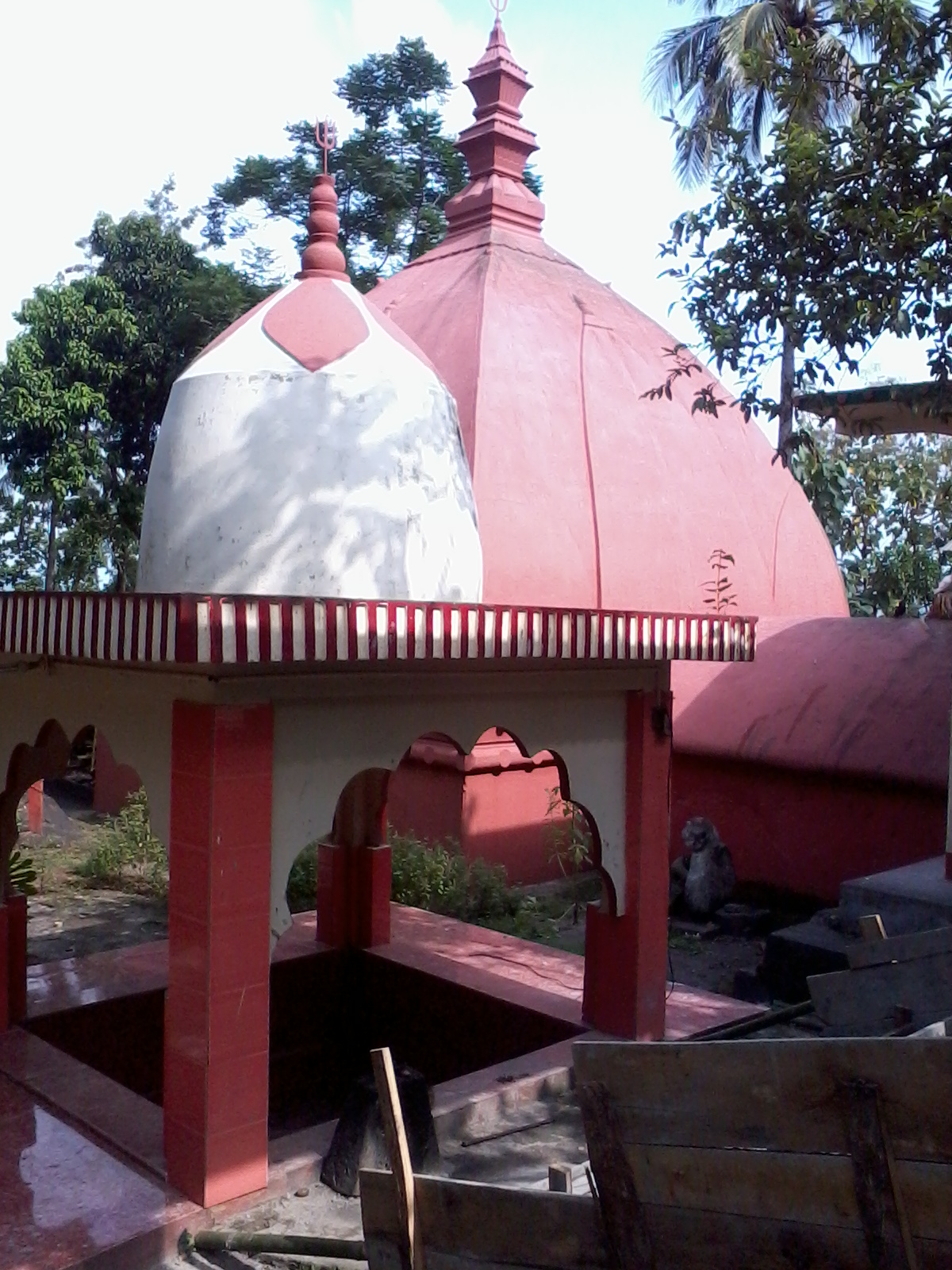
The Nilachal Shikhara: A Syncretic Crown
Structural Grammar: From Bada to Calanta
What is the Nilachal Style?
The Nilachal style is a regionally evolved temple architecture indigenous to Assam, characterised by: (1) a cruciform stone base; (2) a hemispherical brick shikhara with Islamic-influenced angashikharas; (3) integration of Nagara plinths, Khajuraho dados, Bengal charchala roofs, and Ahom dochala/apsidal elements; and (4) a subterranean garbhagriha housing a natural yoni fissure. It is named after the Nilachal Hills and was codified in 1565 CE.
The Presiding Deity
Deity Name
Kamakhya (Sanskrit: Kāmākhyā, "She whose desires are fulfilled")
Form
Aniconic yoni—a natural fissure in basalt rock, approx. 10 inches deep, continuously filled by a perennial spring
Consort
Implied as Shiva in his form as Kameshvara (Lord of Desire), though no separate shrine exists; their union is cosmological, not spatial
Iconographic Uniqueness
The only major Shakti Peetha where the primary deity is worshipped exclusively as a yoni; no anthropomorphic murti occupies the garbhagriha
Spiritual Classification
One of the oldest four Shakti Peethas among the 51; also classified as a Yoni Pitha and Yogini Pitha
Associated Texts
Kalika Purana (Sati narrative), Yogini Tantra (Kirata-yoni cosmology), Hevajra Tantra (8th c., references Kamarupa as pitha)
Kamakhya Beyond the Yoni: The Mahavidya Mandala
Tantric Worship: Vamachara and Dakshinachara in Harmony
Festivals & Living Traditions
Ambubachi Mela: The Goddess’s Menstruation
Durga Puja: The Autumnal Triumph
Manasha Puja: Serpent Wisdom
Plan Your Visit
Visiting Kamakhya is not tourism—it is participation in a continuum. Respect, preparation, and awareness are essential.
Logistics & Accessibility
What to See Beyond the Main Temple
Respectful Conduct & Cultural Sensitivity
Nearby Temple Circuit



Related temples: Ancient Greek temple | Bagheswari Temple, Bongaigaon
Sacred Stories & Mythology
The Kalika Purana Narrative: Sati’s Yoni & the Birth of Kamarupa
According to the Kalika Purana, composed under Pala patronage in the 10th century, Kamakhya is the site where Sati’s yoni (genitals and womb) fell after her self-immolation and subsequent dismemberment by Vishnu’s Sudarshana Chakra. Enraged by her father Daksha’s insult, Sati immolated herself at his yajna. Carrying her corpse in grief, Shiva performed the tandava—a dance of cosmic dissolution—until Vishnu dismembered the body to halt the chaos. The yoni landed on Nilachal Hill, and the site became eternally charged with creative power. Crucially, the text adds a political layer: it recounts how the demon-king Naraka, after severe penance, won Kamakhya’s favour and was granted sovereignty over Kamarupa. Thus, the temple becomes the divine charter for Assamese kingship, binding land, ruler, and goddess in sacred covenant.
The Yogini Tantra Narrative: Kirata Origins & Creative Yoni
In stark contrast, the Yogini Tantra, a later text rooted in indigenous Kamarupa practice, entirely omits the Sati myth. It presents Kamakhya as Kirata-Kali, a pre-Vedic, autochthonous goddess of the hills and forests, whose power resides inherently in the yoni as the source of all life—not as a relic of trauma, but as the eternal wellspring of generation. This narrative emphasises Kamakhya’s Kirata lineage and creative symbolism, independent of Brahminical frameworks. As Kakati argues, the Yogini Tantra preserves the “original stratum” of worship, where the yoni was never a fallen part, but the first principle—the undivided, self-sufficient source from which even Shiva emerges.
The Curse of Koch Bihar: Power, Transgression, and Memory
Saints, Poets & Devotees
Krishnaram Bhattacharyya & the Parbatiya Gosains
The Nati and Na Gosains: Indigenous Custodians
Chilarai: The Warrior-Patron
Records, Marvels & Heritage
Kamakhya is a site of extraordinary historical density—where every stone, inscription, and spring tells a story verified by archaeology, epigraphy, and textual criticism.
Epigraphic Anchors: From Tezpur Plates to Ahom Inscriptions
The Engineering Marvel: Hydrogeology as Ritual
Heritage Status & Conservation
🗺 How to Reach
Hover a card to animate the journey on the map
Route to Maligaon
Common Questions
Where is Kamakhya Temple: Assam’s Ancient Shakti Peetha & Tantric Heart located?
Kamakhya Temple: Assam’s Ancient Shakti Peetha & Tantric Heart is documented at Assam.
Which deity is associated with Kamakhya Temple: Assam’s Ancient Shakti Peetha & Tantric Heart?
Kamakhya Temple: Assam’s Ancient Shakti Peetha & Tantric Heart is associated with Kamakhya.
Related Temples



A Living Covenant