



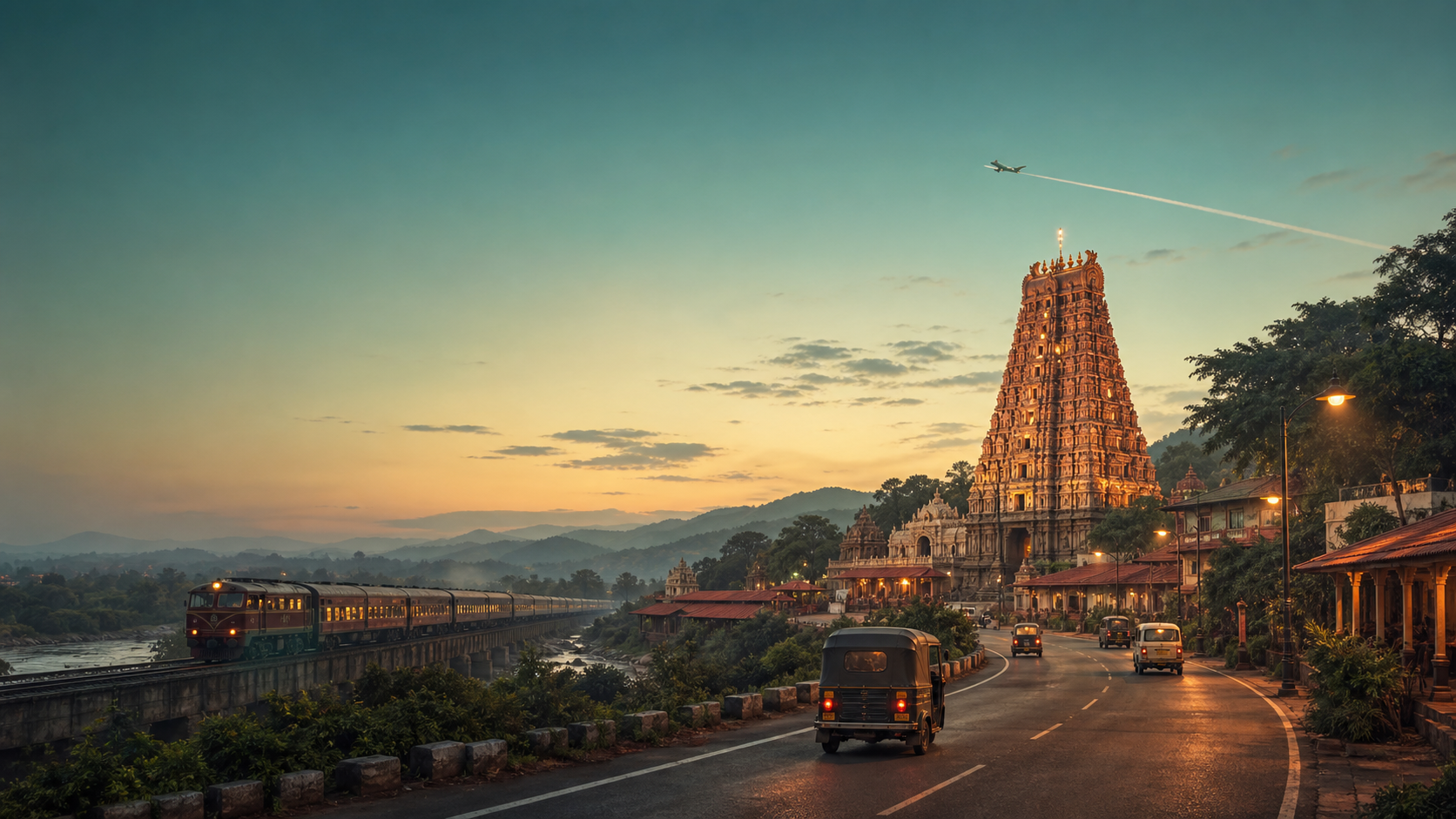
A complete pilgrim record drawn from the existing published article data.
Architectural Simplicity and Serenity
The Jwalpa Devi Temple is strategically positioned on the tranquil banks of the Nawalika River, offering a serene and picturesque backdrop for worship. While specific intricate architectural details are not widely documented, the temple embodies a characteristic simplicity that harmonizes with its natural surroundings. Its design reflects the humble yet profound spiritual ethos prevalent in Himalayan shrines, focusing on the sanctity of the deity rather than elaborate ornamentation. The constant murmur of the river, coupled with the lush greenery, enhances the meditative and peaceful ambiance, fostering a deep sense of devotion among pilgrims.
Riverside Location
The temple's setting on the banks of the Nawalika River contributes significantly to its peaceful and sacred atmosphere.
Harmonious Design
Characterized by architectural simplicity, the temple's structure blends seamlessly with the natural beauty of its Himalayan environment.
Ambiance of Peace
The shrine exudes a profound sense of serenity, providing a calm and meditative space for devotees to connect with the divine.
Goddess Jwalpa: A Form of Parvati
At the heart of the Jwalpa Devi Temple resides Goddess Jwalpa, revered as a powerful manifestation of Parvati, the Hindu goddess of power, energy, and devotion. For many local communities, particularly the Thapliyal and Bisht clans, Goddess Jwalpa holds immense spiritual importance as their Kuladevi, or family deity. This designation signifies her role as a protector and bestower of blessings upon their lineage, deeply integrating her worship into their ancestral traditions and daily lives. Devotees believe her presence ensures prosperity and well-being for her followers in the region.
Manifestation of Parvati
Goddess Jwalpa is worshipped as a significant and powerful form of Parvati, embodying her divine attributes and strength.
Kuladevi for Thapliyal and Bisht Clans
She is deeply revered as the ancestral deity (Kuladevi) for the Thapliyal and Bisht communities, holding a central place in their traditions.
Spiritual Significance
Devotees seek her blessings for protection, prosperity, and the well-being of their families and lineage, reflecting her profound spiritual role.
Planning Your Pilgrimage
For pilgrims planning a visit to Jwalpa Devi Temple, it is situated approximately 34 km from Pauri and 36 km from Kotdwar, making it accessible from both towns. The nearest railway station is Rishikesh (RKSH), about 47 km away, with trains connecting via Chandigarh. Dehradun Airport (DED) is the closest airport, roughly 58 km distant, offering flights from Chandigarh (IXC). From these hubs, visitors can arrange local transport. It is advisable to verify current road conditions and transportation options, especially during monsoon season, to ensure a smooth and sacred journey to this revered site.
Geographical Accessibility
The temple is located about 34 km from Pauri and 36 km from Kotdwar, offering convenient access from these regional centers.
Travel Options
Rishikesh railway station (RKSH) is approximately 47 km away, and Dehradun Airport (DED) is about 58 km, providing air and rail connectivity.
Visitor Advice
Travelers should confirm current transport availability and road conditions, particularly during adverse weather, for a comfortable pilgrimage.
| Deity | Goddess Jwalpa |
|---|---|
| Form | Jwalpa is a form of Goddess Parvati, representing divine feminine energy and strength. |
| Consort | Not specified |
| Sampradaya | Hindu |
| Significance | The temple is a revered shrine dedicated to Goddess Jwalpa, who is also the Kuladevi (family deity) of the Thapliyal and Bisht clans, holding deep spiritual importance for these communities. |
The Eternal Protector of Garhwal
Legend speaks of Goddess Jwalpa, a fierce and benevolent manifestation of Parvati, who chose the serene hills of Patisain as her abode. As the revered Kuladevi of the ancient Thapliyal and Bisht clans, she has been worshipped for generations as their divine protector. It is believed that her presence safeguards the communities from all adversities, bestowing strength, prosperity, and spiritual solace upon her devotees. Her temple stands as a testament to her enduring grace, a beacon of faith where prayers are answered and blessings flow eternally.
In the heart of Garhwal, Jwalpa Devi stands as the eternal mother, guarding her devotees and showering blessings upon the Thapliyal and Bisht clans.
Goddess Jwalpa, a vibrant form of Parvati, embodies the divine feminine power, inspiring strength and devotion in all who seek her grace.
Welcome to Jwalpa Devi Temple
The Jwalpa Devi Temple stands as a significant Hindu shrine nestled in Patisain, Satpuli, within the Pauri Garhwal district of Uttarakhand. Dedicated to Goddess Jwalpa, a revered manifestation of Parvati, the temple offers a spiritual haven on the tranquil banks of the Nawalika River. It serves as a vital pilgrimage site, drawing devotees seeking blessings from the divine feminine energy. The temple's serene location amidst the natural beauty of the Himalayas contributes to its profound spiritual ambiance, making it a focal point of faith in the region. Its historical roots and continuous worship traditions underscore its importance.
Location and Setting
Situated in Patisain, Satpuli, Pauri Garhwal, the temple is uniquely positioned beside the sacred Nawalika River, enhancing its spiritual atmosphere.
Deity and Significance
The shrine is dedicated to Goddess Jwalpa, a powerful form of Parvati, revered for her protective and benevolent nature by local devotees.
The Legacy of Jwalpa Devi
The Jwalpa Devi Temple boasts a rich historical lineage, primarily attributed to its construction by the late Pandit Shri Duttaram Anthwal. His vision established this sacred site, which has since been meticulously maintained by the Anthwal family. This family has traditionally served as the temple's priests and caretakers, ensuring the continuity of rituals and preservation of its sanctity across generations. Their dedication embodies the temple's enduring legacy, making it not just a place of worship but also a testament to sustained familial devotion and stewardship. The temple's history is deeply intertwined with the contributions of the Pandit lineage.
Founding by Pandit Shri Duttaram Anthwal
The temple's establishment is credited to the late Pandit Shri Duttaram Anthwal, who initiated its construction and worship.
Ancestral Guardianship
The Anthwal family has historically served as the traditional priests and custodians, safeguarding the temple's sanctity and rituals.
Dynastic Tradition
The temple's operations and spiritual guidance have been passed down through the generations of the late Pandit dynasty.
🗺 How to Reach
Hover a card to animate the journey on the map
Verified routes to Jwalpa Devi Temple
Common Questions
Where is Jwalpa Devi Temple located?
Jwalpa Devi Temple is documented at Patisain, Satpuli, Uttarakhand Pauri Garhwal.
Which deity is associated with Jwalpa Devi Temple?
Jwalpa Devi Temple is associated with the goddess Jwalpa.