



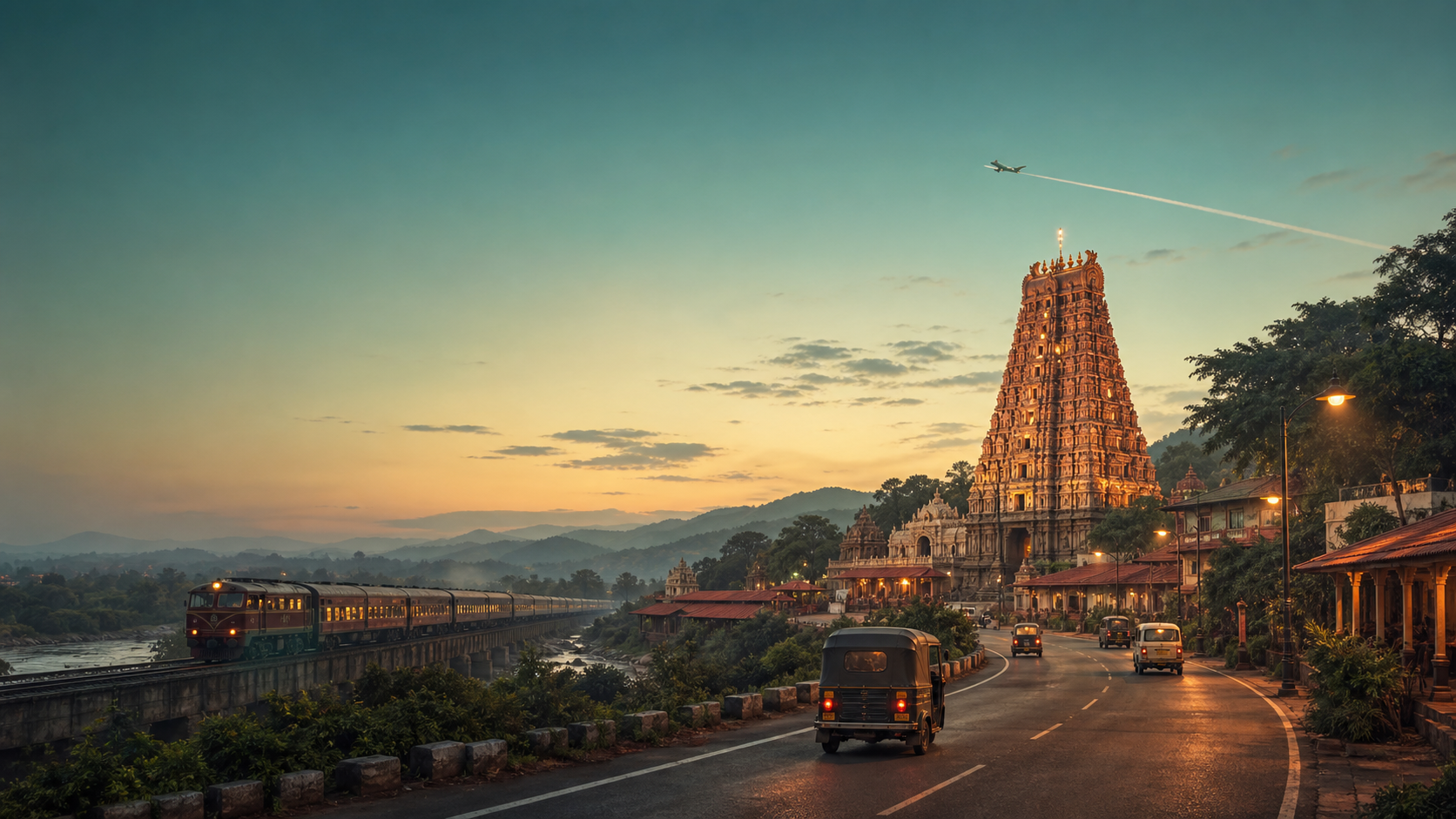
A complete pilgrim record drawn from the existing published article data.
Goddess Jwalpa: Form and Significance
Goddess Jwalpa, the revered presiding deity of the temple, is widely considered a manifestation of Goddess Parvati, the divine consort of Lord Shiva. Her worship holds immense significance for many local clans and communities, who often regard her as their Kuldevi or ancestral deity. Devotees believe that Goddess Jwalpa bestows blessings, protection, and fulfillment of wishes upon her followers. Her iconography and rituals reflect her powerful yet benevolent nature, embodying the creative and destructive energies attributed to the divine feminine in Hindu mythology. The goddess is central to the spiritual identity of the region.
Manifestation of Parvati
Goddess Jwalpa is worshipped as a significant form of Goddess Parvati, embodying her divine power and grace.
Importance to Clans
For numerous local clans and families, Goddess Jwalpa serves as their revered Kuldevi, signifying a deep ancestral and spiritual connection.
Planning Your Pilgrimage to Jwalpa Devi
Pilgrims planning a visit to Jwalpa Devi have several transport options to reach this sacred site. The nearest major railway station is Rishikesh (RKSH), approximately 47 km away, with routes available via Chandigarh (CDG) which is about 155 km. For air travel, Dehradun Airport (DED) is the closest, situated about 58 km from the temple. Flights can be taken from Chandigarh (IXC) to Dehradun. From the airport, visitors can continue their journey by authorized taxi, app cab, airport bus, or auto-rickshaw, subject to current availability. It is advisable to verify transport options in advance for a smooth journey.
Reaching the Temple by Rail
The nearest train station is Rishikesh (RKSH), located approximately 47 km away. Alternative routes include trains via Chandigarh (CDG), which is about 155 km distant.
Air Travel Options
Dehradun Airport (DED) is the closest airport, approximately 58 km from the temple. Flights from Chandigarh (IXC) to Dehradun are available, followed by local transport.
Local Transport from Airport
From Dehradun Airport, pilgrims can utilize authorized taxis, app cabs, airport buses, or auto-rickshaws to reach the temple, with options subject to verification.
| Deity | Goddess Jwalpa |
|---|---|
| Form | Goddess Jwalpa is revered as a powerful form of Goddess Parvati, embodying divine feminine energy. |
| Consort | Not specified |
| Sampradaya | Hinduism |
| Significance | The temple is a significant shrine dedicated to Goddess Jwalpa, serving as the Kuladevi for the Thapliyal and Bisht clans. |
The Protective Kuladevi
Goddess Jwalpa, a powerful manifestation of Parvati, holds a special place as the revered Kuladevi for the Thapliyal and Bisht clans. Devotees believe she watches over their families, bestowing blessings and protection across generations. Her presence in Patisain ensures the well-being and prosperity of her lineage, reinforcing the deep spiritual bond between the deity and her devoted followers.
Goddess Jwalpa stands as the divine protector, embodying the fierce yet benevolent spirit of the universal Mother.
For generations, the Jwalpa Devi temple has been a sacred anchor, nurturing faith and tradition for its devoted families.
Jwalpa Devi Temple: A Sacred Abode
The Jwalpa Devi Temple, nestled in Patisain, Satpuli, in the Pauri Garhwal district of Uttarakhand, stands as a significant Hindu pilgrimage site. Dedicated to the goddess Jwalpa, this sacred abode attracts devotees seeking blessings and spiritual solace. Its location amidst the scenic beauty of the Garhwal Himalayas contributes to its tranquil and revered atmosphere. The temple serves as a focal point for religious practices and community gatherings, embodying the rich spiritual heritage of the region. It is a testament to the enduring faith and cultural traditions prevalent in Uttarakhand.
Location and Significance
Situated in the picturesque landscape of Patisain, Satpuli, the temple is a prominent spiritual landmark in Uttarakhand Pauri Garhwal, drawing pilgrims from various parts.
The Presiding Deity
The temple is primarily dedicated to the goddess Jwalpa, revered as a powerful and benevolent deity within the Hindu tradition.
The Legacy of Jwalpa Devi
The construction and establishment of the Jwalpa Devi Temple are deeply intertwined with the legacy of the Anthwal family. The temple was built by the late Pandit Shri Duttaram Anthwal, a revered figure from the late Pandit dynasty. His vision and devotion led to the creation of this significant religious structure, which has since become a cornerstone of faith in the region. The Anthwal family has historically played a crucial role in the temple's upkeep and the preservation of its religious traditions, ensuring its continued prominence as a place of worship and spiritual guidance for generations.
Founding by Pandit Shri Duttaram Anthwal
The temple's origins trace back to the efforts of the late Pandit Shri Duttaram Anthwal, who belonged to the late Pandit dynasty.
Role of the Anthwal Family
The Anthwal family has maintained a long-standing association with the temple, contributing significantly to its construction, maintenance, and spiritual administration over time.
Serene Setting on the Nawalika River
The Jwalpa Devi Temple enjoys a serene and picturesque location, situated on the banks of the sacred Nawalika River. This idyllic setting significantly enhances the spiritual ambiance of the temple, offering pilgrims a tranquil environment for devotion and contemplation. The gentle flow of the river, combined with the lush greenery of the surrounding Garhwal hills, creates a peaceful retreat from the mundane. The natural beauty of the area is believed to amplify the spiritual energy of the temple, making the pilgrimage a deeply immersive and calming experience for visitors seeking inner peace and connection with the divine.
Riverside Tranquility
The temple's location on the banks of the Nawalika River provides a peaceful and picturesque backdrop, conducive to spiritual reflection.
Picturesque Surroundings
The natural beauty of the Garhwal Himalayas surrounding the temple contributes to its serene and sacred atmosphere, enriching the visitor's experience.
🗺 How to Reach
Hover a card to animate the journey on the map
Verified routes to Jwalpa Devi
Common Questions
Where is Jwalpa Devi: Parvati's Fiery Form by Nawalika River located?
Jwalpa Devi: Parvati's Fiery Form by Nawalika River is documented at Patisain, Satpuli, Uttarakhand Pauri Garhwal.
Which deity is associated with Jwalpa Devi: Parvati's Fiery Form by Nawalika River?
Jwalpa Devi: Parvati's Fiery Form by Nawalika River is associated with the goddess Jwalpa.