



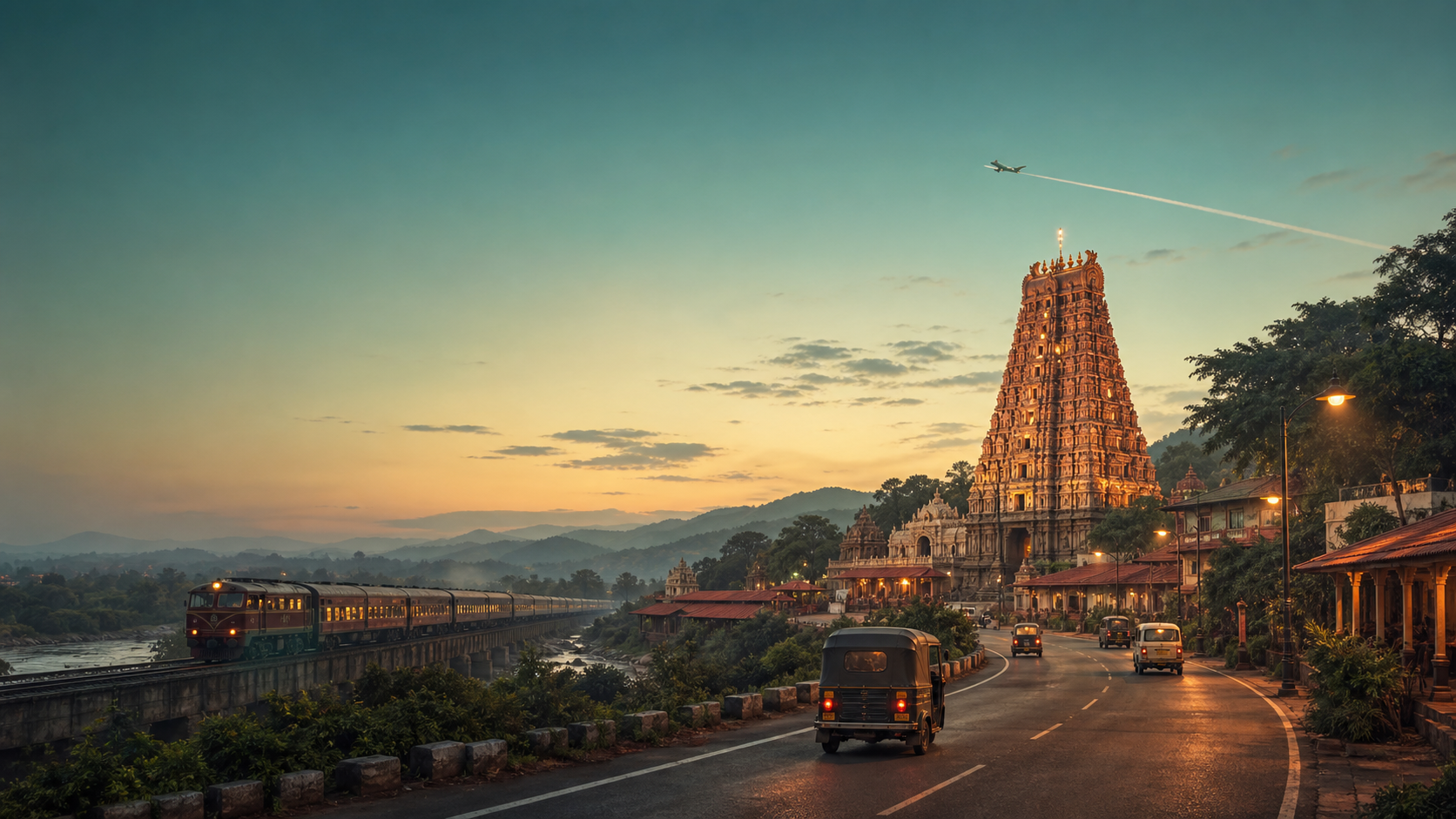
A complete pilgrim record drawn from the existing published article data.
A Legacy Forged in Resilience: The History of Goan Temples
The history of Hindu temples in Goa is a testament to the enduring spirit of its people, marked by periods of immense challenge and subsequent revival. During the Portuguese Inquisition in the 16th century, many original temples were destroyed or desecrated. To preserve their deities and traditions, communities often clandestinely relocated their idols across the border into safer territories, primarily in the Ponda region, which was then under Maratha or Adil Shahi rule. This led to the establishment of new temple complexes, often built with a blend of regional architectural styles. Following the end of Portuguese rule, many of these relocated deities were re-enshrined in grander structures, symbolizing a triumphant return and the unwavering faith of the Goan Hindu community.
The Inquisition's Impact
The Portuguese Inquisition led to the destruction of numerous ancient temples, forcing communities to protect their deities through relocation.
Relocation and Re-establishment
Many deities were moved to safer areas, particularly Ponda, where new temples were constructed, often incorporating diverse architectural elements.
Post-Liberation Revival
After Goa's liberation, many temples underwent significant renovation and expansion, symbolizing the resurgence of Hindu culture and faith.
Architectural Marvels: A Fusion of Styles
The architectural landscape of Goan Hindu temples is a fascinating showcase of diverse influences, reflecting centuries of cultural exchange and adaptation. Unlike the towering gopurams of South India or the Nagara style of the North, Goan temples often feature a unique blend of indigenous Konkani, Maratha, and even subtle Portuguese elements. The _Deepastambha_ (lamp tower) is a common and distinctive feature, often intricately carved. Many temples incorporate octagonal or circular _garbhagrihas_ (sanctum sanctorum) and a _Sabhamandapa_ (assembly hall) with ornate pillars. The use of vibrant colors and stucco ornamentation, particularly seen in the _shikhara_ (spire), further contributes to their unique visual identity, setting them apart from other Indian temple architectures.
Distinctive Deepastambha
The lamp tower, or _Deepastambha_, is a prominent and often elaborately carved feature found at the entrance of many Goan temples.
Blending Influences
Goan temple architecture integrates local Konkani styles with Maratha and even Portuguese aesthetic elements, creating a unique synthesis.
Ornate Interiors
Interiors often feature intricately carved wooden or stone pillars, colorful stucco work, and well-designed _Sabhamandapas_.
Divine Pantheon: Deities and Their Stories
The Hindu temples of Goa are dedicated to a rich pantheon of deities, predominantly various forms of Shiva, Vishnu, and Devi. Prominent among them are Lord Shiva, revered in his many manifestations such as Mangesh, Nagesh, and Mahadev, often represented by the Lingam. Lord Vishnu is worshipped as Vithal, Laxmi Narasimha, and Krishna. The Mother Goddess, Devi, is celebrated in her fierce and benevolent forms, including Shantadurga, Mahalakshmi, and Mahalasa. Each deity is enshrined with a unique history and local legends, often recounting their miraculous appearances, protection of devotees, or significant events that shaped the temple's establishment. These stories are deeply interwoven with the cultural fabric of Goa, passed down through generations.
Prominent Shiva Deities
Lord Shiva is widely worshipped in forms like Mangesh and Nagesh, with temples dedicated to these specific manifestations being highly revered.
Devi's Many Forms
The Mother Goddess is venerated as Shantadurga, Mahalakshmi, and Mahalasa, each with distinct attributes and local narratives.
Vishnu's Incarnations
Lord Vishnu is worshipped in various incarnations such as Vithal and Laxmi Narasimha, reflecting diverse Vaishnavite traditions.
Plan Your Spiritual Journey: Visiting Goa's Sacred Sites
Visiting Goa's Hindu temples offers a profound spiritual and cultural experience. Most temples are located in the Ponda taluka, easily accessible from Panaji. Visitors should adhere to traditional temple etiquette: remove footwear before entering, dress modestly, and maintain silence in the sanctum. Photography may be restricted in certain areas. The best time to visit is from October to March, when the weather is pleasant and many temple festivals (Jatras) are held, offering a vibrant display of local traditions, music, and dance. Key sites like the Shri Mangeshi Temple, Shri Mahalsa Narayani Temple, and Shri Shantadurga Temple provide excellent starting points for exploring Goan temple architecture and devotion. Allow 1-2 hours per temple for a comprehensive visit.
Etiquette and Dress Code
Visitors should dress modestly, covering shoulders and knees, and remove footwear before entering temple premises as a sign of respect.
Best Time to Visit
October to March is ideal, coinciding with pleasant weather and numerous temple festivals, providing a richer cultural experience.
Key Temples to Explore
Must-visit temples include Shri Mangeshi, Shri Mahalsa Narayani, and Shri Shantadurga, each offering unique architectural and spiritual insights.
| Deity | Multiple Hindu Deities |
|---|---|
| Form | Unknown |
| Consort | Unknown |
| Sampradaya | Hindu |
| Significance | These temples are dedicated to a variety of Hindu deities, encompassing the diverse spiritual practices and traditions within Hinduism. |
The Enduring Spirit of Goan Temples
Across Goa's verdant landscapes, numerous Hindu temples stand as testaments to enduring faith. Many were rebuilt and relocated over centuries, preserving the spiritual heritage against historical challenges. Each temple, whether dedicated to Shiva, Vishnu, Ganesha, or Devi, embodies a unique facet of the divine. These sacred sites collectively narrate a story of resilience, where diverse traditions and deities found sanctuary, flourishing into the vibrant tapestry of worship seen today, reflecting the deep devotion of the Goan people.
In the heart of Goa, devotion finds countless forms, each temple a beacon of ancient faith and enduring spirit.
The sacred spaces of Goa invite all to witness the vibrant mosaic of Hindu traditions and timeless reverence.
Related temples: Chota Char Dham | Gandhidham
Introduction to Goa's Hindu Temples
The Hindu temples of Goa represent a profound fusion of history, culture, and spirituality, standing as resilient symbols of faith within a region known for its diverse heritage. These sacred sites offer a unique glimpse into the spiritual landscape of Goa, reflecting centuries of tradition and devotion. Unlike temples in other parts of India, Goan temples often exhibit distinct architectural and ritualistic practices, shaped by local customs and historical events. They serve not only as places of worship but also as vibrant cultural centers, preserving ancient art forms, music, and social gatherings that define the Goan identity.
Cultural Significance
Goan temples are integral to the local cultural fabric, hosting numerous festivals and community events throughout the year. They act as custodians of traditional arts and practices.
Spiritual Hubs
These temples serve as vital spiritual centers for devotees, offering spaces for prayer, meditation, and religious ceremonies that reinforce community bonds.
Restoration and Conservation Efforts
The Hindu temples of Goa, many of which were meticulously rebuilt after their destruction or relocation during the Portuguese Inquisition, face significant challenges in their ongoing preservation. Constructed predominantly from laterite stone and timber, these structures are susceptible to the humid coastal climate, monsoon rains, and the natural degradation of materials over centuries. Restoration efforts are complex, requiring a delicate balance between maintaining the structural integrity of ancient edifices and preserving their historical and religious authenticity. The process often involves specialized techniques to address issues like water ingress, biological growth, and material decay, while ensuring that interventions respect the original architectural style and traditional craftsmanship. Temple committees, often with limited resources, collaborate with archaeological experts to safeguard these invaluable cultural assets.
Contemporary conservation initiatives for Goan temples involve a multi-pronged approach, integrating traditional knowledge with modern scientific methods. Projects often include detailed structural assessments, chemical treatment for stone preservation, and the careful replacement of deteriorated wooden elements using similar species and traditional joinery. The Archaeological Survey of India (ASI) and various state departments, alongside dedicated temple trusts and local communities, play crucial roles in funding and executing these intricate restoration works. Emphasis is placed on documentation, creating a historical record of each intervention. These efforts are vital not only for the physical survival of these sacred spaces but also for ensuring their continued role as vibrant centers of worship and cultural heritage, adapting to the pressures of increased pilgrimage and environmental shifts while retaining their spiritual essence.
🗺 How to Reach
Hover a card to animate the journey on the map
Route to Temple
Related Temples



A Living Covenant