



A complete pilgrim record drawn from the existing published article data.
A Legacy Forged in Resilience: The History of Goan Hindu Temples
The history of Goan Hindu temples is a compelling narrative of survival and revival. During the 16th century, Portuguese suppression in Old Conquest areas led to the clandestine relocation of ancestral cult images by devout followers. These migrant deities found initial sanctuary in temporary shrines within territories then under the Bijapur Sultanate. A significant turning point arrived in the late 17th century with the establishment of Maratha rule in these regions. This period ushered in a major rebuilding phase, and by the early 18th century, numerous permanent and magnificent temples were constructed. Maratha patronage was crucial, transforming these sites into powerful symbols of Hindu resurgence and enduring faith.
The Great Migration
The 16th century witnessed devotees secretly transporting sacred murtis from Portuguese-controlled areas to safer inland regions.
Maratha Patronage
Under Maratha rule from the late 17th century, significant resources were dedicated to building and rebuilding permanent temple structures for the relocated deities.
Periods of Rebuilding
The 17th and 18th centuries marked extensive construction and renovation, establishing the temples seen today.
Architectural Fusion: A Unique Goan Style
Goan Hindu temples exhibit a distinctive architectural hybridity, showcasing a remarkable blend of traditional Dravidian typology with syncretic elements. While their fundamental design draws from South Indian temple architecture, particularly in the inner sanctums, the exterior facades and decorative motifs often reveal influences from Portuguese ecclesiastical structures and and, to a lesser extent, Indo-Islamic forms. This unique fusion is evident in features such as multi-storied deepstambhas (lamp towers), often resembling church belfries, and the use of materials like laterite, granite, and lime mortar. The resulting aesthetic is a testament to the region's complex cultural history, creating a style that is recognizably Goan and distinct from other Indian temple architectures.
Dravidian Foundations
The core structural and ritualistic layout of Goan temples often adheres to Dravidian principles, especially in the garbhagriha (sanctum sanctorum).
Portuguese and Indo-Islamic Influences
External architectural elements, such as dome-like structures, ornate stucco work, and specific tower designs, reflect colonial and regional styles.
Material and Craftsmanship
Temples are constructed using local laterite and granite, combined with lime mortar, wood, and terracotta, showcasing indigenous building traditions.
Pantheon of Faith: Deities and Spiritual Significance
The Goan Hindu temples are centers of profound spiritual importance, housing a diverse pantheon of deities that reflect a rich tapestry of faith. While specific temples are dedicated to individual gods and goddesses, collectively they represent the breadth of Hindu worship. Popular deities include forms of Shiva (like Mangesh), Vishnu, and various goddesses such as Mahalasa Narayani. The worship of these deities is deeply interwoven with local traditions and festivals, such as Shigmo, which features vibrant processional worship, and Nag Panchami, dedicated to serpent deities. This spiritual landscape underscores the enduring devotion of the Goan community, whose faith has been preserved and celebrated for centuries.
Diverse Divine Forms
Temples enshrine various manifestations of Hindu gods and goddesses, including Shiva, Vishnu, and Shakti, often with unique local interpretations.
Festival Celebrations
Major festivals like Shigmo and Nag Panchami are vibrant expressions of devotion, featuring elaborate rituals and community participation.
Enduring Devotion
The continuous worship in these temples symbolizes the unwavering faith and cultural identity of the Goan Hindu community through historical challenges.
Planning Your Spiritual Journey: Visiting Goan Hindu Temples
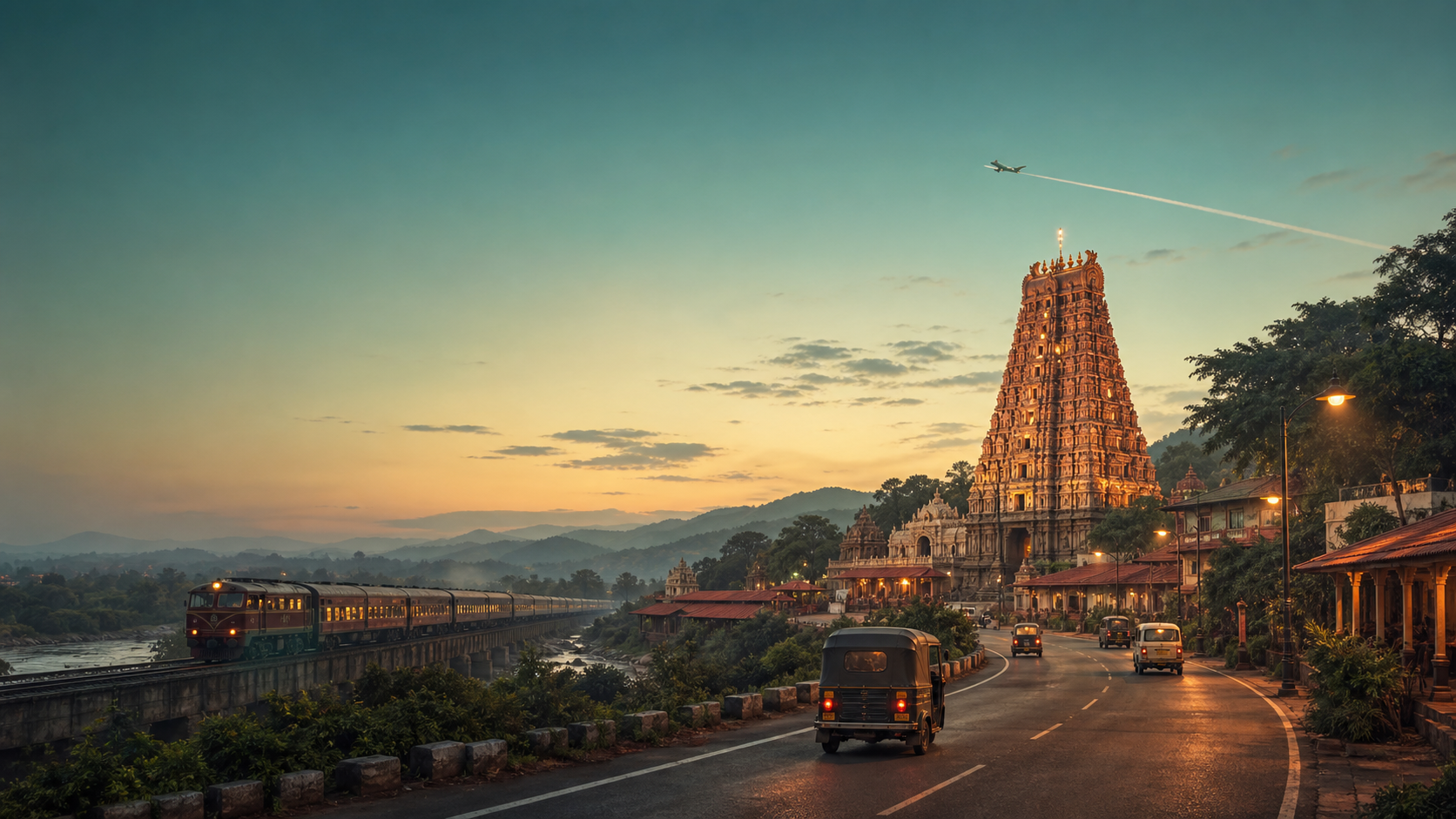
For an enriching spiritual journey, visiting Goan Hindu temples offers an immersive experience into their heritage and practices. The ideal time to explore these sacred sites is from November to March, coinciding with pleasant weather and the vibrant Shigmo festival. Visitors should adhere to a modest dress code and remove footwear before entering the sanctum. While a core circuit of temples in the Ponda region can be explored in two to three days, it is advisable to contact individual temple offices for specific timings, entry procedures, and transport details. Major transport hubs include Madgaon Railway Station, Dabolim Airport, and Vasco Da Gama for buses.
Best Time to Visit
The period from November to March is recommended, particularly during festivals like Shigmo (March) or Ganesh Chaturthi (August–September).
Etiquette and Dress
Modest attire is required, and visitors must remove their footwear before entering the temple's inner sanctum.
Travel and Logistics
Temples are accessible via train (Madgaon), flight (Dabolim), and bus (Vasco Da Gama); confirm specific routes and timings with temple authorities.
| Deity | Multiple Hindu Deities |
|---|---|
| Form | Migrant deities, originally cult images secretly relocated from Portuguese Old Conquests. They were enshrined in secluded border enclaves near Ponda and Bicholim. |
| Consort | Unknown |
| Sampradaya | Hindu |
| Significance | These deities are believed to possess protective power, having survived destruction during the 16th-century Portuguese suppression of Hinduism. Folk narratives recount divine intervention during their relocation and concealment. |
The Great Migration of the Gods
During the tumultuous 16th century, as Portuguese forces sought to suppress Hindu traditions in Goa's Old Conquest regions, a profound act of devotion unfolded. Brave devotees, risking everything, secretly spirited away their ancestral cult images from impending destruction. Under the cloak of night and guided by an unwavering faith, they carried these sacred murtis inland, seeking refuge in territories then under the Bijapur Sultanate. Folk narratives speak of divine intervention, of unseen hands guiding their perilous journey and protecting the hidden idols from discovery. These 'migrant' deities, embodying the resilience of a people, found temporary sanctuary near the border. Later, with the rise of the Maratha Empire in the late 17th and 18th centuries, a new dawn broke. Permanent, magnificent temples were erected, not just as places of worship, but as powerful symbols of Hindu resurgence, reasserting a vibrant cultural presence against the backdrop of Portuguese Goa. These temples stand today as living testaments to the gods' miraculous survival and the enduring spirit of their devotees.
Under the cloak of night, guided by unwavering faith, devotees spirited away their sacred murtis, ensuring the survival of their gods against all odds.
These temples stand as powerful symbols of Hindu resurgence, a rare architectural blend where Dravidian forms embrace Portuguese and Indo-Islamic influences.
Related temples: Chota Char Dham | Gandhidham
Introduction to Goan Hindu Temples
Goan Hindu temples embody a unique cultural and architectural landscape, standing as profound testaments to resilience and adaptation across centuries. Their distinctive character, shaped by periods of intense historical change, reflects a vibrant spiritual continuity. Many of these sacred sites, initially established to house deities relocated during periods of suppression, later blossomed into magnificent structures under Maratha patronage. Today, they serve not only as active centers of worship but also as vital repositories of Goan heritage, blending traditional Hindu forms with local influences. These temples are recognized as State Protected Monuments, preserving their significance for future generations.
A Legacy of Resilience
The existence of these temples is a direct result of devotees' efforts to preserve their faith, relocating ancestral cult images during the 16th century.
Architectural Distinctiveness
Goan temples exhibit a syncretic hybridization, blending Dravidian base typologies with elements influenced by local and historical contexts.
Cultural Significance
Beyond worship, these temples are cultural hubs, hosting festivals like Shigmo and preserving traditional arts and practices.
Restoration & Conservation
The preservation and restoration of Hindu temples represent a monumental challenge, given their antiquity, intricate craftsmanship, and continuous exposure to environmental elements. Many temples, some dating back over a millennium, face threats from weathering, seismic activity, vegetation growth, and even pollution. The sheer scale of these structures, often carved from stone, necessitates specialized approaches that blend traditional building knowledge with modern conservation science. Efforts to maintain these sacred sites are not merely about architectural preservation; they are intrinsically linked to safeguarding invaluable cultural heritage, spiritual practices, and the living traditions of Hinduism. Neglecting these structures would mean losing not only artistic masterpieces but also vital links to India's historical and religious identity, making conservation a critical endeavor for future generations. Conservation initiatives for Hindu temples involve a complex interplay of various agencies, including governmental archaeological surveys (such as the Archaeological Survey of India), temple trusts, local communities, and international heritage organizations. Modern restoration techniques employ advanced diagnostics, structural engineering, and material science to stabilize dilapidated sections, meticulously clean surfaces without damage, and reconstruct lost elements based on historical evidence. However, these efforts are often fraught with ethical dilemmas, balancing the need for structural integrity and functionality for active worship with the imperative to maintain historical authenticity. Decisions regarding the use of new materials, the extent of reconstruction, and the integration of modern amenities require careful consideration, ensuring that the temple continues to serve its dual role as a living place of worship and an irreplaceable historical monument.🗺 How to Reach
Hover a card to animate the journey on the map
Route to Mormugao
Related Temples



A Living Covenant