



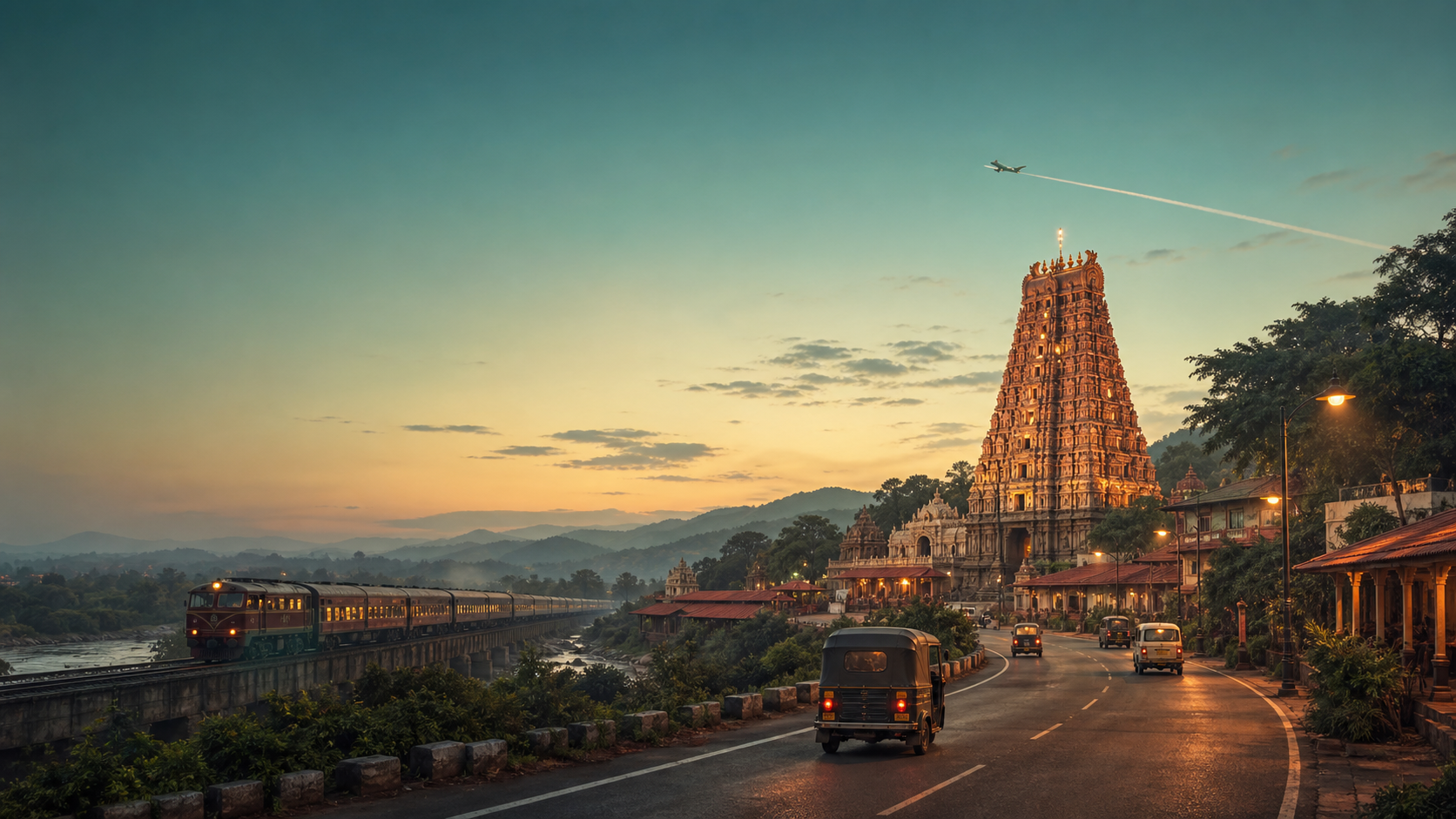
A complete pilgrim record drawn from the existing published article data.
Centuries of Devotion: The History of Eklingji
The history of Eklingji Mahadev Temple spans over twelve centuries, beginning in the 8th century CE with its construction by the early Guhila dynasty rulers of Mewar. This period also saw the installation of the Chaturmukhi Shiva idol, solidifying Eklingji's status as the Kuldevata of Mewar. Successive rulers, including the Sisodia Rajputs, continuously patronized the temple. Maharana Kumbha undertook significant renovations in the 15th century, followed by Maharana Udai Singh II in the 16th century, ensuring the temple's continuous development and its enduring spiritual and political importance to the kingdom of Mewar.
Guhila Origins
The temple's foundation dates back to the 8th century CE, initiated by the early Guhila dynasty rulers. The Chaturmukhi Shiva idol was installed during this era, establishing Eklingji as the revered Kuldevata.
Royal Patronage and Expansions
Later, Sisodia Rajputs of Mewar continued the patronage. Maharana Kumbha significantly renovated the complex in the 15th century, and Maharana Udai Singh II made further additions in the 16th century, maintaining its grandeur.
Architectural Marvels of Eklingji Temple Complex
The Eklingji Mahadev Temple complex is a distinguished example of Rajput architectural style, featuring a cluster of 108 temples within its high walls. Constructed primarily from sandstone and marble, the complex showcases intricate carvings and detailed craftsmanship. The main temple houses the celebrated Chaturmukhi Shiva idol, a four-faced lingam carved from black marble, representing Brahma, Vishnu, Rudra, and Surya. This unique idol is central to the temple's spiritual identity. The architecture reflects centuries of royal patronage, blending structural grandeur with devotional artistry.
Rajput Style and Materials
The temple complex exemplifies Rajput architecture, utilizing durable sandstone and polished marble. Its design incorporates traditional elements and fine sculptural details, reflecting regional artistic traditions.
The Chaturmukhi Shiva Idol
Central to the main shrine is the unique Chaturmukhi Shiva, a four-faced black marble lingam. Each face symbolizes a different aspect of divinity: Brahma, Vishnu, Rudra, and Surya.
Complex Layout
The sprawling complex encompasses 108 smaller temples, creating a sacred precinct. These subsidiary shrines, dedicated to various deities, contribute to the site's rich spiritual tapestry.
Lord Eklingji: The Presiding Deity and Royal Patron
Lord Shiva, venerated as Eklingji, holds paramount spiritual importance as the Kuldevata (ancestral deity) of the Mewar royal family. Legend states that the Guhila kings installed Eklingji in the 8th century, establishing him as the spiritual sovereign of Mewar. The Maharanas considered themselves mere regents, ruling under Eklingji's divine mandate. Stories like "The Listener of All Prayers" emphasize the belief that Eklingji hears and responds to all devotees' pleas, actively intervening in times of crisis for both royalty and commoners, embodying a living, responsive divinity for the entire kingdom.
Kuldevata of Mewar
Eklingji is the revered Kuldevata, or ancestral deity, of the Mewar royal family. The Maharanas traditionally ruled as his de facto regents, acknowledging his supreme spiritual authority over the kingdom.
Divine Sovereignty
The Guhila kings installed Eklingji in the 8th century, establishing him as the 'Sacred Sovereign of Mewar'. This belief guided the rulers, who sought his blessings for coronations and governance.
Responsive Divinity
Known as 'One who listens to all', Eklingji is believed to hear and respond to every prayer. This profound faith ensured royal patronage and inspired public devotion, especially during crises.
Eklingji Mahadev Temple: A Sacred Legacy of Mewar
Introduce Eklingji Mahadev Temple, located in Rajasthan amidst the Aravalli hills. It is an ancient Shiva shrine, serving as the ancestral deity (Kuldevata) of the Mewar royal family. Built starting in the 8th century CE by the Guhila dynasty, it remains a vital spiritual center. The temple complex showcases Rajput architectural style, primarily using sandstone and marble. It is a State Protected Monument, managed by the Mewar Royal Family Trust, embodying centuries of devotion and heritage.
Location and Setting
Nestled in the Aravalli hills, Eklingji is approximately 35 km north of Udaipur, Rajasthan, offering a serene and picturesque environment for devotees.
Deity and Significance
The temple is dedicated to Lord Shiva, revered as Eklingji. He is the ancestral deity (Kuldevata) of the Mewar royal family, symbolizing divine protection and sovereignty.
Visiting Eklingji: A Guide for Devotees and Travelers
Planning a visit to Eklingji Mahadev Temple requires consideration of its unique aspects. Entry is free, but modest attire and removal of footwear are expected. While specific timings should be confirmed with the temple office, the best time to visit is from October to March, particularly during Maha Shivratri, the major annual festival. The temple is approximately 35 km from Udaipur, accessible by bus, train, flight (Udaipur airport), or car via NH48, with parking available. A typical visit lasts 2-3 hours.
Essential Visit Information
Entry to the temple is free. Visitors should adhere to a modest dress code and remove footwear before entering. Contact the temple office for precise daily timings and ritual schedules.
Best Time and Festivals
The ideal period for a visit is between October and March, offering pleasant weather. The temple is especially vibrant during Maha Shivratri, a significant annual festival in February-March.
Accessibility and Transport
Eklingji is located about 35 km from Udaipur. It is well-connected by road (NH48), with regular bus services. Udaipur City Railway Station and Maharana Pratap Airport are the nearest hubs.
| Deity | Shiva |
|---|---|
| Form | The main deity is Shiva in his Chaturmukhi Lingam form, an anthropomorphic lingam with four faces. This unique representation signifies Shiva's omnipresence and directional sovereignty. |
| Consort | Unknown |
| Sampradaya | Shaiva |
| Significance | Worshipped as 'Eklingji'—'One who listens to all', Shiva is considered the divine protector and spiritual sovereign of Mewar. He guided and safeguarded the rulers, functioning as both Kuldevata and the de facto spiritual head of state. |
The Sacred Sovereign of Mewar
Deep within the ancient lands of Mewar, nestled amidst hills, lies the sacred Eklingji Mahadev Temple, a testament to enduring faith and divine protection. It is believed that in the 8th century, the valiant Guhila kings, seeking a celestial guardian for their nascent kingdom, installed the venerated Eklingji. This unique four-faced Shiva lingam was not merely an idol; it became the very spiritual sovereign of Mewar. Throughout centuries, Eklingji guided the rulers through tumultuous wars, blessed their coronations, and oversaw their governance, functioning as both their ancestral deity (kuldeva) and the de facto spiritual head of state. The Maharanas considered themselves mere regents, ruling under the divine mandate of Eklingji, ensuring the kingdom's prosperity and spiritual well-being.
Eklingji, the divine protector, hears all prayers, guiding Mewar's rulers and safeguarding its people through the ages.
The Maharanas ruled as mere regents, for the true sovereign of Mewar was Eklingji, Shiva himself.
Related temples: Aakkoor Thanthondreeswarar Temple | Aazhimala Shiva Temple
Restoration & Conservation
The Eklingji Mahadev Temple, with its origins tracing back to the 8th century, has naturally faced the ravages of time, climate, and historical events. Over its long history, the complex has endured periods of destruction, notably during invasions by various rulers, requiring subsequent rebuilding and renovation. Early efforts at restoration were often undertaken by the Mewar rulers themselves, who considered the deity their true king and protector. These historical repairs, while crucial for the temple's survival, were typically carried out using available resources and traditional methods, sometimes leading to alterations in the original architectural style. The delicate marble and sandstone structures, exposed to centuries of monsoons, heat, and human activity, have consistently demanded attention to maintain their structural integrity and intricate carvings.
In more recent times, the preservation of Eklingji Mahadev Temple has evolved into a more systematic and scientific endeavor, often involving archaeological experts and conservation trusts. Modern restoration projects focus on meticulous documentation, structural stabilization, and the careful cleaning of weathered surfaces to reveal original details without causing further damage. Challenges remain significant, including managing the constant flow of devotees, which necessitates careful planning to avoid disruption to worship while undertaking repairs. Environmental factors like air pollution and the impact of large gatherings also pose ongoing threats. These contemporary efforts aim not only to halt decay but also to ensure the temple's architectural and spiritual legacy endures for future generations, requiring continuous funding and a dedicated team of specialists.
🗺 How to Reach
Hover a card to animate the journey on the map
Route to Temple
Common Questions
Where is Eklingji Mahadev Temple: Ancient Shiva Shrine of Mewar Rulers located?
Eklingji Mahadev Temple: Ancient Shiva Shrine of Mewar Rulers is documented at Rajasthan.
Which deity is associated with Eklingji Mahadev Temple: Ancient Shiva Shrine of Mewar Rulers?
Eklingji Mahadev Temple: Ancient Shiva Shrine of Mewar Rulers is associated with Shiva.
Related Temples


A Living Covenant