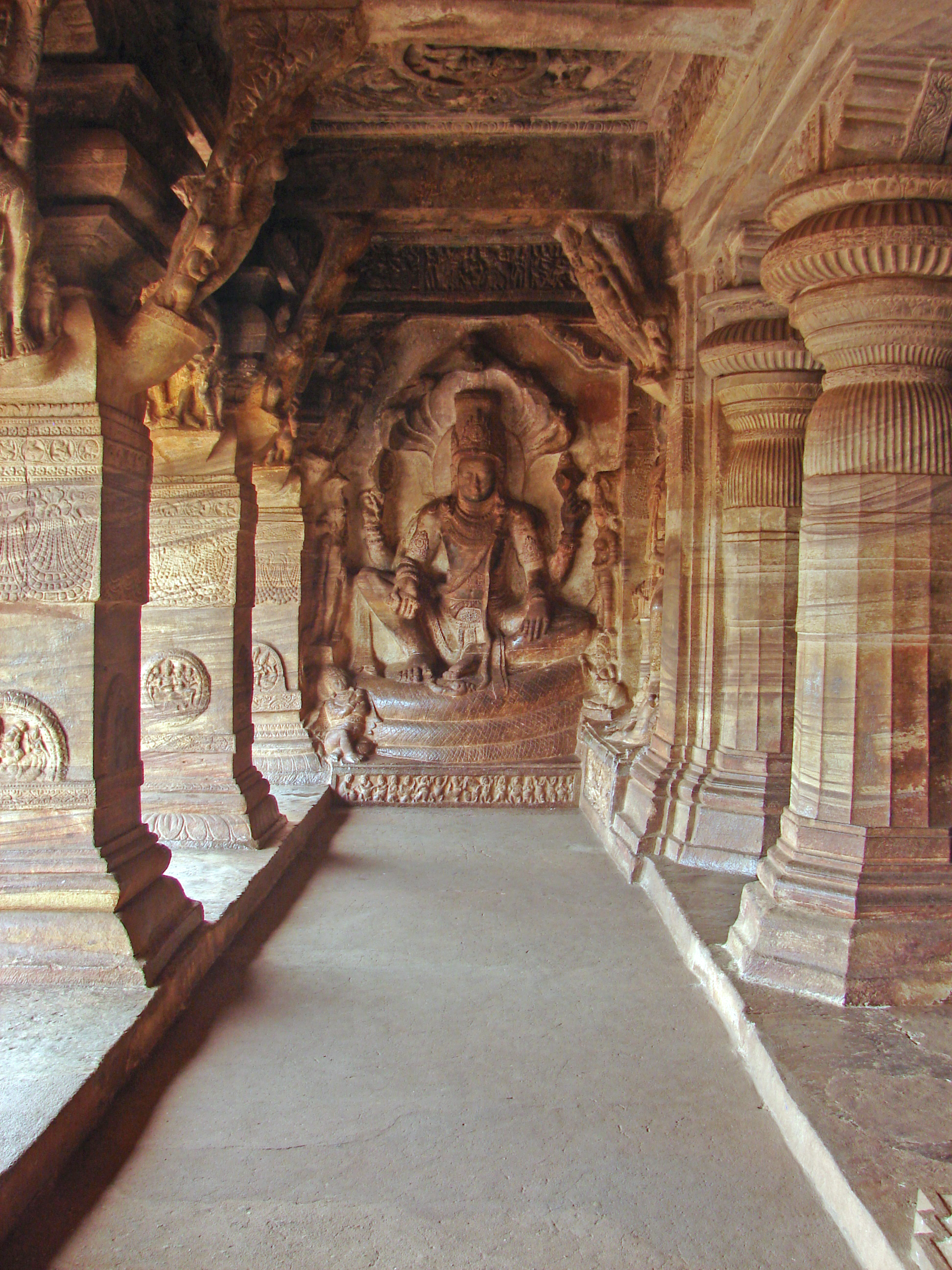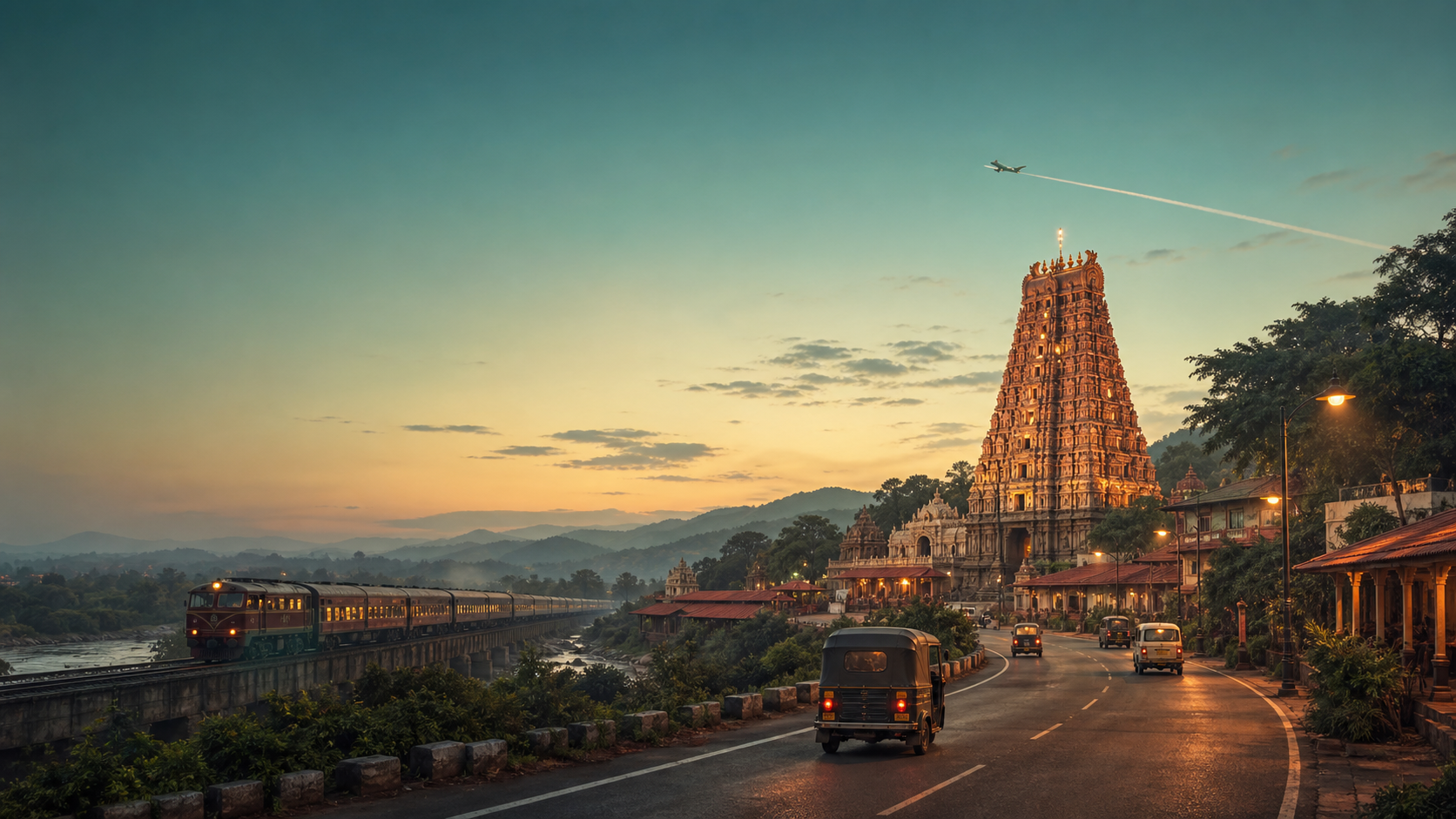
A complete pilgrim record drawn from the existing published article data.
Plan Your Visit to Daunne Devi Temple
The Daunne Devi Temple is situated in Dumkibas, Bardaghat Municipality, within Nepal's Nawalparasi District. Visitors can access the temple through various transportation options. For those traveling by air, Kushinagar Airport (KBK) in India is approximately 86 km away, with onward travel possible via local transport. Train travelers can consider Kaptanganj Junction (CPJ), about 71 km distant, or Raghunathpur (RPR) at roughly 163 km. These transport hubs facilitate reaching the region, from where local arrangements can be made to complete the journey to this revered hilltop shrine.
Geographical Location
The temple is located in Dumkibas, Bardaghat Municipality, Nawalparasi District, Nepal, offering a sacred destination in the region.
Air Travel Accessibility
The nearest airport is Kushinagar Airport (KBK), located approximately 86 km away, providing an aerial route for international and domestic visitors, followed by ground transport.
Rail Connectivity
Train travelers can reach the area via Kaptanganj Junction (CPJ), about 71 km away, or Raghunathpur (RPR), approximately 163 km distant, serving as key railway access points.
| Deity | Durga |
|---|---|
| Form | A fierce yet protective form of the Divine Mother, revered as the remover of obstacles and destroyer of evil. |
| Consort | None specified |
| Sampradaya | Shaktism |
| Significance | Durga is a central deity in Shaktism, embodying cosmic energy and power. Devotees seek her blessings for strength, protection, and liberation. |
The Ancient Legacy of Trikut Parbat
The Daunne hill, where the temple now stands, holds a profound ancient history. It was once known as Trikut Parbat, a sacred peak mentioned in ancient texts. Legend has it that the revered sage Valmiki, author of the epic Ramayana, chose this very spot for his deep meditation. His presence imbued the hills with spiritual energy, making it a hallowed ground long before the temple's establishment. This ancient connection adds a layer of sanctity to the Daunne Devi Temple, drawing pilgrims seeking spiritual solace in a place touched by legendary figures.
The Daunne hill, once Trikut Parbat, holds the echoes of Valmiki's ancient meditation, a sacred ground touched by legendary figures.
Durga, the fierce yet protective Divine Mother, embodies cosmic energy, offering strength and liberation to those who seek her blessings.
Daunne Devi Temple: Nepal's Hilltop Shrine
The Daunne Devi Temple is a significant Hindu pilgrimage site located in the Daunne Hills of Nepal's Nawalparasi District. Situated in Dumkibas, Bardaghat Municipality, this revered shrine is primarily dedicated to the powerful goddess Durga. The temple offers a spiritual retreat amidst natural surroundings, drawing devotees seeking blessings from the Mother Goddess. While the Daunne Hill has ancient spiritual roots, the current temple structure is believed to have been established in 2055 CE, making it a focal point for Hindu worship in the region.
Location in Daunne Hills
The temple is nestled within the scenic Daunne Hills, specifically in Dumkibas, Bardaghat Municipality, Nawalparasi District, Nepal. Its elevated position provides a serene and sacred environment for worship.
Primary Deity: Goddess Durga
The central deity revered at Daunne Devi Temple is Goddess Durga. She is worshipped as a fierce protector and bestower of strength, with devotees offering prayers to seek her divine grace and blessings.
Hindu Tradition
The Daunne Devi Temple is a prominent site within the Hindu tradition, upholding ancient rituals and practices dedicated to the worship of the Mother Goddess and other deities.
From Trikut Parbat to Modern Devotion
The Daunne Devi Temple stands on ground with a rich history, once known as Trikut Parbat. Ancient texts identify this sacred hill as the meditation site of Sage Valmiki, the revered author of the epic Ramayana, imbuing it with profound spiritual significance long before any temple stood. This ancient legacy contributes immensely to the hill's sanctity. The temple itself, as it is known today, is believed to have been established in 2055 CE by Jung Bahadur Rana, marking a transition from ancient spiritual reverence to a structured place of worship for the modern era.
Ancient Origins as Trikut Parbat
The Daunne hill was historically known as Trikut Parbat, a sacred peak mentioned in ancient scriptures, establishing its spiritual importance since antiquity.
Sage Valmiki's Meditation Site
Legend holds that the revered sage Valmiki, author of the Ramayana, chose Trikut Parbat for his deep meditation, thus sanctifying the hill with his spiritual presence.
Establishment by Jung Bahadur Rana
The current temple structure is believed to have been established in 2055 CE, with Jung Bahadur Rana credited as its builder, transforming the ancient sacred site into a formal place of worship.
The Sacred Presence of Durga and Shiva
At the heart of the Daunne Devi Temple is the worship of Goddess Durga, the primary deity revered for her power and protection. Devotees offer prayers to seek her blessings and strength. Complementing her divine presence, the temple complex also houses a significant Shivalaya. This inclusion allows pilgrims to honor Lord Shiva, the destroyer and transformer, alongside Durga. The coexistence of these two major deities underscores a holistic spiritual experience, where the feminine divine energy of Durga and the masculine cosmic force of Shiva are both venerated, particularly during auspicious times like Shrawan.
Goddess Durga, the Primary Deity
Goddess Durga is the main deity of the Daunne Devi Temple, worshipped for her protective and empowering attributes by countless devotees.
The Shivalaya within the Complex
A dedicated Shivalaya is present within the temple complex, allowing devotees to offer prayers to Lord Shiva, enriching the spiritual offerings at the site.
Dual Worship and Significance
The temple facilitates the dual worship of both Goddess Durga and Lord Shiva, symbolizing a comprehensive approach to Hindu spiritual practice and fulfilling diverse devotional needs.
Experiencing Devotion at Daunne Devi
The spiritual atmosphere at Daunne Devi Temple intensifies annually during the holy month of Shrawan. This period marks a significant pilgrimage, attracting numerous devotees who undertake the journey to offer prayers. Pilgrims visit not only to worship Goddess Durga but also to pay homage at the Shivalaya located within the temple complex. Offerings are made to both deities, with devotees seeking blessings for prosperity, well-being, and spiritual fulfillment. The serene hilltop setting, combined with the collective devotion of pilgrims, creates a profound and uplifting spiritual experience for all who visit during this sacred month.
Shrawan Month Pilgrimage
During the sacred month of Shrawan, the temple becomes a hub of activity as devotees undertake a pilgrimage to offer special prayers and seek blessings from the deities.
Offerings and Blessings
Pilgrims present various offerings to Durga and Shiva, seeking prosperity, well-being, and spiritual solace, believing their prayers will be answered during this auspicious time.
Profound Spiritual Atmosphere
The collective devotion of pilgrims and the tranquil hilltop environment contribute to a deeply spiritual and uplifting atmosphere, especially vibrant during the Shrawan pilgrimage.
🗺 How to Reach
Hover a card to animate the journey on the map
Verified routes to Daunne Devi Temple
Common Questions
Where is Daunne Devi Temple: Durga's Abode on Trikut Parbat located?
Daunne Devi Temple: Durga's Abode on Trikut Parbat is documented at Dumkibas, Bardaghat Municipality, Nepal.
Which deity is associated with Daunne Devi Temple: Durga's Abode on Trikut Parbat?
Daunne Devi Temple: Durga's Abode on Trikut Parbat is associated with Durga.