



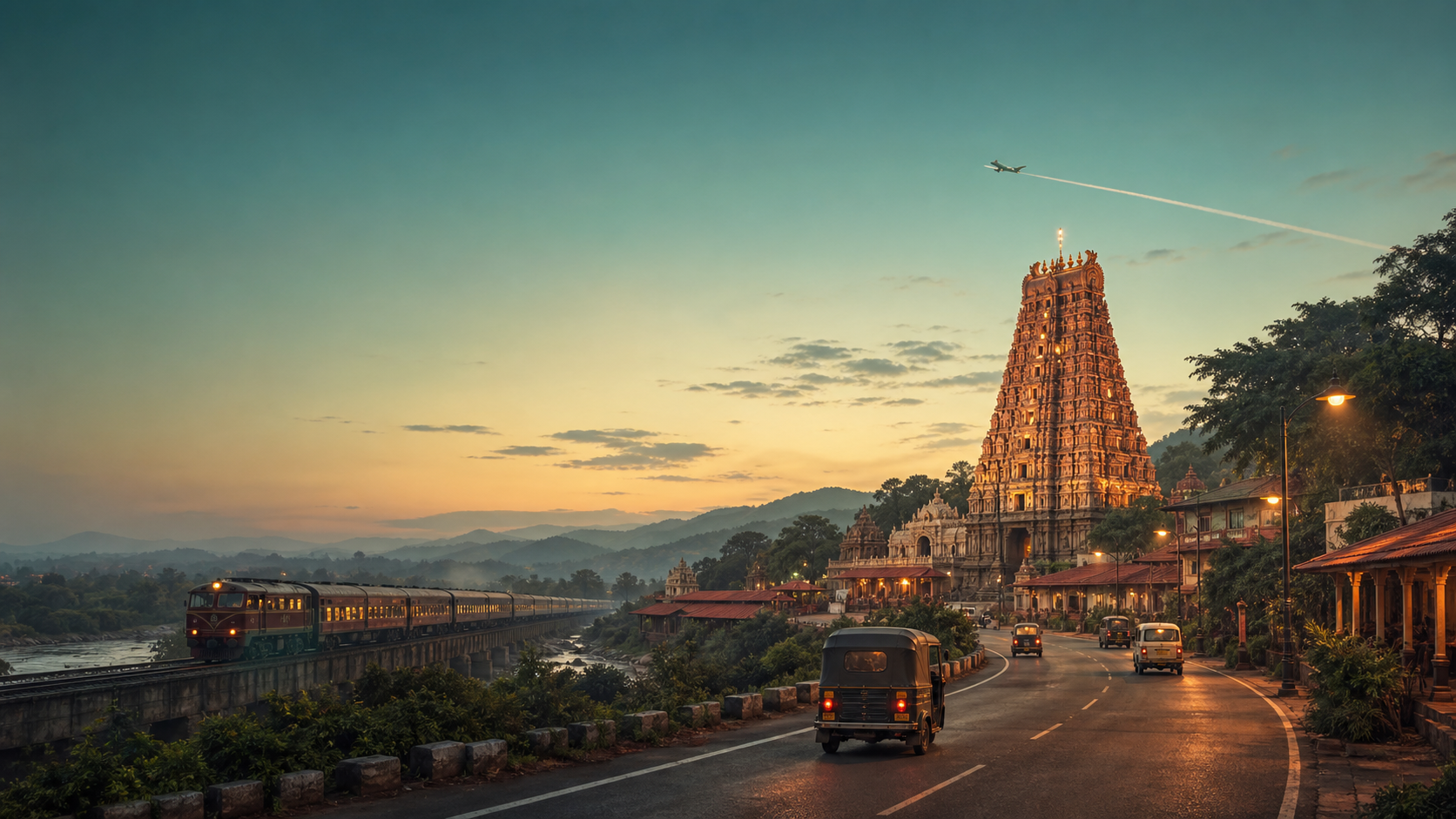
A complete pilgrim record drawn from the existing published article data.
Discover the Ancient Chandraditya Temple of Barsur
The Chandraditya Temple, an ancient Hindu shrine, stands prominently in Barsur, a historic town situated in the Dantewada district of Chhattisgarh. This revered temple is dedicated to Lord Shiva, one of the principal deities in the Hindu pantheon. It serves as a significant spiritual and historical landmark, attracting devotees and history enthusiasts alike to its tranquil premises. The temple's enduring presence reflects centuries of devotion and architectural craftsmanship in the region.
Location and Significance
Located in the heart of Barsur, the temple is easily accessible and forms a central part of the town's rich cultural heritage. Its antiquity makes it a key site for understanding the historical religious practices of Chhattisgarh.
Dedication to Lord Shiva
As a Shiva temple, it embodies the spiritual energy associated with the deity, inviting pilgrims to seek blessings and experience a profound sense of peace within its sacred confines.
Odisha Style: The Architectural Grandeur of Chandraditya
The Chandraditya Temple showcases a distinctive architectural style, notably influenced by the Odisha school of temple architecture. This influence is evident in its structural features and decorative elements. The temple's design often incorporates intricate carvings, a characteristic of the Odisha style, which is known for its elegant curvilinear towers (shikharas) and detailed sculptures. The craftsmanship reflects the artistic prowess of the period, making the temple a significant example of regional temple architecture. Its robust construction has allowed it to withstand the test of time, preserving its original artistic intent.
Odisha Influence
The temple's design prominently features elements characteristic of the Odisha architectural style, including its overall structure and decorative motifs.
Structural Features
Key structural components and their arrangement reflect the traditional temple-building techniques associated with the Odisha region.
Intricate Carvings
The temple is adorned with detailed carvings that are typical of the Odisha style, adding to its aesthetic and historical value.
Lord Shiva: The Presiding Deity of Chandraditya Temple
At the heart of the Chandraditya Temple's spiritual essence is Lord Shiva, the main deity to whom the shrine is dedicated. As one of the most revered gods in Hinduism, Shiva symbolizes destruction and creation, meditation, and asceticism. Devotees visit the temple to offer prayers and seek blessings from Lord Shiva, experiencing a profound spiritual atmosphere that permeates the sacred space. The presence of Shiva as the central figure imbues the temple with a powerful energy, making it a significant pilgrimage site for followers of Shaivism and Hindu devotees in general.
Central Deity
Lord Shiva is the principal deity enshrined within the Chandraditya Temple, making it a focal point for Shaivite worship.
Spiritual Significance
As a deity representing both destructive and regenerative forces, Shiva's presence provides a deep spiritual anchor for the temple and its visitors.
Atmosphere of Devotion
The temple offers a serene and sacred environment, fostering an atmosphere conducive to prayer and spiritual reflection for all who enter.
Planning Your Pilgrimage to Chandraditya Temple
Visiting the Chandraditya Temple in Barsur offers a unique blend of spiritual solace and historical exploration. The temple is located in the Dantewada district of Chhattisgarh, a region rich in ancient sites. To reach Barsur, travelers can consider various transport options, with Raipur being a major hub for bus and flight connections. While specific timings are not provided, temples generally open during daylight hours. Visitors should plan for a journey that allows ample time to explore the temple and its surroundings, including other nearby historical ruins in Barsur. It is advisable to check local conditions before travel.
Location and Access
The temple is situated in Barsur, Dantewada district, Chhattisgarh, accessible via road networks from major cities like Raipur.
Travel Considerations
Visitors should plan their travel to Barsur, taking into account the distances and estimated travel times from various transport hubs like Raipur (RPR) or Rajahmundry Airport (RJA).
Exploring Barsur
Beyond the Chandraditya Temple, Barsur is home to several other ancient temples and ruins, offering a broader historical experience for visitors.
| Deity | Shiva |
|---|---|
| Form | Lord Shiva, also known as Mahadev, is one of the principal Hindu deities, often depicted as the destroyer of evil and transformer. |
| Consort | Not specified |
| Sampradaya | Hindu |
| Significance | As one of the principal Hindu deities, Shiva represents the cosmic consciousness, meditation, and asceticism, revered for his power to create, preserve, and destroy. |
The Cosmic Significance of Shiva
While specific legends tied directly to the Chandraditya temple are not detailed, its dedication to Lord Shiva invokes the profound narratives surrounding this principal Hindu deity. Visitors connect with Shiva's essence as the destroyer of evil, the transformer, and the ultimate yogi. The temple serves as a sacred space for contemplation on Shiva's cosmic dance, which symbolizes the eternal cycles of creation, preservation, and dissolution, embodying the spiritual journey of devotees.
Shiva, the cosmic consciousness, represents the power to create, preserve, and destroy, guiding the cycles of existence.
In the heart of Chhattisgarh, the Chandraditya temple stands as a testament to devotion and enduring architectural beauty.
A Glimpse into Barsur's Past: The Chandraditya Legacy
The Chandraditya Temple carries a rich historical narrative, rooted in the legacy of its builder, Mahamandleshwar Chandraditya. This eminent figure commissioned the temple, bestowing upon it his name and ensuring its place in history. Barsur itself was once a thriving capital of the Nagvanshi kings, and the temple stands as a testament to the region's past glory and the patronage of its rulers. Its construction marks a significant period in the architectural and religious development of the area, reflecting the cultural zenith achieved under the Nagvanshi dynasty.
Founder and Naming
The temple was built by Mahamandleshwar Chandraditya, whose name it proudly bears, signifying his pivotal role in its establishment and dedication.
Nagvanshi Capital
Barsur, where the temple is located, was historically the capital of the Nagvanshi kings, underscoring the temple's importance within a powerful kingdom.
Historical Importance
The temple's existence provides valuable insights into the religious practices and architectural styles prevalent during the era of its construction.
🗺 How to Reach
Hover a card to animate the journey on the map
Verified routes to Chandraditya temple, Barsur
Common Questions
Where is Chandraditya temple, Barsur located?
Chandraditya temple, Barsur is documented at Danteawada, Chattisgarh.
Which deity is associated with Chandraditya temple, Barsur?
Chandraditya temple, Barsur is associated with one of the principal Hindu deities.