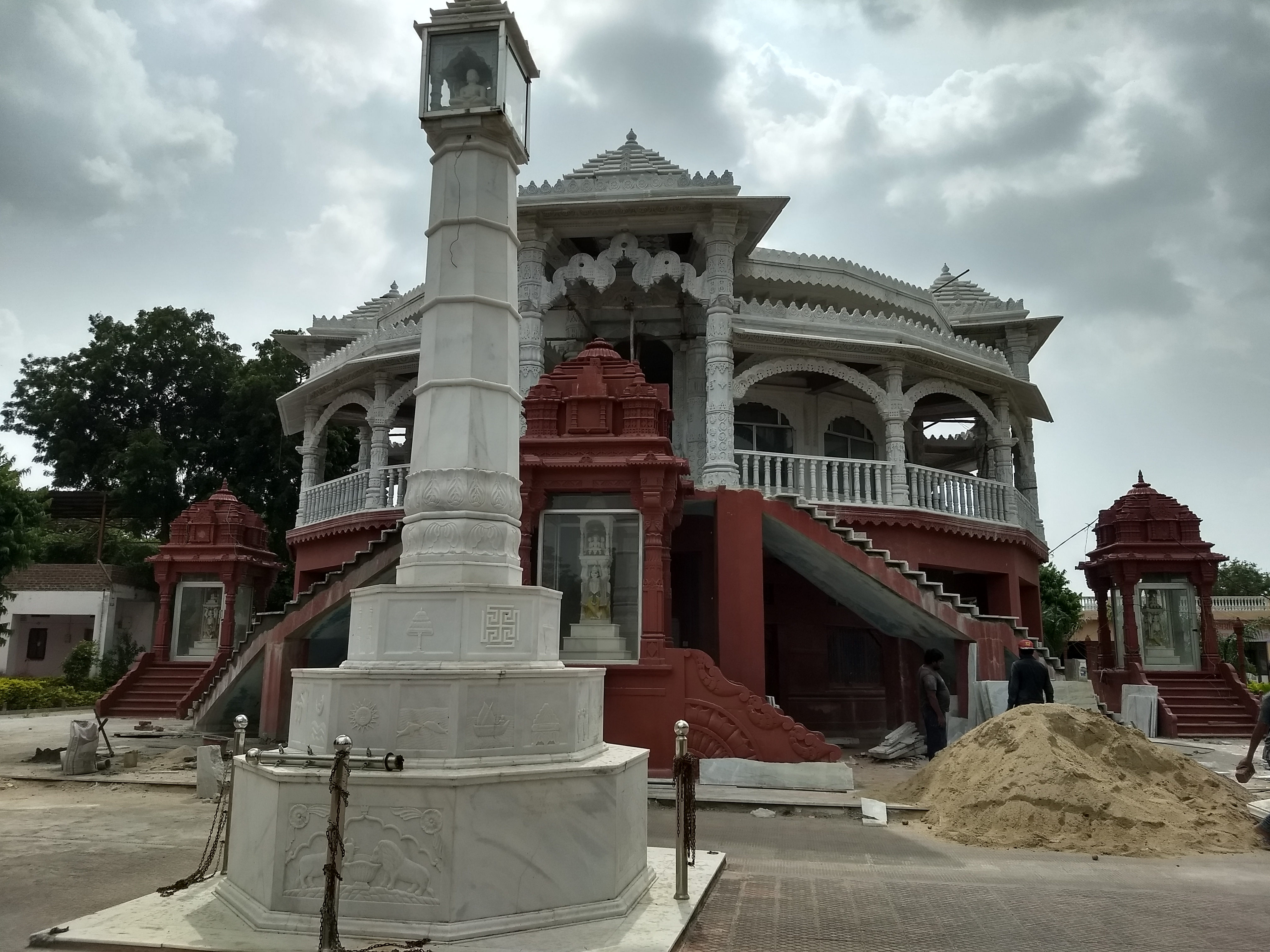
A complete pilgrim record drawn from the existing published article data.
The Historical Foundation: Inscriptions and Chronologies
Royal Patronage and the Chahamana Lineage
The inscriptions reveal that the temple was sanctioned by royal authority, cementing its status as a significant religious and political landmark of the 12th century.
Key Historical Events
Jaina Spiritualism and Cultural Interplay
Architectural Context and Artistic Expressions
While specific surviving architectural blueprints from the primary construction phase remain elusive, the rich historical context strongly suggests a structure built with immense reverence and substantial royal resources. The temple complex, dedicated to the revered Parshvanatha, beautifully reflects the artistic and religious sensibilities characteristic of the medieval period in Rajasthan.
Śvētāmbara Roots and Stylistic Influences
The Legacy of Royal Endowments
The sustained royal patronage ensured the temple’s initial construction and its remarkable preservation, allowing its spiritual and historical significance to endure for nearly 900 years.
Presiding Deity and Jain Faith
At the spiritual core of the Bijolia Parshvanath Temple lies the profound worship of Lord Parshvanatha, a pivotal figure and the 23rd Tirthankara in Jainism. As a major Jain pilgrimage center, the temple serves as a focal point for countless devotees seeking spiritual solace, adherence to Jain principles, and blessings from this revered prophet.
The Significance of Lord Parshvanatha
Lord Parshvanatha
Parshvanatha, revered as the 23rd Tirthankara (ford-maker) of Jainism, lived approximately in the 8th century BCE. He is particularly significant for his teachings which predate those of Mahavira, the 24th Tirthankara. Lord Parshvanatha preached the "Fourfold Restraint" (Chaturyama Dharma): not to kill, not to lie, not to steal, and not to own property. His iconography often depicts him with a serpent's hood over his head, symbolizing protection and his triumph over adversities. Devotees honor him for his compassion and his role in guiding souls towards liberation (Moksha).
A Vibrant Center for Jain Pilgrimage
Festivals and Spiritual Life
Religious life in India thrives on vibrant festivals, and the Bijolia Parshvanath Temple serves as a lively focal point for these sacred celebrations. Festivals observed here are more than mere events; they are deep immersions into the spiritual narratives and historical traditions embedded within the temple’s hallowed grounds.
Observing Sacred Celebrations
Daily Devotion and Community Gathering
Visiting the Bijolia Parshvanath Temple
For those planning a visit to this historically rich and spiritually significant site, thoughtful preparation ensures a truly meaningful experience. Understanding the profound historical context of the inscriptions and the deep religious significance of Parshvanatha enhances the journey from a mere sightseeing trip to a profound historical and spiritual pilgrimage.


Related temples: Ahichchhatra Jain temples | Ambamata Temple
Practical Information for Pilgrims and Historians
Accessibility and Best Times to Visit
Sacred Stories and Spiritual Narratives
Beyond its architectural grandeur and historical significance, the Bijolia Parshvanath Temple is deeply embedded with sacred narratives that reinforce its spiritual essence. These stories, often preserved in ancient texts and inscriptions, provide insight into the beliefs and values cherished by the Jain community for centuries.
The Uttama Sikhara Purana: A Jain Epic
The Narrative of Uttama Sikhara
The Uttama Sikhara Purana, inscribed at Bijolia, is a Jain narrative text that likely describes the sanctity of a holy mountain (Sikhara) and the spiritual attainments associated with it. Such texts often blend mythology with ethical teachings, detailing the arduous journeys of spiritual seekers, their meditations, and the ultimate liberation they achieve. For pilgrims, this purana would have served as a guide and an inspiration, connecting the physical site of Bijolia with a broader cosmic and spiritual landscape, reinforcing its role as a place conducive to enlightenment and ascetic practice.
The Power of Devotional Literature
🗺 How to Reach
Hover a card to animate the journey on the map
Route to Bijolia Parshvanatha Temple: 12th Century Jain Heritage
Common Questions
Where is Bijolia Parshvanatha Temple: 12th Century Jain Heritage located?
Bijolia Parshvanatha Temple: 12th Century Jain Heritage is documented at Rajasthan.
Which deity is associated with Bijolia Parshvanatha Temple: 12th Century Jain Heritage?
Bijolia Parshvanatha Temple: 12th Century Jain Heritage is associated with Shiva.
Related Temples


A Living Covenant