A complete pilgrim record drawn from the existing published article data.
What is a Shakti Peeth?
A Shakti Peeth is a sacred shrine or pilgrimage destination in Shaktism, believed to be formed from the fallen body parts of the goddess Sati. These sites are central to the worship of the Divine Mother.
History & Foundation

The King's Discovery
Legend states that King Bikram Shahi, whose palace once stood at the temple's current location, discovered a miraculous phenomenon. Rice beaten in his Okhall (rice mill) would mysteriously double in quantity. This led to an excavation around 1114 BS (1057 CE).
During the excavation, a statue of Bhagwati was unearthed, standing within a Sadkon Yantra. From the excavated pit, numerous butterflies emerged. One particular butterfly flew to the site where the temple now stands, transforming into stone when villagers attempted to catch it.
Divine Instructions & Priests
Among the remaining butterflies, five flew to different locations in Nepal, establishing new religious centers like Kanika Sundari and Bagheshwori. Three more also transformed into statues. A villager named Kaji Bista experienced a dream revealing that nine sisters of Durga Bhagawati desired a temple at the Okhall site, to be worshipped by a Neupane Brahmin.
The first priest appointed by King Bikram Shahi was from the Bistas family. Later, other Brahmin castes, including Chaulagai, Sinkhadas, Neupane, and Upadhya, served as priests. The search for a Neupane Brahmin, as per Kaji Bista's dream, highlights the temple's unique founding narrative.
Architecture & Deity

Sacred Geography & Deities
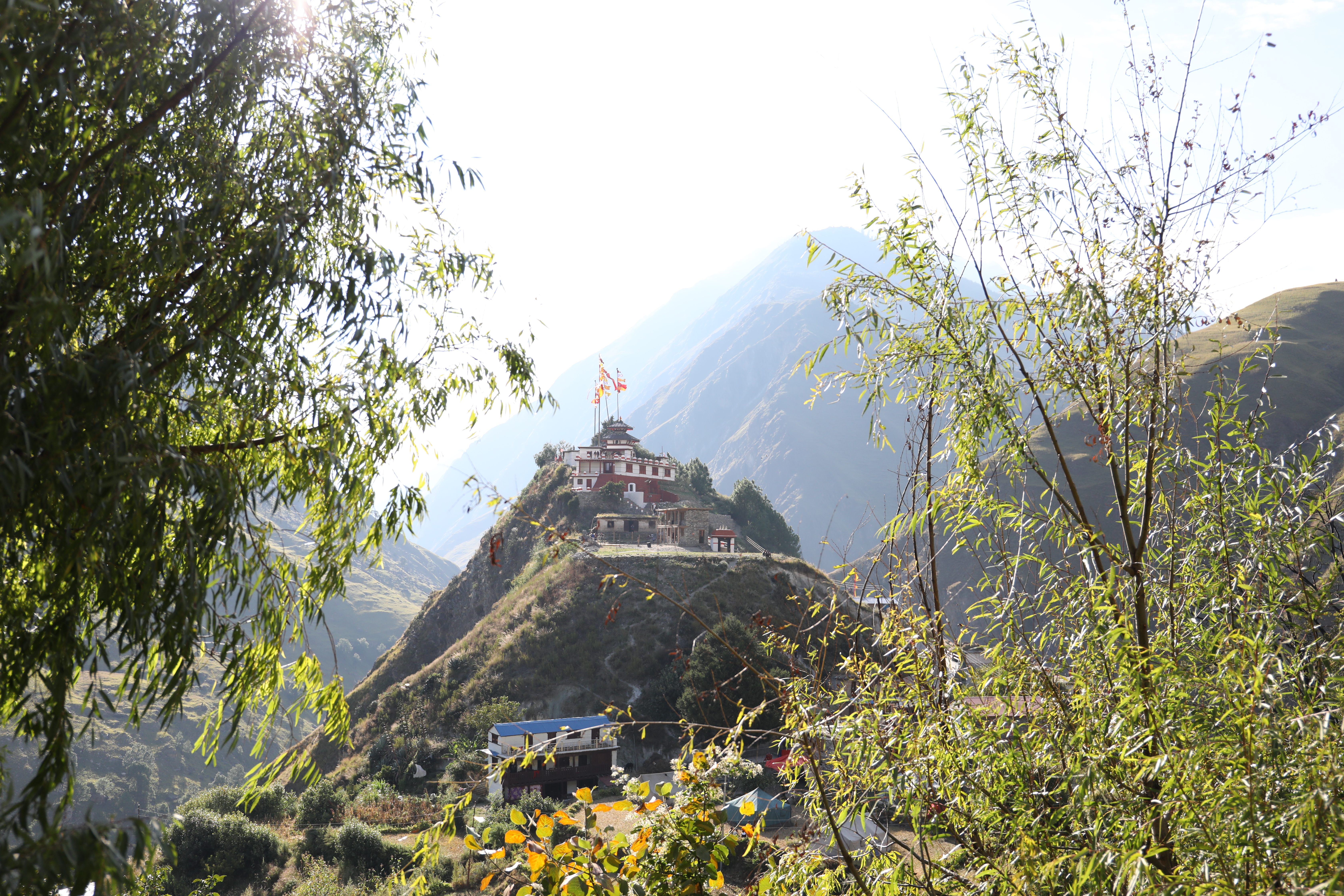
The temple is strategically located on a hill, overlooking the sacred confluence of three rivers: the Bhariavi Ganga, Tamrabarni, and Sundari. This geographical setting enhances its spiritual significance. The primary deity is Bala Tripura Sundari Bhagawoti, a powerful form of the Divine Mother.
Inside the temple, devotees can find statues of five prominent goddesses: Barahi, Chamunda, Bhramayani, Indrayani, and Mahakali. Additionally, there were eight other metal idols of gods and goddesses. Sadly, idols of Chamunda, Chandika, Nusing, and Baisnav were stolen in 1972, a significant loss to the temple's heritage.
Architectural Features
While specific architectural details are not extensively documented, the temple's ancient origins suggest traditional Nepalese temple architecture, likely incorporating local stone and timber. Its position on a hill near a river confluence is a common feature of sacred sites, providing a serene and powerful atmosphere for worship.
"The confluence of rivers at the temple site amplifies its spiritual energy, making it a truly potent place of worship."
Festivals & Traditions

Dashain Celebrations
The atmosphere during Dashain is vibrant, filled with hymns, traditional music, and communal feasts. It is a time when the spiritual energy of the temple reaches its peak, offering a profound experience for all who visit.
Notable Devotees & Routes
In commemoration of Khaptad Baba's spiritual achievement, a dedicated route comprising 1,008 steps was constructed around the temple premises in 2020. This "Khaptad Baba route" serves as a pilgrimage path, allowing devotees to symbolically follow in the footsteps of the enlightened sage.
"The temple's history is woven with the devotion of sages and the vibrant spirit of festivals like Dashain."
Visiting the Temple

Location and Accessibility
Accessing the temple involves navigating the local terrain. The recently constructed Khaptad Baba route, with its 1,008 steps, offers a dedicated path for pilgrims, providing both a physical and spiritual ascent to the temple. Prepare for a scenic trek.
Best Time to Visit & Tips
Pro-Tip for Visitors:
Wear comfortable walking shoes, especially if you plan to ascend the 1,008 steps of the Khaptad Baba route. Respect local customs and traditions, and be prepared for basic amenities in this remote region. Consider hiring a local guide for insights into the temple's history and local culture.
Related temples: Ariyanatha Mudaliar | Athitheeswarar Temple
Sacred Stories

The Butterfly Transformation
The temple's origin is deeply intertwined with the mystical tale of the butterflies. After King Bikram Shahi's discovery, a butterfly from the excavated pit flew to the temple's current spot and transformed into stone. This event was a clear sign of divine presence, guiding the temple's establishment.
This miraculous transformation was not isolated; five other butterflies journeyed to different regions, becoming the foundation for other significant Shakti centers across Nepal. This legend connects Bala Tripura Sundari to a wider network of sacred sites, emphasizing its central role.
Kaji Bista's Prophetic Dream
The construction and worship traditions of the temple were further guided by a profound dream experienced by Kaji Bista. He dreamt of nine sisters of Durga Bhagawati, who instructed that a temple be built over the Okhall site and that a Brahmin of the Neupane caste should perform the regular worship.
This dream provided specific divine directives, influencing the community's actions and the temple's spiritual lineage. Even when a Neupane Brahmin from Jumla initially declined the role, the villagers' efforts to fulfill the dream underscore their deep faith and commitment to the goddess.
Cultural Impact and Local Traditions
🗺 How to Reach
Hover a card to animate the journey on the map
Route to Sarkiwada
Related Temples

A Living Covenant